素工·东方手作

中国非物质文化遗产 · 手作工艺

CHINA INTANGIBLE CULTURAL HERITAGE · HANDMADE CRAFTS

素工东方手作

Oriental Craft Heritage

一纸一墨,一线一纹,都是手与时间留下的痕

A sheet of paper, a stick of ink, a thread and a pattern — marks left by hands and time.

本站是文化展示与工艺记录站点,全站不含交易环节。以下八页为中英双语排版预览,配图均按传统形制由 AI 复原绘制。

This is a cultural showcase and craft record. It contains no transactions. The eight pages below are bilingual. Illustrations are AI reconstructions based on traditional forms.

  1. 二首页Home/
  2. 三文房四宝The Scholar's Table/studio-study
  3. 四刺绣布艺专区Embroidery and Cloth/embroidery
  4. 五剪纸专区Paper Cutting/paper-cutting
  5. 六竹编专区Bamboo Weaving/bamboo-weaving
  6. 七瓷器专区Porcelain/porcelain
  7. 八工艺纪实Craft Notes/craft-notes
  8. 九联系我们Contact/contact

本站为中国非遗手作文化科普展示站点,页面内无商城、无下单与支付功能。外部权威链接仅作文化资料查阅,第三方站点内容由其独立负责。本站配图依照传统工艺形制复原,仅作示意参考。

This website is for cultural introduction only. There is no shop, ordering or payment on these pages. External authoritative links are for reference only and third-party content is independently managed. Illustrations are reconstructed based on traditional craft forms for demonstration.

orientalcraft-heritage@outlook.com · +86 13641088824

说明

站点说明Site Notes

栏目结构 · 视觉基调 · 写作规范 · 建站导入

站名:素工 · 东方手作。英文站名:Oriental Craft Heritage。

本站是中国非物质文化遗产手作文化的展示站,以科普、记录与展示为主:讲清一种材质从哪来、一道工序怎么做、一个纹样为什么这样长。本站不经营作坊,不设门店,也不接待参观,只做记录与科普。全站不设商品栏目,不承载任何交易流程,读者若需进一步了解,统一从“联系我们”页面沟通。

主要读者有三类:对中国手工艺感兴趣的海外普通读者与旅行者;国内关注手作、设计与传统文化的爱好者;需要资料引用的学校、文化机构与内容创作者。三者的共同点是愿意慢读,因此全站文字以短段落、具体细节、可复述的工序为主,不作推销式表达。

写作与建站的共同标准只有一条:读者读完一页,能向别人转述出至少一个具体动作。

全站八个页面,中英双语并列排版。页面路径建议按英文语义命名,便于海外读者记忆,也便于后续做多语言目录。

序号页面中文标题英文标题建议路径核心内容
1首页首页Home/站点导语、工艺理念、手艺作品轮播
2文房文房四宝The Scholar's Table/studio-study宣纸、毛笔、徽墨、砚台的历史、工艺与寓意
3刺绣刺绣与布艺Embroidery and Cloth/embroidery苏绣、民间刺绣的纹样、传承与工序
4剪纸剪纸专区Paper Cutting/paper-cutting剪纸的来历、工序、纹样含义与今天的用法
5竹编竹编专区Bamboo Weaving/bamboo-weaving选竹、破篾、编织、器物与今天的用法
6瓷器瓷器专区Porcelain/porcelain龙泉青瓷、德化白瓷、景德镇青花的工艺与日用
7工艺工艺纪实Craft Notes/craft-notes工序影像与匠人记录,只做记录,不设参观
8联系联系我们Contact/contact邮箱、电话、微信、工作时间与回复说明

色彩取五色,全站通用,不逐页更换:宣纸白 #F7F5F0 作页面底色,墨黑 #1C1B19 作正文色,赭石 #8C5A3C 作强调色,青灰 #6E7B72 作辅助色,旧金 #B9A16B 只用于细分隔线与图标描边。强调色每次出现不超过一处,用于引导视线,不用于装饰。

字体:中文标题用思源宋体或系统宋体,正文同族;英文标题用 EB Garamond,正文用 Source Serif 4,回退到系统衬线体。正文 16 至 17 像素,行高 1.9,中文每行不超过 40 个全角字。

影像:写实国风摄影,侧逆自然光,浅景深,低饱和;保留现场原有的墙面、木架、水痕与粉尘,不做滤镜与拼贴,不叠发光字。所有页面配图按第四部分的提示词生成,同一页面内保持同一光位与色温。

语气:陈述句为主,不用感叹号,不用“绝美”“震撼”“必看”一类形容词;工序用编号序列,故事用第三人称。中文与英文各自独立成篇,不做逐句直译,允许句式重组,但事实、数字与工序顺序必须一致。

以下七条适用于全部页面,改稿时逐条核对。

  1. 全站不出现任何交易相关表述,中文与英文均按下方禁用词表处理;读者主动咨询时再另行沟通。
  2. 年代只写到朝代或世纪,公认的起源说法用“相传”“一般认为”引出,不作精确到年的断言。
  3. 工艺描述按“选料—成型—修整”的顺序展开,每道工序给出一个可观察的细节,例如纸的帘纹、篾条的透光度。
  4. 称谓统一用“手艺人”“匠人”“作坊”(指他人的作坊),不用“大师”“泰斗”一类头衔。
  5. 英文译名统一:Xuan paper、Hu brush、Hui ink stick、She inkstone、Su embroidery、paper cutting、bamboo weaving。
  6. 单页篇幅中文 600 至 900 字,英文 450 至 700 词;超过时拆分为二级小节,不压缩字号。
  7. 图片说明只补正文没有的信息,写材质、光位、地点,不重复正文句子。

中英文禁用词对照如下,写作与校对时按表核查。

中文禁用英文禁用替代写法
价格、售价、报价price, pricing, quote改写为材质、工时与工序的描述
运费、邮费shipping, postage, freight全站不提,留待读者咨询
海关、清关customs, clearance全站不提
发货、配送、到货dispatch, delivery, lead time全站不提
破损、破损风险damage, damage risk全站不提
购买、选购、下单buy, purchase, place an order改为“了解”“阅读”“查阅工序”
订单、购物车、结算order, cart, checkout全站不提
支付、付款、预付payment, pay, deposit全站不提
优惠、折扣、活动价discount, promotion, special offer全站不提

本文档按“一个页面一节”组织,每节固定三段:中文文案、英文文案、配图 AI 提示词清单。导入时按以下四步处理。

  1. 在 WordPress 后台新建八个“页面”,标题用上表的中文标题,固定链接用上表的建议路径。首页设为静态首页。
  2. 页面标题在主题中输出为 H1,因此正文内的小节标题从 H2 起算:本文档的三级标题对应 H2,其下的材料名或说明名对应 H3。复制时不要带入编号符号。
  3. 中英对照按三种方式任选:默认同页上下并列,中文在前英文在后,用一条细分隔线隔开,适合海外读者对照阅读;也可用多语言插件按语言目录分站;若面向海外为主,可只上线英文,把中文留作资料页。
  4. 配图按提示词生成后,统一命名为“页面-主题-序号.jpg”,例如 study-xuan-01.jpg;上传后把图片说明的首句填进替代文本,便于检索与无障碍阅读。

全站页脚只放一行信息:邮箱。电话、微信与完整回复说明集中在“联系我们”页面,避免联系信息散落在各页造成口径不一。

这套文案不是一次性的宣传稿,而是一个可以长期增补的资料库。上线之后按季度更新,每次只做三件事,避免内容越写越散。

  1. 补一次产区走访:一次只写一类材质、一道工序,配三到五张实拍图,附一段两到四分钟的工序影像。
  2. 校对一次旧页:核对工序名称、工具称谓与英文译名是否与前文一致,删去没有依据的形容词。
  3. 更新一次联系信息:确认邮箱可用、电话与微信未变、所写时段与季节工序相符。

改稿时守住三条底线:不加入交易相关表述,不为凑字数堆砌形容词,不把别处的图片当作本站拍到的现场。读者对“真实”的判断,往往就落在这些细节上。

页面稳定之后,可以按材质逐步扩展:纸与墨、丝与线、竹与木、土与火。每一个新专题沿用本文件的三段结构(中文文案、英文文案、配图提示词),标题层级与固定链接保持同一套命名规则,日后迁移或做多语言版本都不会乱。

本站为中国非遗手作文化科普展示站点,页面内无商城、无下单与支付功能。外部权威链接仅作文化资料查阅,第三方站点内容由其独立负责。本站配图依照传统工艺形制复原,仅作示意参考。

This website is for cultural introduction only. There is no shop, ordering or payment on these pages. External authoritative links are for reference only and third-party content is independently managed. Illustrations are reconstructed based on traditional craft forms for demonstration.

orientalcraft-heritage@outlook.com

二

首页Home

/

1. 站点导语

素工 · 东方手作

一纸一墨,一线一纹,都是手与时间留下的痕

这里记录中国非遗手作的四种基本材质——纸、墨、丝、竹,以及今天仍在用它们做事的人。

从泾县的捞纸槽、湖州的笔坊、苏州的绣房到古徽州的墨室,工序的顺序、温度、气味,和那些必须停下来等待的时刻,写成可以慢慢读的文字。纸要在焙墙上烘干,墨要在暗处静置,绣面要一层层提亮,篾条要一根根剖薄。手作的节奏不是快,而是准。

如果你只是路过,欢迎从任意一页开始;如果你正在学习、教学或做设计,希望这里的记录能替你省下几次跑产区的路。

2. 东方非遗工艺理念

手作的道理,通常在材料里:非遗不是一种固定的式样,而是一套与材料相处的方法。三种态度,贯穿本站所有页面。

先懂材料:宣纸的韧性来自青檀树皮的长纤维,墨的光泽取决于烟与胶的比例,丝的经纬决定绣面能不能承住光,竹的年龄决定篾条会不会断。手艺人的第一课不是技法,是摸清手里的东西能做什么、不能做什么。

时间是原料:一张宣纸从树皮到成纸,要经过浸泡、蒸煮、打浆、捞纸、压榨、烘干与拣选;一块徽墨成型之后还要静置数月,让胶与烟慢慢安定。时间在这门手艺里不是成本,是配方的一部分。

分寸比技巧重要:针脚藏在背面,刀口收在纹样边缘,墨色停在将透未透处。所谓克制,是把多余的动作删掉,只留下必须的那一下。

这三条不写在墙上,只体现在成品上。所以看一件手作品,先看它的边、它的背面、它收笔的地方。

3. 手艺作品轮播介绍

轮播区选五件日常器物,每件只讲材质与做法,不作评价。文字控制在两行以内,与图片同屏,不遮挡主体。

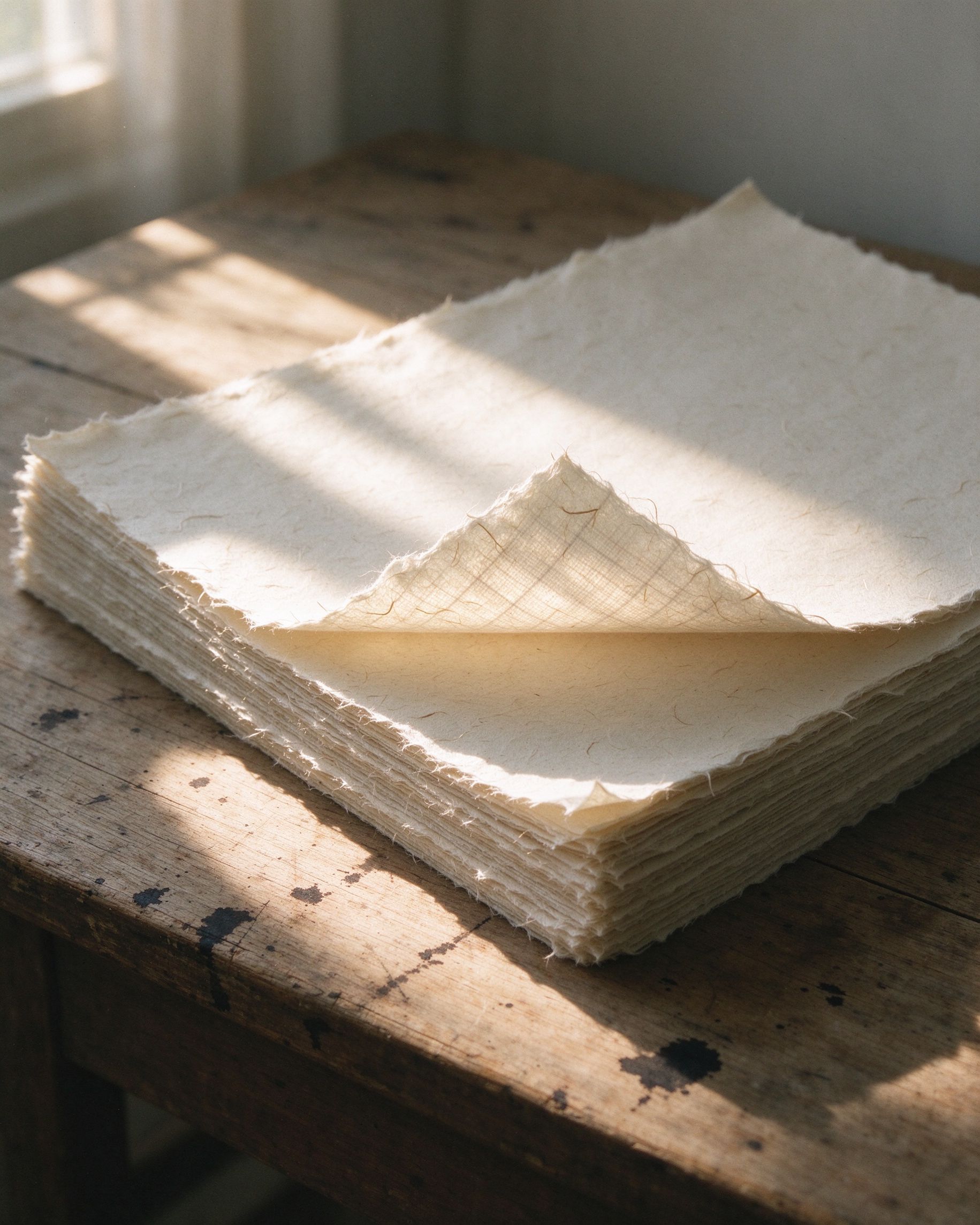
四尺宣 · 泾县捞纸:纸面有帘纹,迎着光能看到纤维的走向。落墨时水走得慢,笔痕边缘会留下一圈很浅的水线。

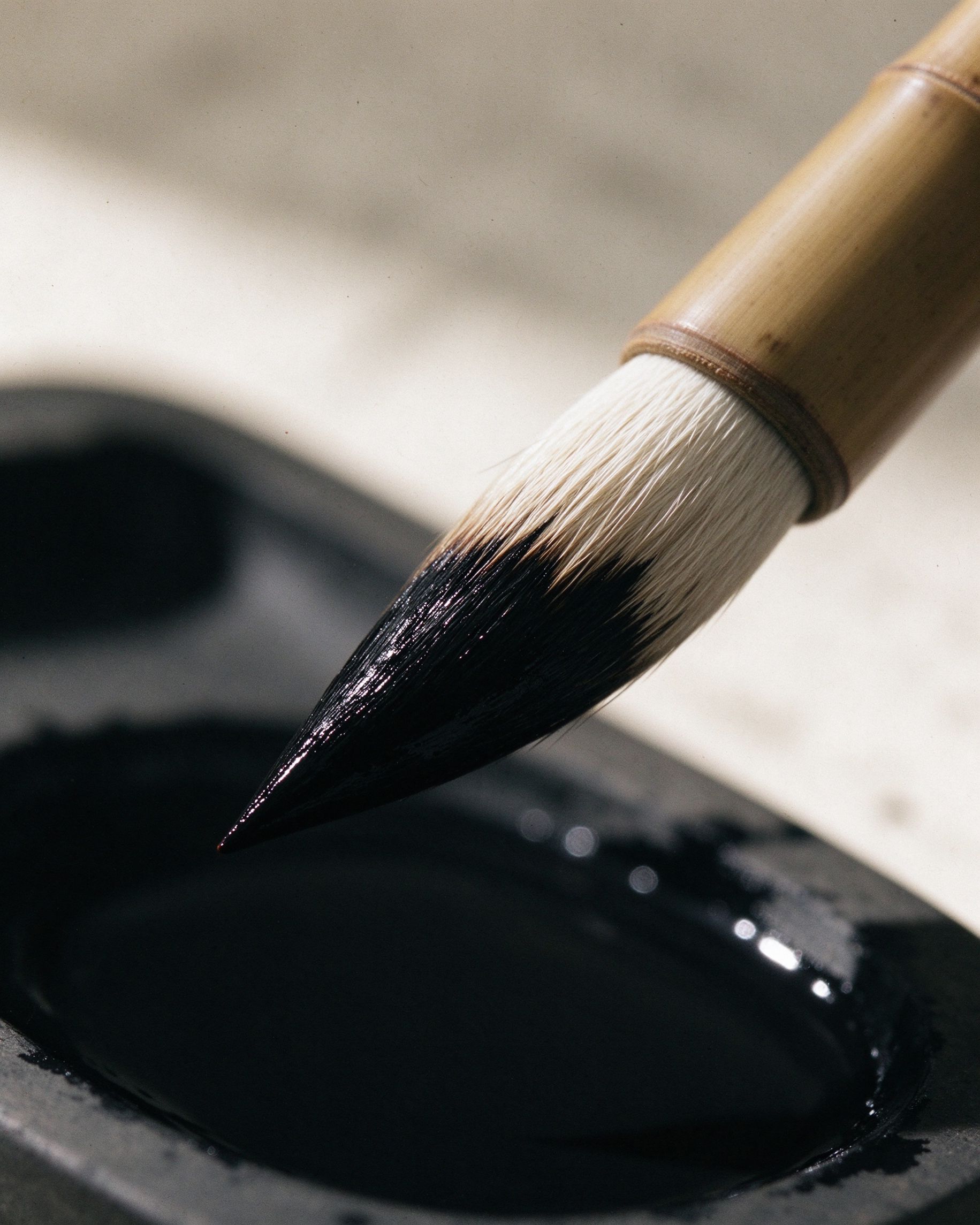
兼毫中楷 · 湖笔:羊毫为被,狼毫为柱,写一寸见方的楷书最稳。按下去有回弹,提起来收得住锋。

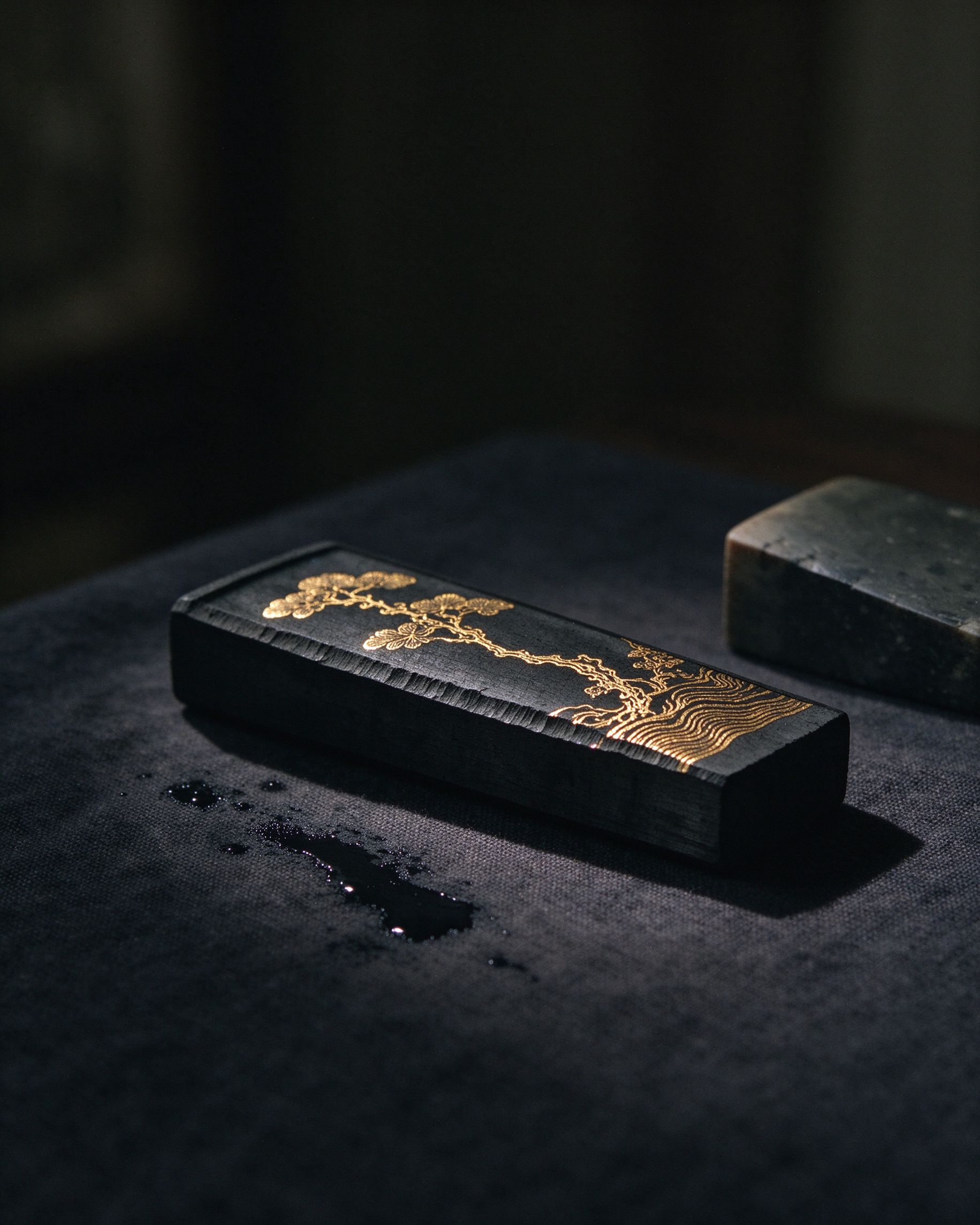
松烟写字墨 · 徽墨:墨色偏冷,写小字层次清楚。磨墨时水要少加、慢慢来,墨才不浮在砚面上。

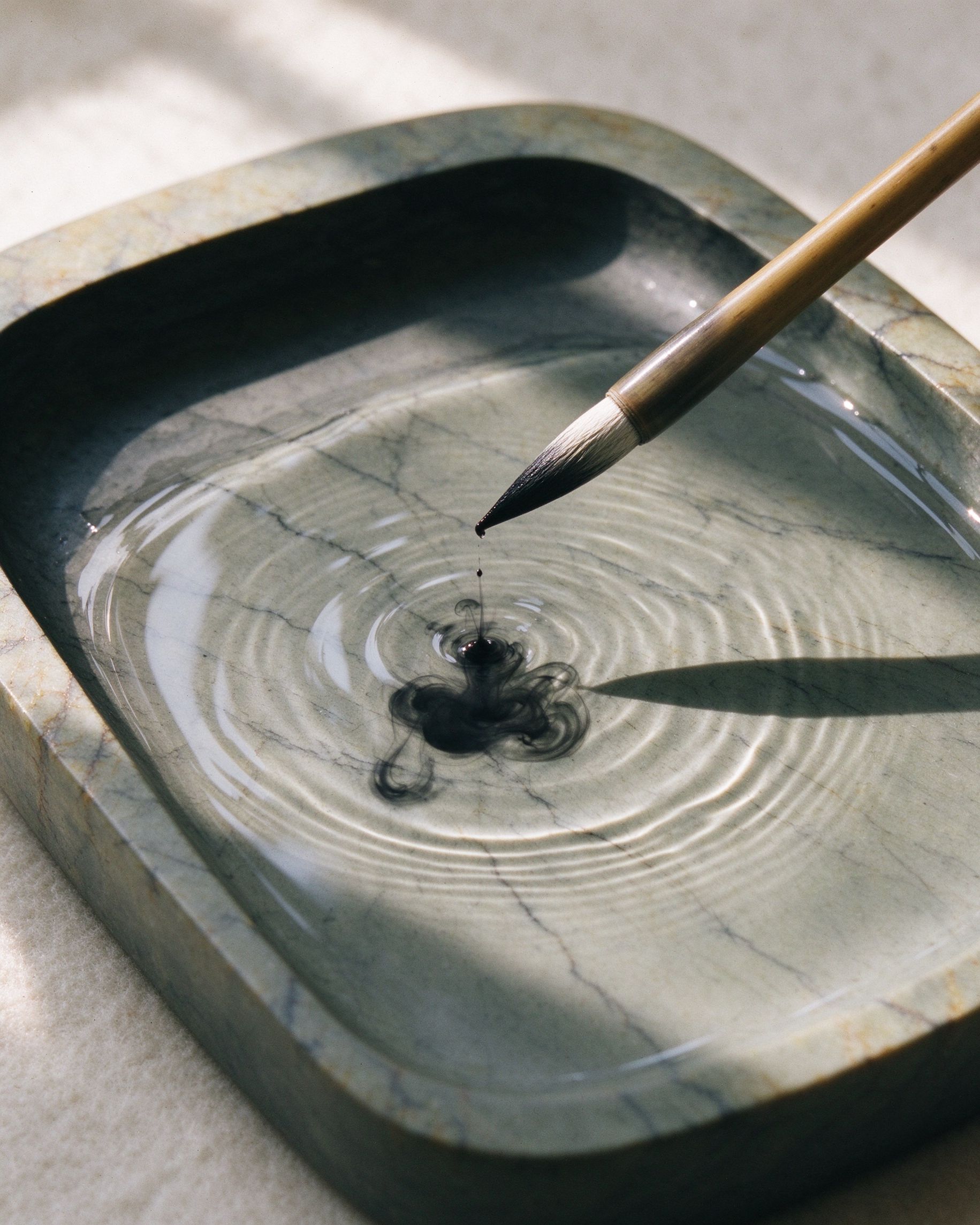
眉纹砚 · 歙砚:石纹像水面细波,发墨细而不滞笔。砚池留得浅,冲洗省事,也看得见墨的浓淡。

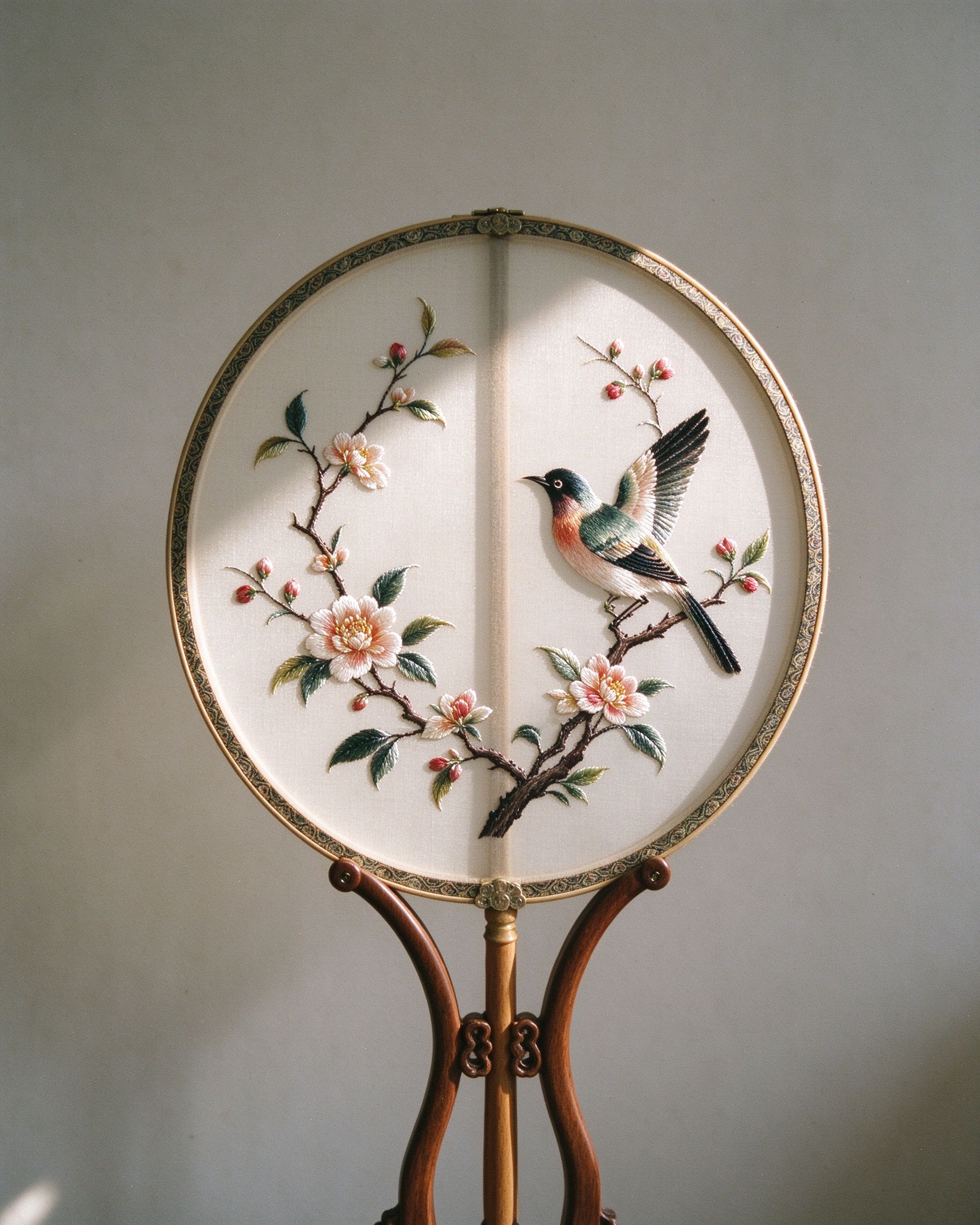
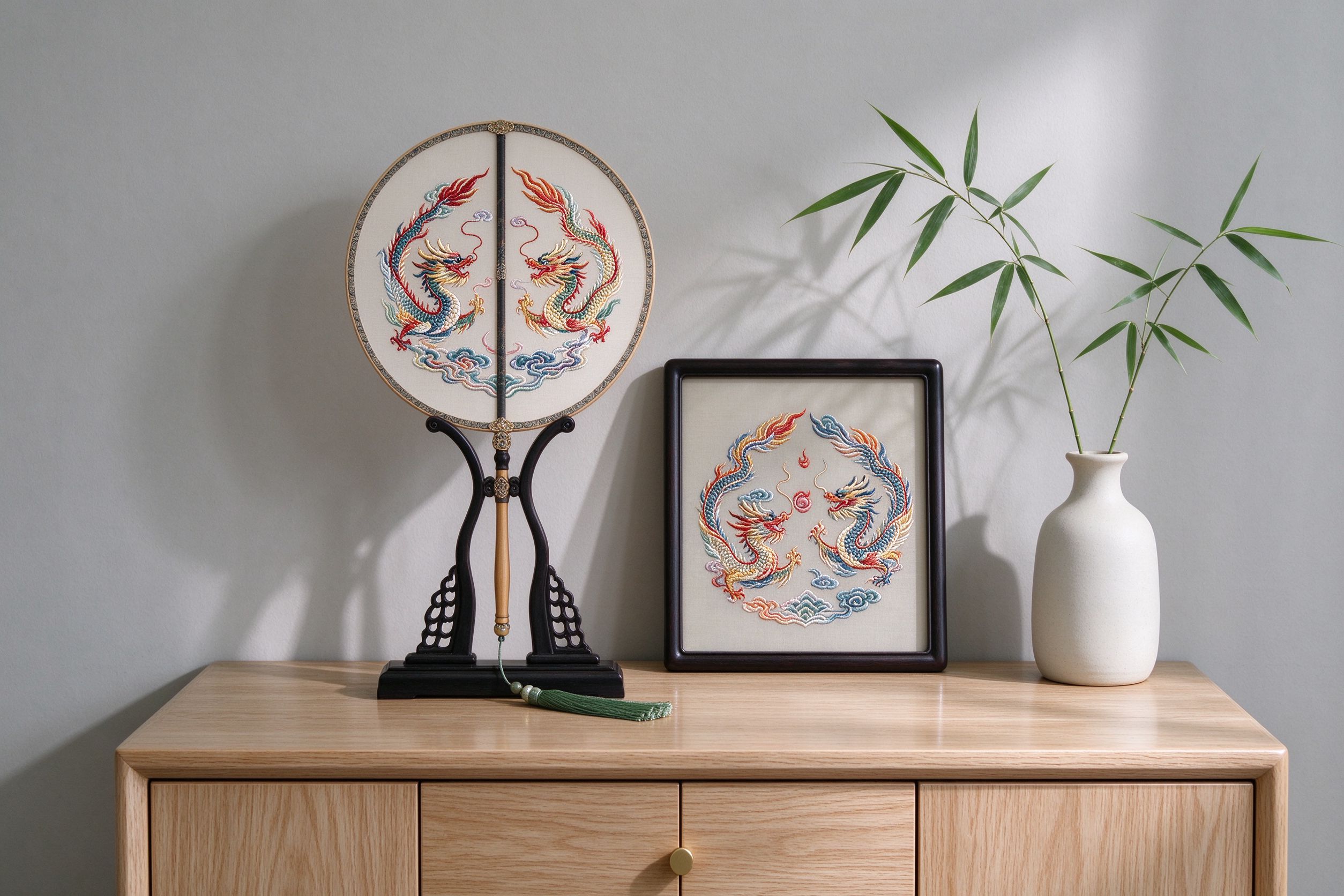
双面绣团扇 · 苏绣:一针两面,正反图案相同,针脚全部藏起。转动扇面时,不露线头。

4. 结语

慢一点看。

本站内容会持续补充新的产区走访与工序记录。若你在做相关的学习、教学、田野记录或设计,欢迎从联系页面找到我们。

1. Site introduction

Oriental Craft Heritage

Paper and ink, thread and reed — traces left by hands and time

This site records four basic materials of Chinese traditional craft — paper, ink, silk and bamboo — and the people who still work with them today.

We write from the paper troughs of Jingxian, the brush workshops of Huzhou, the embroidery rooms of Suzhou and the ink studios of the old Huizhou region. We write down the sequence of steps, the heat of the room, the smell of bark and glue, and the moments when work has to stop and wait. Paper has to dry on a heated wall. An ink stick has to rest in the dark. An embroidered surface is built up in layers. Bamboo has to be split thin, strip by strip. The pace of this work is not fast. It is exact.

If you are just passing by, start from any page. If you are studying, teaching or designing, we hope these notes save you a few trips.

2. Ideas behind the crafts

The logic of handmade work sits in the material: These crafts are not a fixed style. They are a way of getting along with materials. Three ideas run through every page here.

Know the material first: The strength of Xuan paper comes from the long fibers of blue sandalwood bark. The sheen of ink depends on the ratio of soot to glue. The weave of silk decides whether an embroidered surface can hold light. The age of a bamboo decides whether a strip will split. The first lesson is not technique. It is learning what the material in your hands can and cannot do.

Time is an ingredient: From bark to sheet, Xuan paper goes through soaking, steaming, beating, lifting, pressing, drying and sorting. A Hui ink stick rests for months after it is formed, so that glue and soot settle. Time here is not a cost. It is part of the recipe.

Restraint matters more than skill: Stitches are hidden on the back. The knife stops at the edge of the pattern. Ink stops just before it spreads too far. Restraint means removing every movement that is not needed and keeping only the one that is.

None of this is written on a wall. It only shows in the finished object. So when you look at a handmade piece, look first at its edges, its back, and the place where the maker stopped.

3. Pieces we record

The carousel holds five everyday objects. For each one we describe only the material and the method.

Four-foot Xuan paper · lifted by hand in Jingxian: The surface shows fine screen lines, and in the light you can see which way the fibers run. Water moves slowly in it, and the edge of a brush stroke leaves a pale ring.

Mixed-hair medium brush · Huzhou: Goat hair outside, weasel hair at the core. It is steadiest for regular script about an inch across. It springs back when pressed and holds its tip when lifted.

Pine-soot writing ink · Huizhou: The tone reads cool and keeps small characters clear. Add water a little at a time as you grind, and the ink will not float on the stone.

Eyebrow-grain inkstone · She: The grain runs like small ripples on water. Ink grinds fine without dragging the brush. The pool is kept shallow, which makes rinsing easy and shows the depth of the ink.

Double-sided embroidered fan · Suzhou: One needle, two faces. Both sides carry the same pattern and every stitch is hidden. Turn the fan and no thread ends show.

4. Closing

Take your time here.

We keep adding new field visits and process notes. If you are studying, teaching, doing field notes or designing around these crafts, you can reach us from the contact page.

配图 · Illustrations

受著作权相关法规限制,本站未使用第三方实拍照片。本图为AI参照传统实物形制1:1复原绘制,仅作文化示意,并非真实藏品实拍。

Due to copyright regulations, no third-party photographs are used on this site. This image is AI-generated, faithfully reconstructed based on the traditional craft form for cultural illustration only. It is not a photograph of a real artifact.

首页 · 首屏主视觉
图 01首页 · 首屏主视觉AI 复原示意图 · AI reconstruction点击查看提示词 · prompt
首页 · 理念一「先懂材料」
图 02首页 · 理念一「先懂材料」AI 复原示意图 · AI reconstruction点击查看提示词 · prompt
首页 · 理念二「时间是原料」
图 03首页 · 理念二「时间是原料」AI 复原示意图 · AI reconstruction点击查看提示词 · prompt
首页 · 理念三「分寸」
图 04首页 · 理念三「分寸」AI 复原示意图 · AI reconstruction点击查看提示词 · prompt
首页 · 轮播一「四尺宣」
图 05首页 · 轮播一「四尺宣」AI 复原示意图 · AI reconstruction点击查看提示词 · prompt
首页 · 轮播二「湖笔」
图 06首页 · 轮播二「湖笔」AI 复原示意图 · AI reconstruction点击查看提示词 · prompt
首页 · 轮播三「徽墨」
图 07首页 · 轮播三「徽墨」AI 复原示意图 · AI reconstruction点击查看提示词 · prompt
首页 · 轮播四「歙砚」
图 08首页 · 轮播四「歙砚」AI 复原示意图 · AI reconstruction点击查看提示词 · prompt
首页 · 轮播五「苏绣团扇」
图 09首页 · 轮播五「苏绣团扇」AI 复原示意图 · AI reconstruction点击查看提示词 · prompt

权威档案 · Official archives

想要查阅官方档案、馆藏原始记载,可点击下方链接跳转至国家级权威平台阅读。

以上链接为国家平台的项目档案页,页内不设个人联系方式;站点侧栏的公众号二维码属机构自有渠道,非个人账号。

三

文房专区:文房四宝The Scholar's Table

/studio-study

1. 页面导语

文房四宝

笔、墨、纸、砚,书房里最安静的四件工具

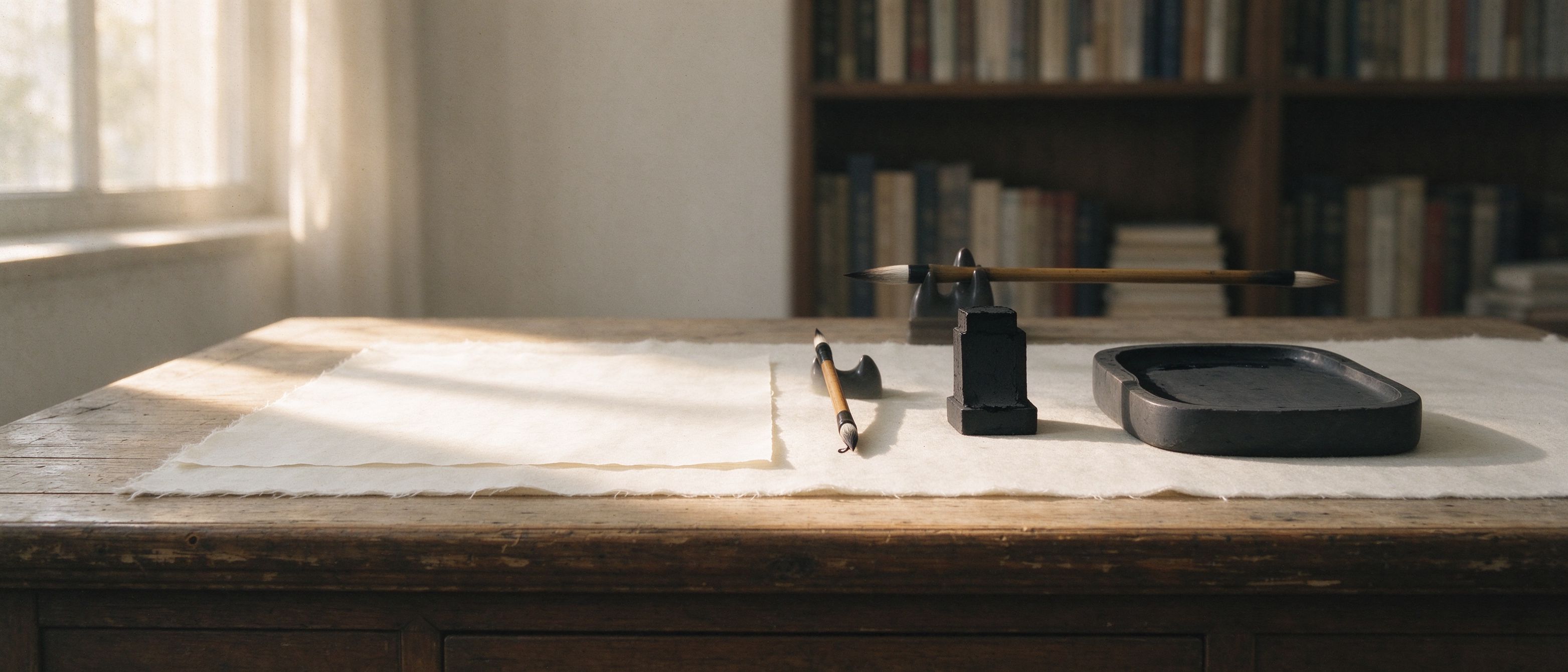
文房四宝不是四件东西的统称,而是一套配合关系:纸要能吃住墨,墨要能在砚上磨开,笔要能蓄住墨又送得出去。四件器物互相挑剔,也互相成全。缺一件,另外三件都发挥不出来。

这一页按“纸、笔、墨、砚”的顺序讲,每一件都分三层:它从哪里来,它怎么做成,它在中国人的心里意味着什么。

2. 宣纸

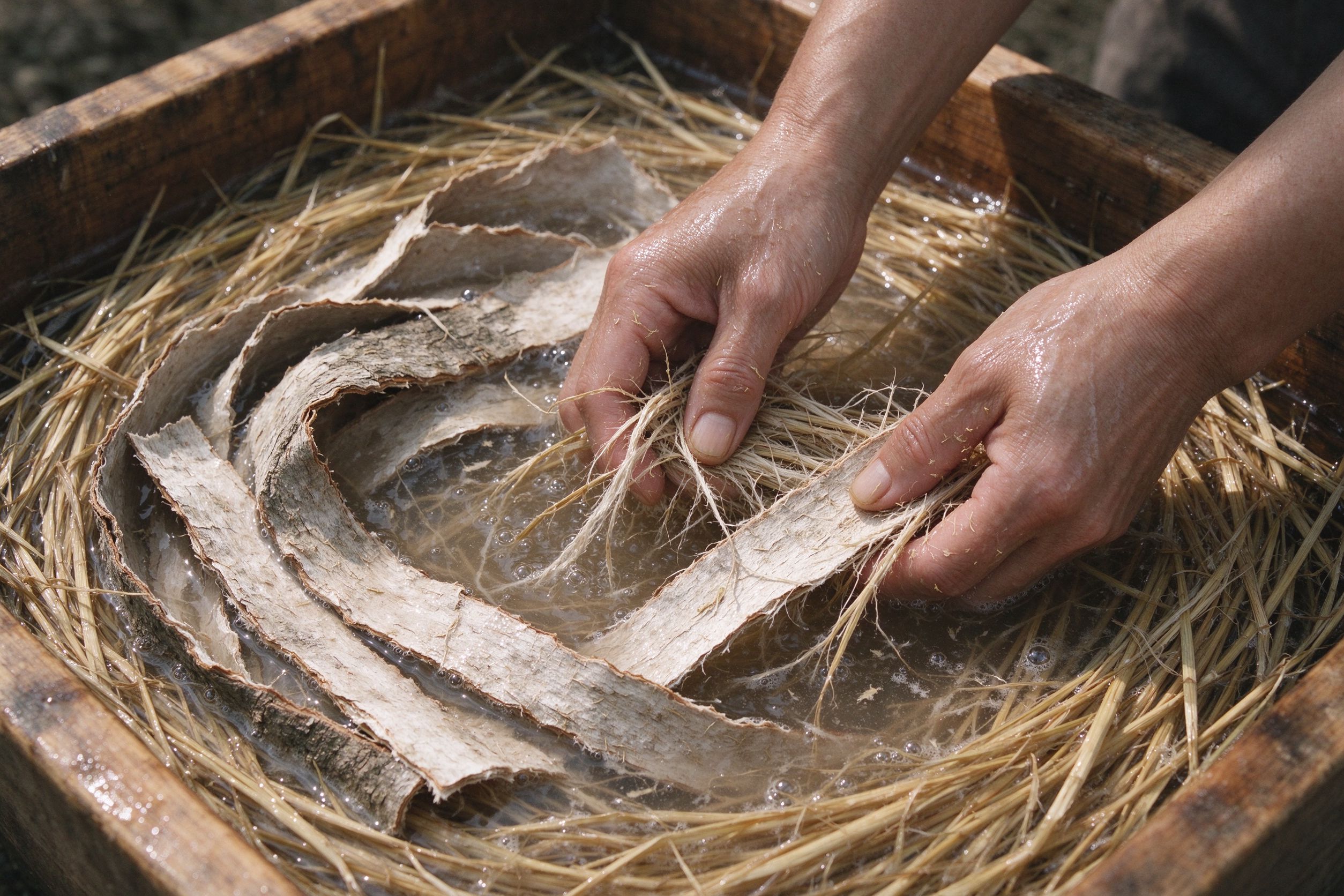
历史渊源:宣纸之名来自唐代的宣州。泾县一带山多水清,青檀树皮提供长纤维,沙田稻草提供柔韧,两样原料配在一起,才有了润墨而不易洇的纸性。宋元以后,书画用纸逐渐以宣纸为正宗,产地至今仍集中在皖南山区。

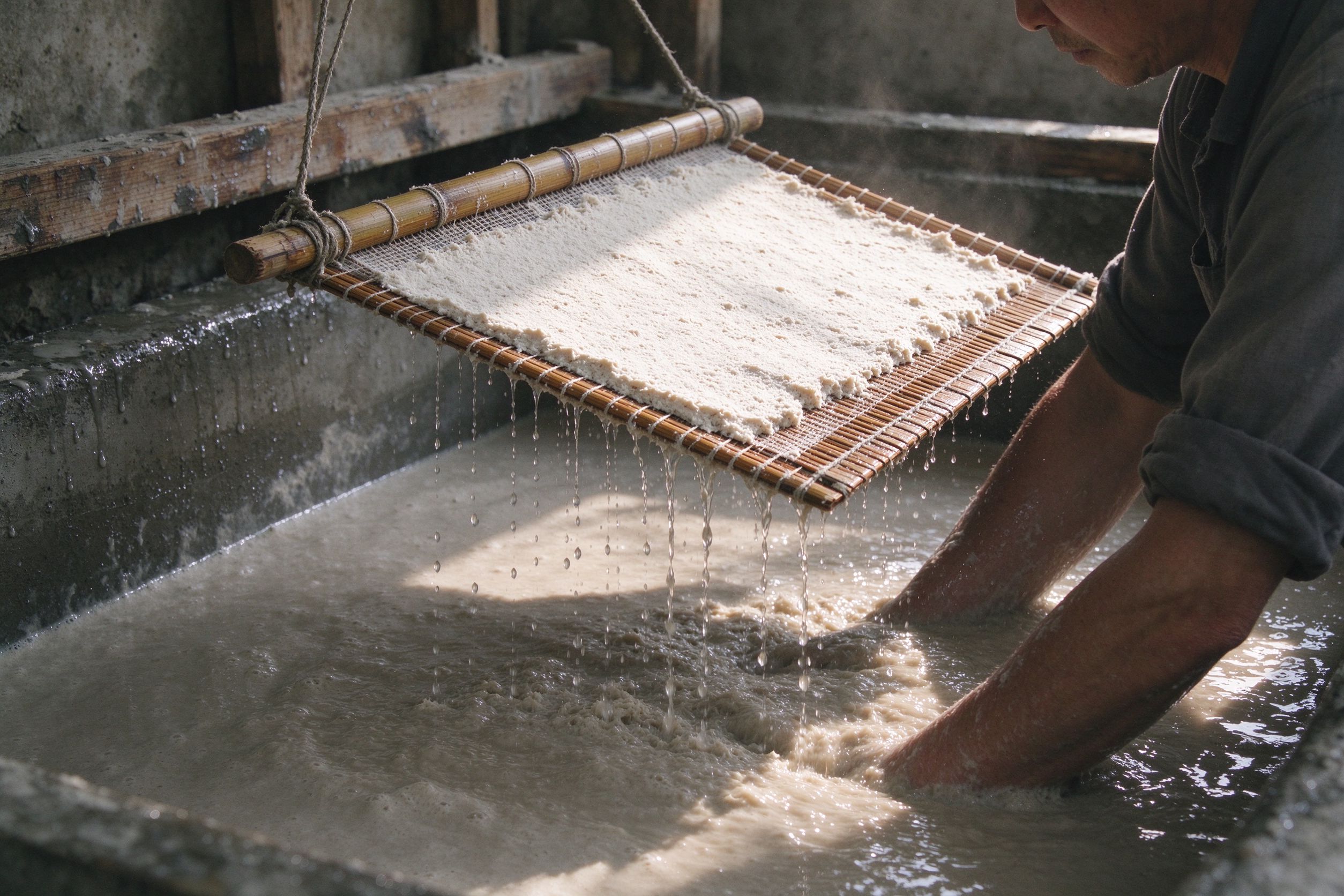
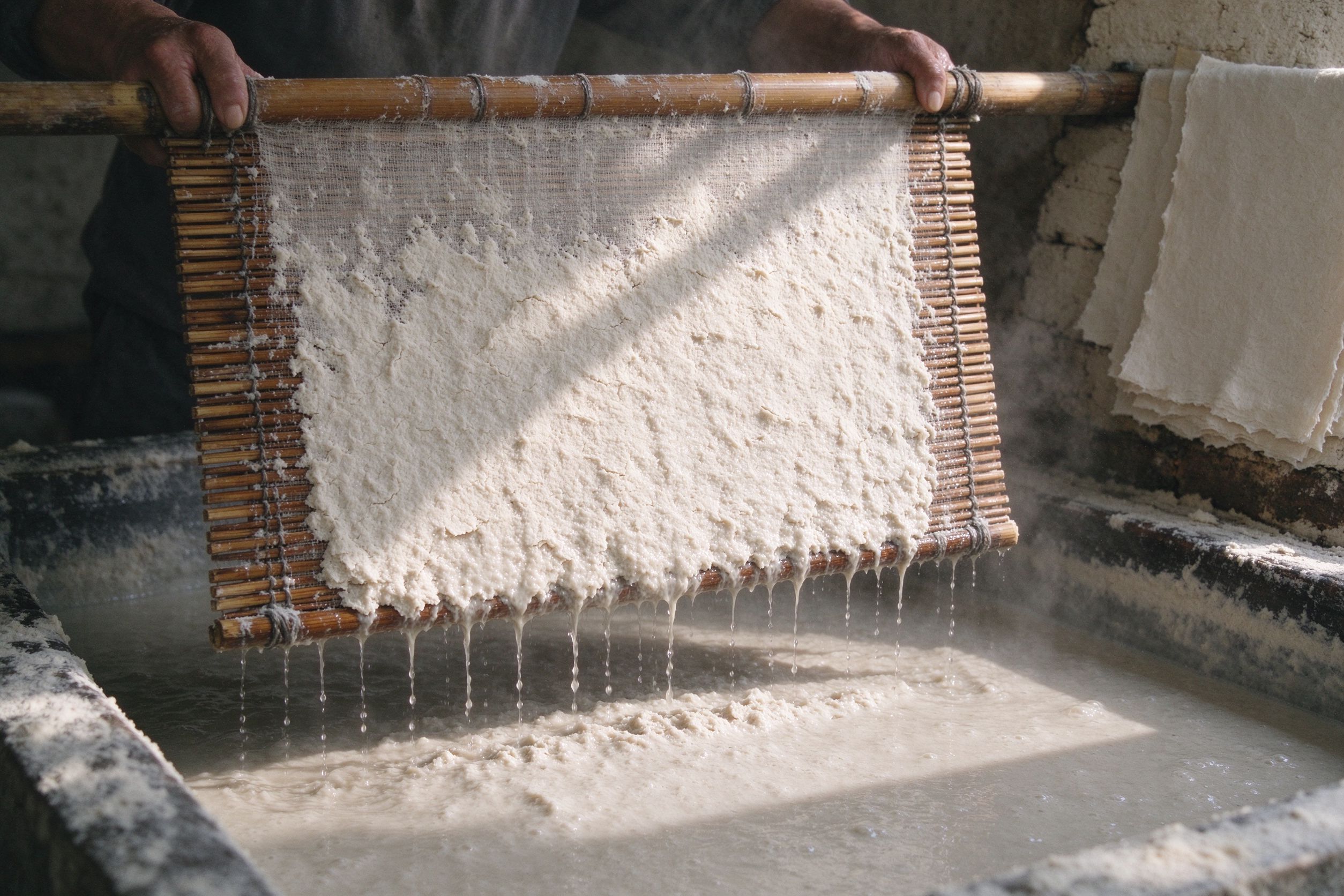
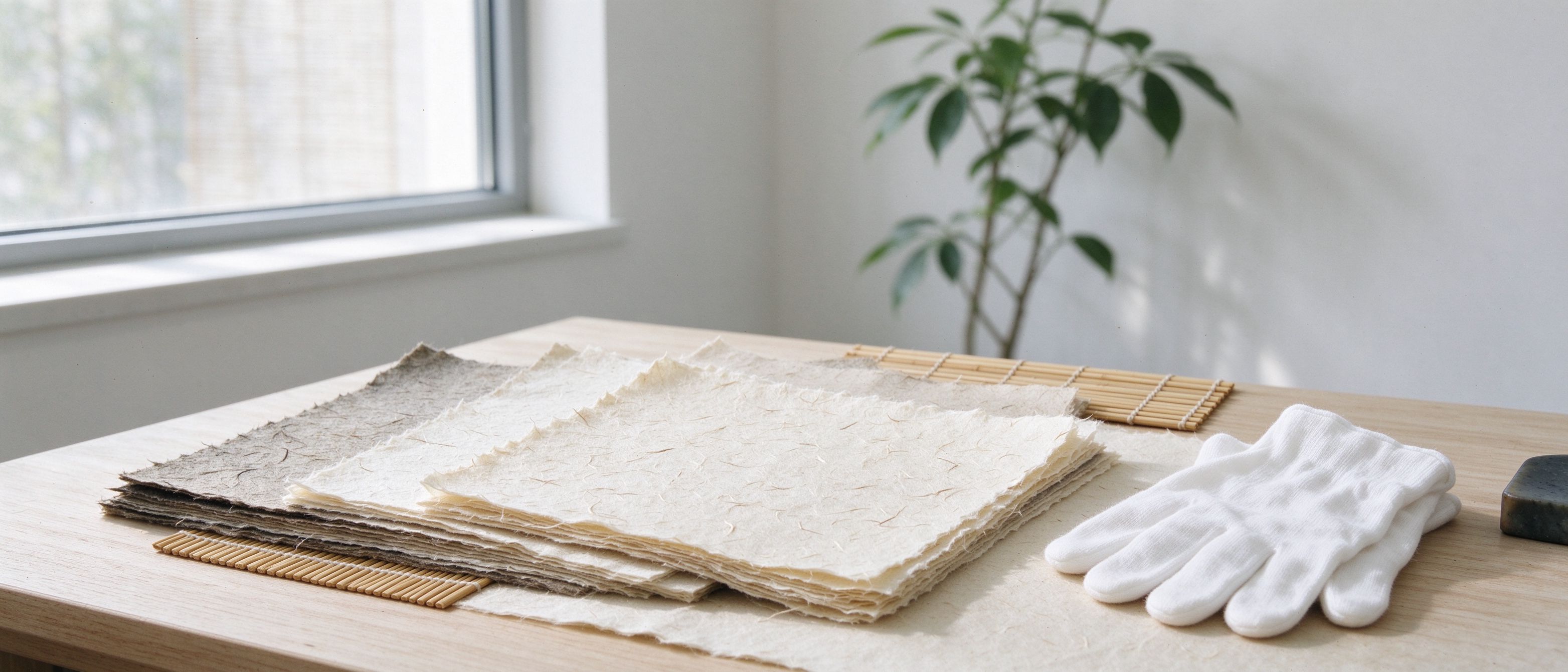
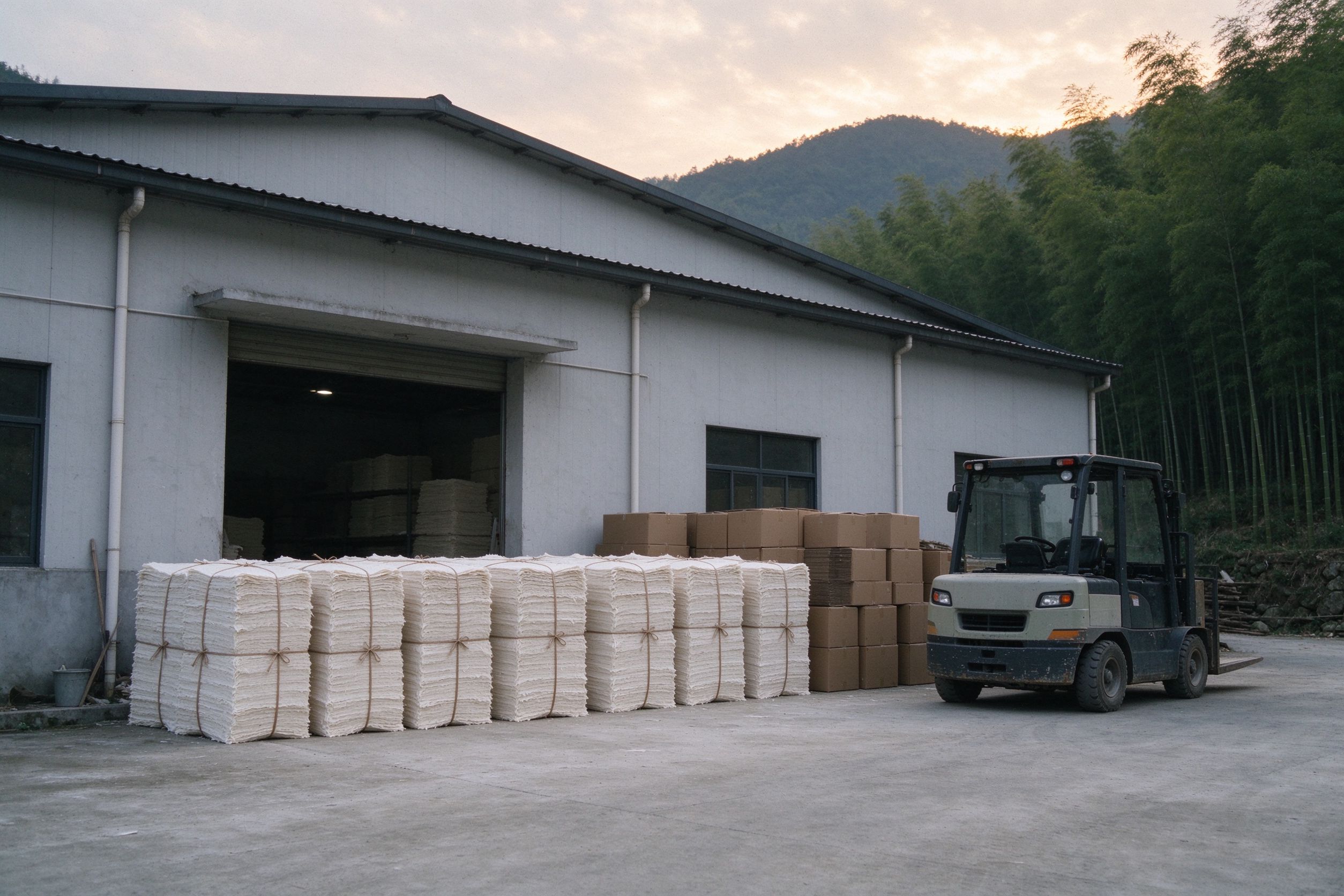
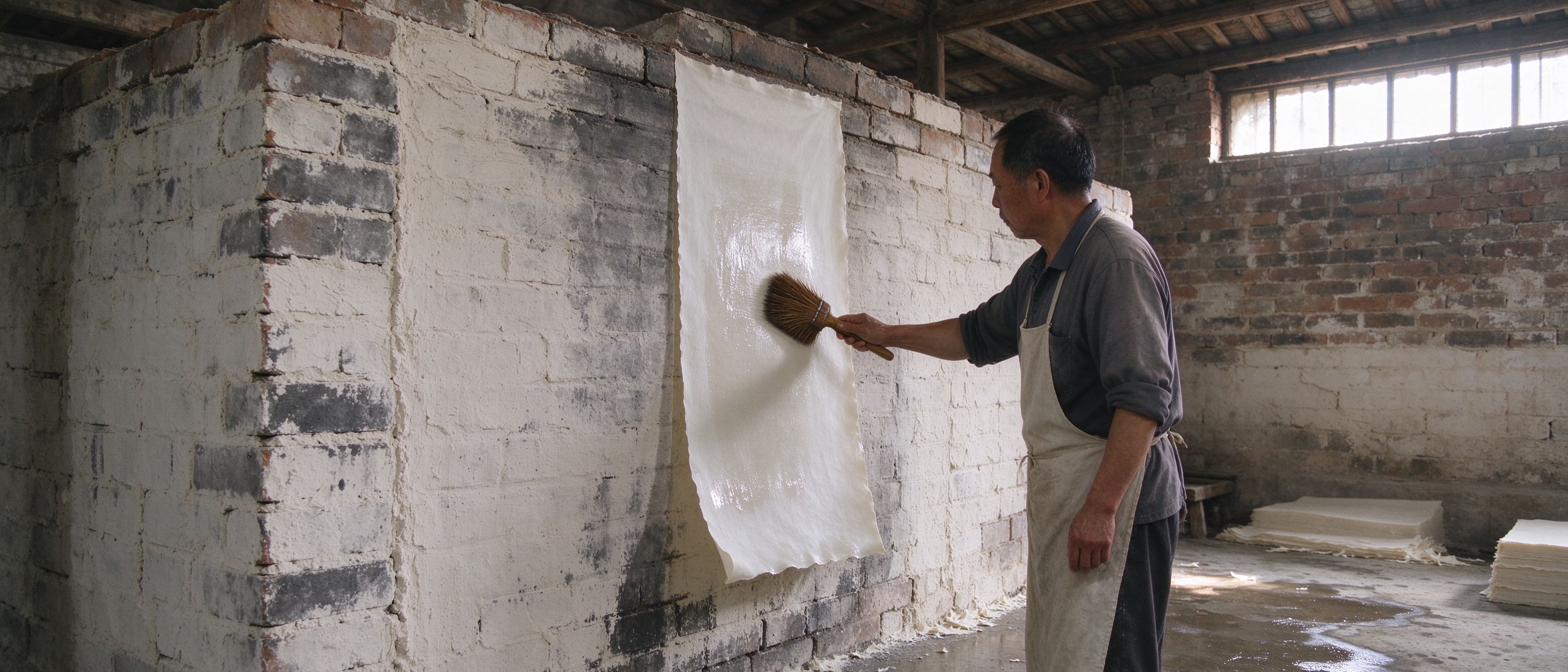
传统工艺:从树皮到成纸,前后要一年左右:选皮、浸泡、蒸煮、去杂、打浆、配浆、捞纸、压榨、烘干、拣选。最看功夫的是捞纸——两张帘同时入槽,抬手要平,纸的厚薄全在腰和腕上;厚一分则涩,薄一分则漏。烘干的纸贴在焙墙上,纸面才平整不起皱。

文化寓意:宣纸讲“生”与“熟”:生纸吸水快,适合写意;熟纸加矾,适合工笔与小楷。纸上的留白从来不是空的,那是给墨留的位置。中国人说“纸寿千年”,说的既是纸的耐久,也是一种希望文字留得久一点的心愿。

3. 毛笔

历史渊源:笔的形制在战国与秦代已经出现,蒙恬造笔是流传最广的说法。到明清,浙江湖州善琏镇的笔工以选料精、分工细著称,“湖笔”由此成名,一支笔往往要经过几个师傅的手。

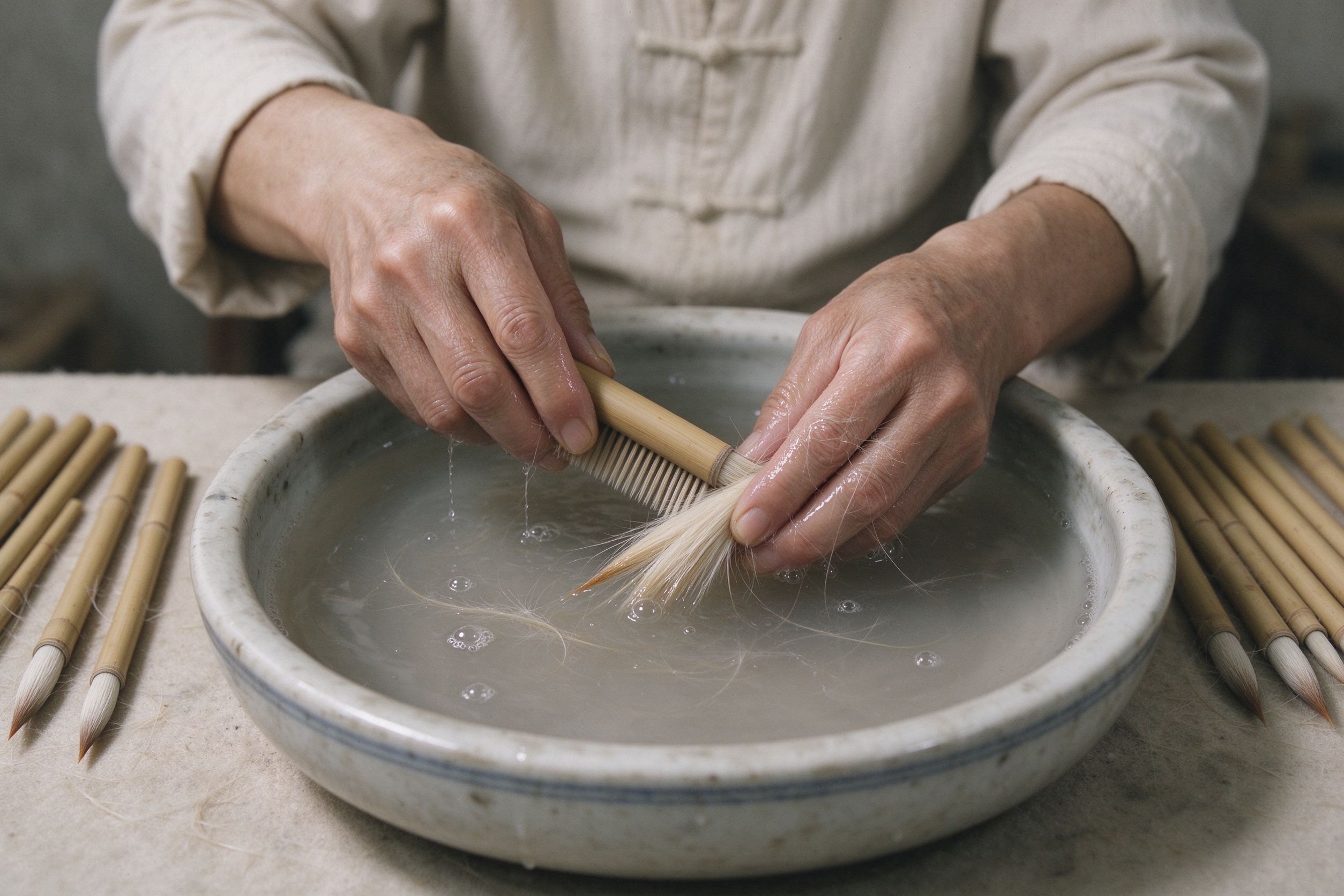
传统工艺:一支湖笔要走择料、水盆、结头、装套、择笔、刻字几道大工序。水盆一道全在手感:浸毛、梳毛、齐毛、卷笔柱、覆被毛,一根杂毛都要挑出来。所谓“尖、齐、圆、健”,说的是锋颖要尖、毛锋要齐、笔肚要圆、按下去要有弹性。

文化寓意:笔有四德,也像做人的四条标准。笔用久了会秃,秃笔多半不舍得扔,留在案头当个念想——这是读书人对工具的感情,也是手作器物少见的“用旧了更亲”。

4. 徽墨

历史渊源:徽墨产在古徽州,唐代已有制墨名家,南唐李廷珪一支被后世视为徽墨的源头。宋代以后徽州墨肆林立,墨不只是书写用品,也成了文人案头的收藏之物。

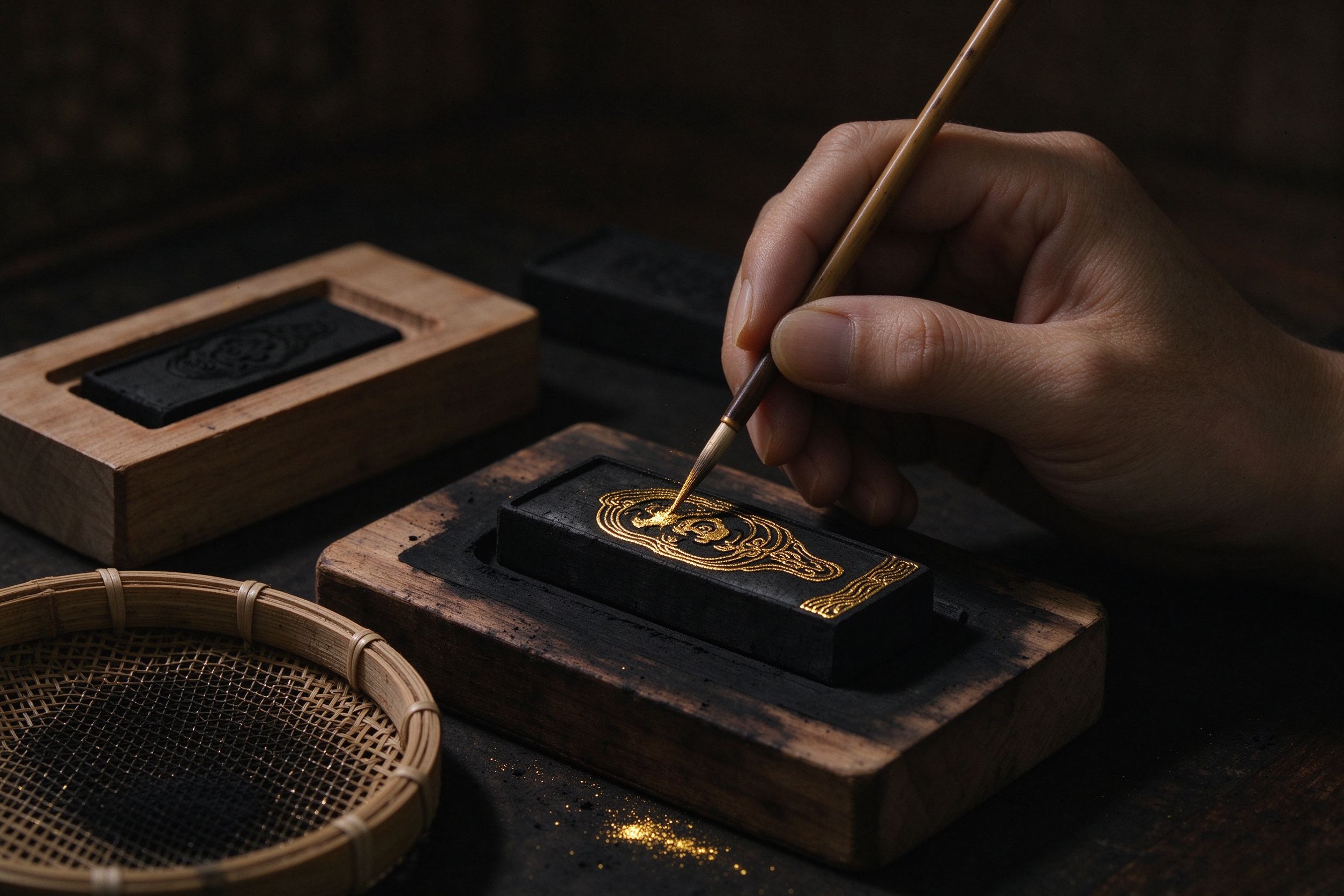
传统工艺:炼烟、筛烟、和胶、杵捣、成型、晾墨、锉边、描金。烟分松烟与油烟:松烟偏冷黑,油烟偏暖亮。和胶的比例决定墨的硬度与光泽;杵捣要让烟与胶彻底融在一起,捣得够次数,墨才磨得开、下笔才不滞。

文化寓意:墨分五色——焦、浓、重、淡、清。同一块墨,靠水的多少调出不同层次,是中国人对“一生多”的理解。磨墨的过程也是一种预备:手在转,心在等,等墨色和墨绪都安定下来。

5. 砚台

历史渊源:砚的出现早于纸。汉代已有石砚,唐代以后,端砚、歙砚、洮砚、红丝砚被并称名砚。端砚出自广东肇庆端溪,歙砚出自安徽歙县龙尾山一带,两地都以石质细润著称。

传统工艺:砚的功夫一半在选石,一半在开池。选石要看细、看润、看有没有杂质与硬钉;开池要留出墨堂与墨池,边缘顺手,不挂墨。好砚发墨如油,磨起来不出响声、不滞笔。

文化寓意:砚最耐久,一方砚可以陪几代人。砚背与砚侧常刻铭文,写的是用砚人的自我提醒。书房里最沉默的器物,往往装着最长的时间。

6. 一次书写之前的准备

  1. 把纸铺平,用镇纸压住四角,先看清纸的吸水速度,决定落笔的轻重。
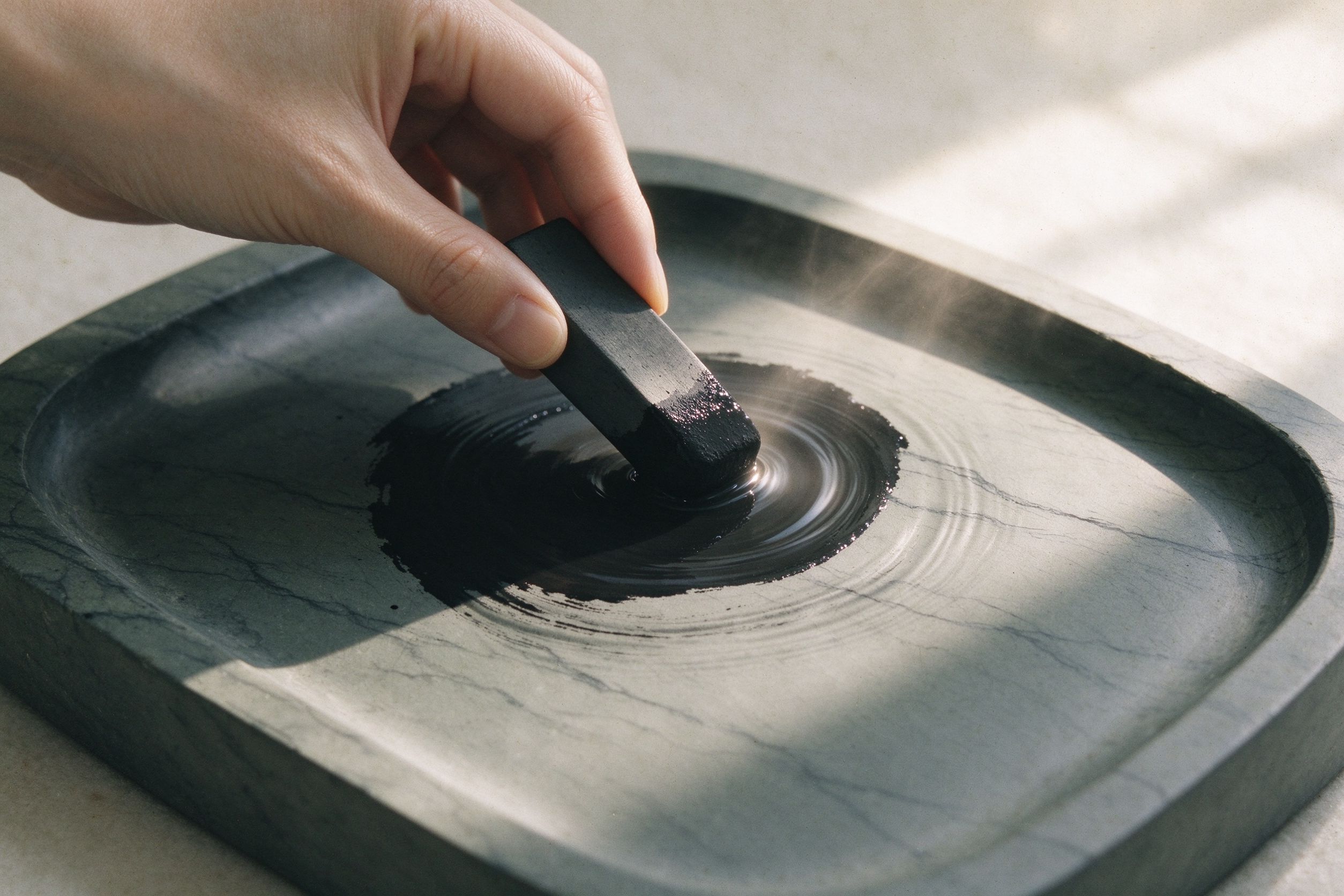
  2. 砚池里少加清水,执墨顺时针慢磨,磨到墨面起细密光晕再停。
  3. 笔尖在砚边理顺,让锋颖聚成一点,不要直接用干笔蘸墨。
  4. 落笔前在废纸上试一次,看纸、墨、笔三者的配合是否需要微调。

这四步不超过五分钟,却是文房器物真正被使用的方式——它们的价值不在陈列,而在每天被拿起的那一小会儿。

1. Page introduction

The Four Treasures of the Study

Brush, ink, paper and stone — the four quietest tools on a Chinese desk

The four treasures are not four separate objects. They are a set of relationships. Paper has to hold ink without letting it spread. Ink has to grind open on the stone. The brush has to store ink and release it again. Each one sets demands on the others, and each one makes the others work. Take one away and the other three stop performing.

This page follows the sequence paper, brush, ink and stone. Each part has three layers: where it comes from, how it is made, and what it has meant to the people who use it.

2. Xuan paper

Where it comes from: The name comes from Xuanzhou in the Tang dynasty. Around Jingxian the hills hold clear water. Bark of the blue sandalwood tree gives long fibers; rice straw gives softness. Together they make a sheet that holds ink without letting it bleed. From the Song and Yuan dynasties on, Xuan paper became the standard for painting and calligraphy, and it is still made in the same mountain valleys.

How it is made: From bark to finished sheet takes about a year: bark selected, soaked, steamed, cleaned, beaten, blended, lifted, pressed, dried and sorted. Lifting is where skill shows. Two screens go into the vat together and the frame has to rise level; thickness lives in the wrists and waist. A little too thick and the sheet feels rough; a little too thin and it leaks. The wet sheet is brushed onto a heated wall so that it dries flat.

What it means: Xuan paper comes raw or sized. Raw paper drinks water quickly and suits free brushwork; sized paper, treated with alum, suits fine line work and small regular script. Empty space on the page is never really empty. It is space kept for ink. The Chinese phrase 'paper lives a thousand years' speaks both of how long the sheet lasts and of a wish that writing might last longer than the writer.

3. The brush

Where it comes from: Brushes appear in Chinese records by the Warring States and Qin periods. The best known story credits Meng Tian with their invention. By the Ming and Qing dynasties, brush makers in Shanlian, Huzhou, were known for careful selection of hair and fine division of labor, and the Hu brush took its name from there. One brush often passes through several pairs of hands.

How it is made: A Hu brush goes through hair selection, the water basin stage, binding the head, fitting the shaft, final trimming and engraving. The water basin stage is all in the fingers: hair is soaked, combed, evened, rolled into a core and covered with an outer layer, and every stray hair is picked out. Brush makers look for four qualities: a pointed tip, an even front, a round belly and good spring.

What it means: Those four qualities are often read as four standards for a person. A brush wears down with use, and a worn brush is rarely thrown away; it stays on the desk as a reminder. Few handmade objects grow closer to their owner as they wear out.

4. Hui ink

Where it comes from: Hui ink comes from the old Huizhou region. Ink makers were already known there in the Tang dynasty, and the workshop of Li Tinggui under the Southern Tang is often named as its source. From the Song dynasty on, ink studios multiplied across Huizhou, and an ink stick became something a scholar kept and collected, not only something to write with.

How it is made: Soot is refined and sifted, glue is blended in, the mix is pounded, formed, rested, trimmed and finally traced with gold. Soot comes in two kinds: pine soot reads cool and black, oil soot reads warmer and brighter. The ratio of glue to soot sets hardness and sheen. Pounding has to bring soot and glue fully together; pound it enough and the stick grinds open smoothly and the brush does not drag.

What it means: Ink is said to have five tones: burnt, dense, heavy, pale and clear. One stick, adjusted with water, gives all five. It is a Chinese way of seeing many things inside one. Grinding ink is also a form of preparation: the hand turns, the mind waits, until both the ink and the mood settle.

5. The inkstone

Where it comes from: Inkstones came before paper. Stone inkstones exist from the Han dynasty. From the Tang dynasty on, the Duan, She, Tao and red-silk stones were named together as the great inkstones. Duan stone comes from the Duan stream in Zhaoqing, Guangdong; She stone from the Longwei mountain area in She county, Anhui. Both are valued for fine, moist grain.

How it is made: Half the craft is choosing the stone, half is cutting the pool. The stone is checked for fineness, moisture and hard flaws. The pool is cut with a flat grinding surface and a shallow well, with edges that let ink gather instead of clinging. A good stone grinds ink like oil: no rasping sound, no drag on the brush.

What it means: An inkstone outlasts almost everything else on a desk and can pass through several generations. Inscriptions are often carved on its back or side, usually a line the owner wanted to keep in mind. The quietest object in the study tends to carry the longest stretch of time.

6. Before writing

  1. Lay the paper flat and weight the corners. Check how fast it drinks water before deciding how heavy to press.
  2. Put a little clean water in the stone and grind the stick slowly, clockwise, until the surface shows a fine sheen.
  3. Straighten the tip against the stone edge so the hairs gather to a point. Never dip a dry brush straight into ink.
  4. Try one stroke on scrap paper to see whether paper, ink and brush need small adjustments.

The whole routine takes five minutes. It is also the only way these objects are truly used. Their value is not in being displayed. It is in being picked up for a short while each day.
配图 · Illustrations

受著作权相关法规限制,本站未使用第三方实拍照片。本图为AI参照传统实物形制1:1复原绘制,仅作文化示意,并非真实藏品实拍。

Due to copyright regulations, no third-party photographs are used on this site. This image is AI-generated, faithfully reconstructed based on the traditional craft form for cultural illustration only. It is not a photograph of a real artifact.

文房 · 页面横幅
图 01文房 · 页面横幅AI 复原示意图 · AI reconstruction点击查看提示词 · prompt
文房 · 宣纸
图 02文房 · 宣纸AI 复原示意图 · AI reconstruction点击查看提示词 · prompt
文房 · 毛笔
图 03文房 · 毛笔AI 复原示意图 · AI reconstruction点击查看提示词 · prompt
文房 · 徽墨
图 04文房 · 徽墨AI 复原示意图 · AI reconstruction点击查看提示词 · prompt
文房 · 砚台
图 05文房 · 砚台AI 复原示意图 · AI reconstruction点击查看提示词 · prompt

权威档案 · Official archives

想要查阅官方档案、馆藏原始记载,可点击下方链接跳转至国家级权威平台阅读。

以上链接为国家平台的项目档案页,页内不设个人联系方式;站点侧栏的公众号二维码属机构自有渠道,非个人账号。

四

刺绣布艺专区Embroidery and Cloth

/embroidery

1. 页面导语

刺绣与布艺

一根线穿过布,再穿回来

重复几千次之后,图案就长在布上了。刺绣是最费时间的一种手作,也是最看得出一个人性子的手作:急的人绣不平,懒的人绣不完。

这一页分两部分。一部分是苏绣,出自绣院与织造局,讲规矩、讲针法;一部分是民间刺绣,出自灶台边的母亲与祖母,讲心愿、讲日子。两者用的都是针与线,路数却完全不同。

2. 苏绣

传承历史:苏绣以苏州为中心,与湘绣、粤绣、蜀绣并称四大名绣。宋代苏州已有“户户有绣”的说法,明清设织造局,绣工的分工越来越细。清末民初,沈寿以仿真绣引入光影与透视,让绣面第一次有了明暗过渡,绣出来的物象开始接近照片。

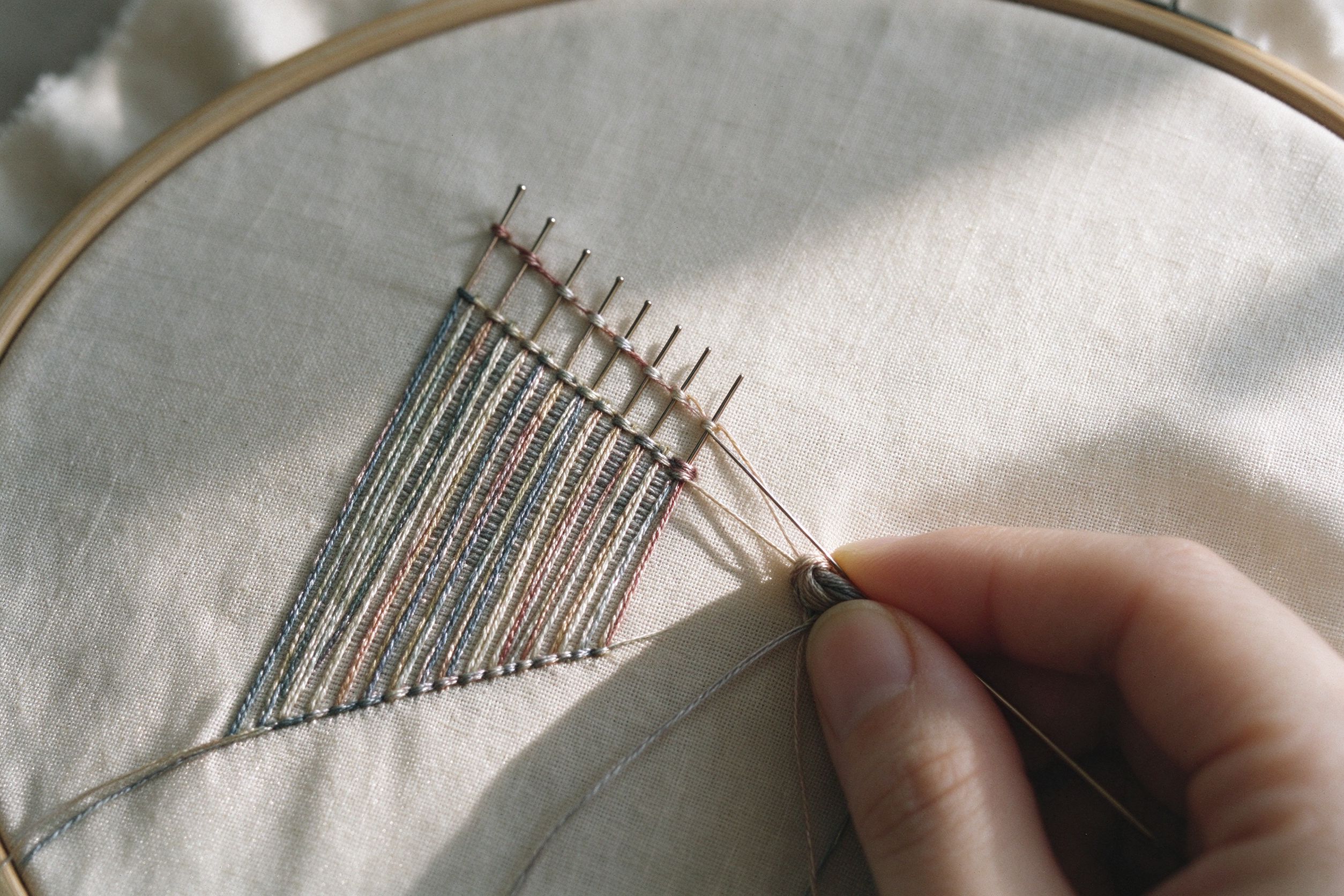
手工工序:主要工序是设计、上绷、勾稿、配线、劈丝、绣制、落绷、装裱。劈丝是最见功力的一步:一根丝线可以劈到十几分之一,绣猫须、绣鱼鳍、绣羽毛的绒感,全靠这个细度。针法有平针、套针、乱针、施针、打点等数十种,平针求匀,乱针求活,套针求过渡自然。

纹样含义:苏绣的传统题材多有出处:折枝花鸟取“花开富贵、鸟报佳音”,双鱼取“年年有余”,鸳鸯与并蒂莲取“成双”。纹样讲究成双成对、首尾呼应,忌讳孤零零一个。绣面上少留空,但空的地方要空得有意,比如一枝斜出的留白,是给风留的位置。

技艺的克制:苏绣讲“平、匀、光、顺”,成品背面几乎看不到线头。中国人把“看不出破绽”当作一种修养,功夫藏在看不见的地方。双面绣更进一步:两面同图,针脚全隐,转动时不露痕迹,是把克制做到了极处。

3. 民间刺绣

分布与来历:民间刺绣散在各地:陕西、山西的枕顶与鞋垫,贵州苗族的破线绣与锡绣,江南水乡的围裙与帐檐。它们不出自绣院,出自灯下的炕头与灶台边,图样靠口传与纸样流传,一代人照着上一代的样子改一点。

手工工序:多用棉线与土布,针法简单直接:平绣、锁绣、打籽绣、贴布绣。打籽绣用线绕针打成小疙瘩,绣面有颗粒感,耐磨也耐洗;贴布绣先剪出布片再缝上去,色块分明,做起来快。民间绣品不追求针脚细密,追求的是颜色亮、图形认得清、结实能穿。

纹样含义:石榴多子,蝙蝠纳福,鱼寓有余,牡丹寓富贵,虎头帽护小孩,五毒纹镇邪。纹样不是装饰,是说不出口的祝愿,用针线写在日常衣物上:一件常穿的上衣,一双鞋垫,一只随身的荷包,每一件都带着一句话。

为什么不对称也好看:民间绣品常常左右不完全对称,因为手不按图纸走,走的是心里的意思。这种不规整,恰恰是它比宫廷绣更亲近人的地方——你能看见那个人的手,也能看见她当时的心情。

4. 一件绣品的六道工序

  1. 起稿:把图样画在纸上,确定尺寸与配色,复杂画面先做小样。
  2. 上绷:布面绷紧在木架上,经纬拉正,松了会皱,紧了会变形。
  3. 勾稿:用淡墨或白粉把图样过到布面,线条要能盖住。
  4. 配线劈丝:按画面层次选线,把一根丝劈成需要的粗细。
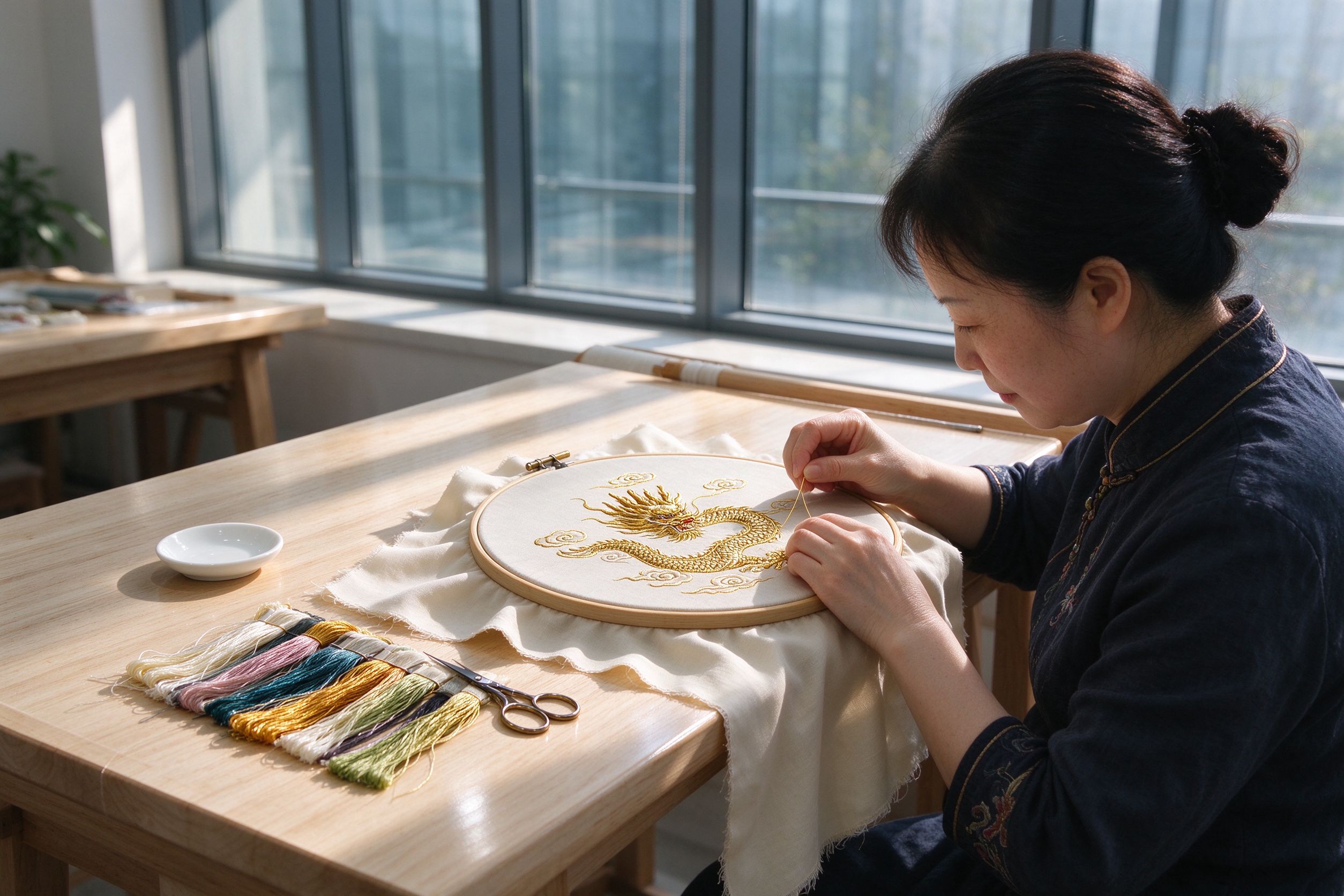
  5. 绣制:从最深的一色起针,一层层提亮,先大体后细部。
  6. 落绷修整:下绷、熨平、修去背面线头,再装裱或缝制成器。

1. Page introduction

Embroidery and Cloth

A needle goes through the cloth, and comes back

After a few thousand repeats, the pattern is no longer on the cloth. It has grown into it. Embroidery takes more time than almost any other craft, and it shows a person's temperament more clearly: a hurried hand cannot stitch evenly, a lazy one never finishes.

This page has two parts. One is Su embroidery, which came out of embroidery rooms and imperial workshops and is governed by rules and stitch types. The other is folk embroidery, which came out of kitchens and lamp-lit beds, and is governed by wishes and daily life. Both use needle and thread, and they travel very different roads.

2. Su embroidery

History: Su embroidery is centered on Suzhou and is named together with the Hunan, Guangdong and Sichuan styles as one of the four great schools. By the Song dynasty, Suzhou was already described as a place where every household embroidered; in the Ming and Qing dynasties imperial workshops were set up there and the division of work grew finer. Around the end of the Qing dynasty, Shen Shou brought light, shadow and perspective into embroidery, and a stitched surface began to show gradual changes of tone, close to a photograph.

The process: The main steps are design, stretching, tracing, selecting threads, splitting silk, stitching, un-stretching and mounting. Splitting silk is where skill shows most: one thread can be divided into more than ten strands, and the softness of a cat's whisker, a fish fin or a feather depends on that fineness. There are dozens of stitches. Flat stitch aims at evenness, random stitch at life, layered stitch at smooth transition.

Patterns and their meanings: Traditional Su subjects carry meanings. A branch of flowers with a bird stands for prosperity and good news. Two fish stand for surplus year after year. Mandarin ducks and paired lotus stand for a couple. Patterns come in pairs that answer each other, and a single isolated motif is avoided. Little space is left empty, but what is left empty is left on purpose: a bare branch of white space is room for wind.

Restraint: Su embroidery is judged by four words: flat, even, bright and smooth. On the back of a finished piece you can barely find a thread end. In Chinese craft, hiding the seams counts as a form of discipline; the skill sits where you cannot see it. Double-sided embroidery goes further: the same pattern on both faces, every stitch hidden, nothing showing when the piece is turned. It is restraint taken to its limit.

3. Folk embroidery

Where it lives: Folk embroidery is scattered across the country: pillow ends and insoles in Shaanxi and Shanxi, split-thread and tin embroidery among the Miao in Guizhou, aprons and curtain borders in the water towns of the south. It did not come from workshops. It came from heated brick beds and kitchen tables, passed on by word of mouth and paper patterns, with each generation changing a small part of the last.

The process: Cotton thread on hand-woven cloth, with simple direct stitches: flat stitch, chain stitch, seed stitch and appliqué. Seed stitch wraps thread around the needle into small knots, which gives a grainy surface that wears well and survives washing. Appliqué cuts cloth shapes first and stitches them down, so colors stay clear and work goes fast. Folk pieces do not aim at fine stitches. They aim at bright color, readable shapes and cloth that holds up.

Patterns and their meanings: Pomegranate for many children, bat for good fortune, fish for surplus, peony for prosperity, tiger hats to protect a child, the five poisons to ward off evil. These patterns are not decoration. They are wishes too plain to say out loud, written in thread on everyday pieces: a jacket worn often, a pair of insoles, a pouch kept close. Each piece carries one sentence.

Why asymmetry still works: Folk pieces are often not quite symmetrical, because the hand does not follow a drawing; it follows a thought. That irregularity is exactly what makes them warmer than palace work. You can see the hand, and you can see how the maker felt that day.
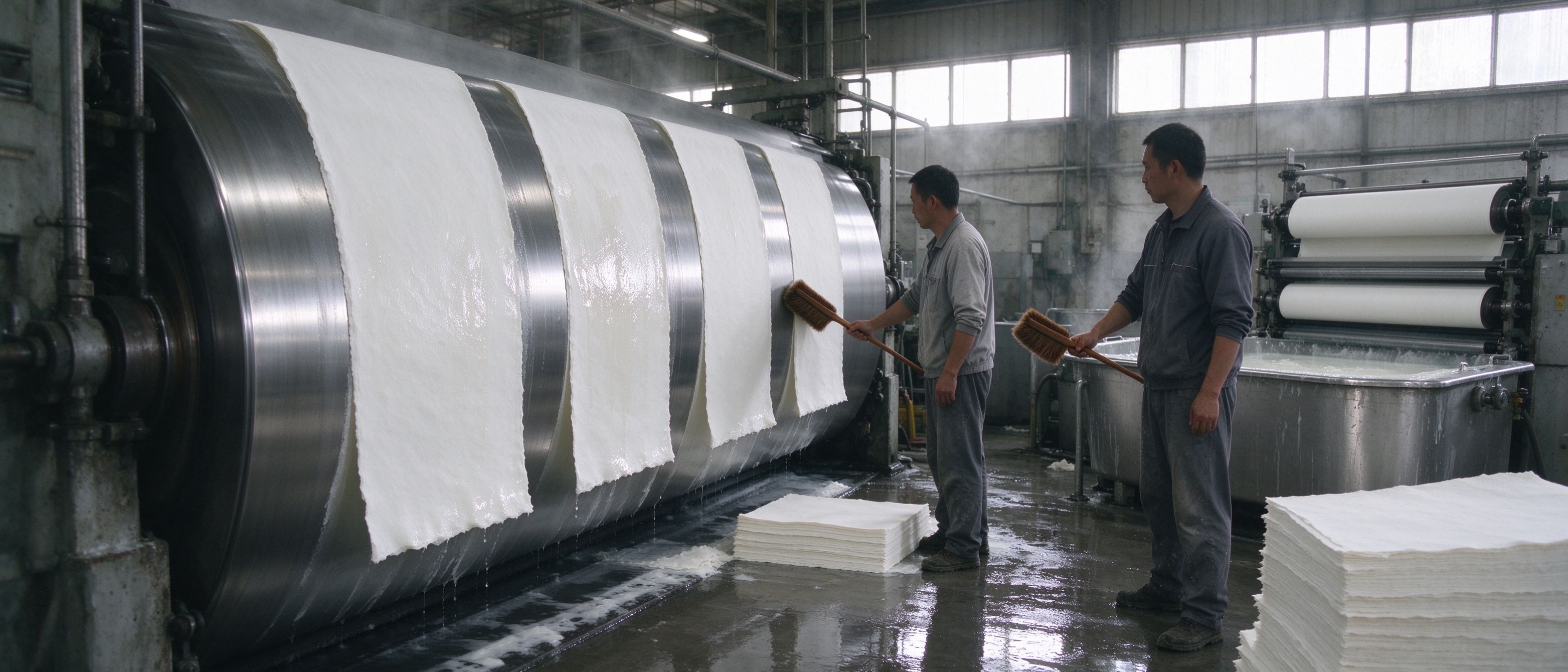
4. Six steps of an embroidered piece

  1. Draw the design on paper, fix the size and colors, and make a small sample for complex scenes.
  2. Stretch the cloth on a frame, straighten the weave. Too loose and it wrinkles; too tight and it distorts.
  3. Trace the design onto the cloth in pale ink or white powder, with lines the stitches can cover.
  4. Choose threads by layer and split each thread to the thickness the image needs.
  5. Stitch from the darkest tone upward, building light in layers, broad shapes before detail.
  6. Take the piece off the frame, press it, trim the threads at the back, then mount or sew it into an object.

配图 · Illustrations

受著作权相关法规限制,本站未使用第三方实拍照片。本图为AI参照传统实物形制1:1复原绘制,仅作文化示意,并非真实藏品实拍。

Due to copyright regulations, no third-party photographs are used on this site. This image is AI-generated, faithfully reconstructed based on the traditional craft form for cultural illustration only. It is not a photograph of a real artifact.

刺绣 · 页面横幅
图 01刺绣 · 页面横幅AI 复原示意图 · AI reconstruction点击查看提示词 · prompt
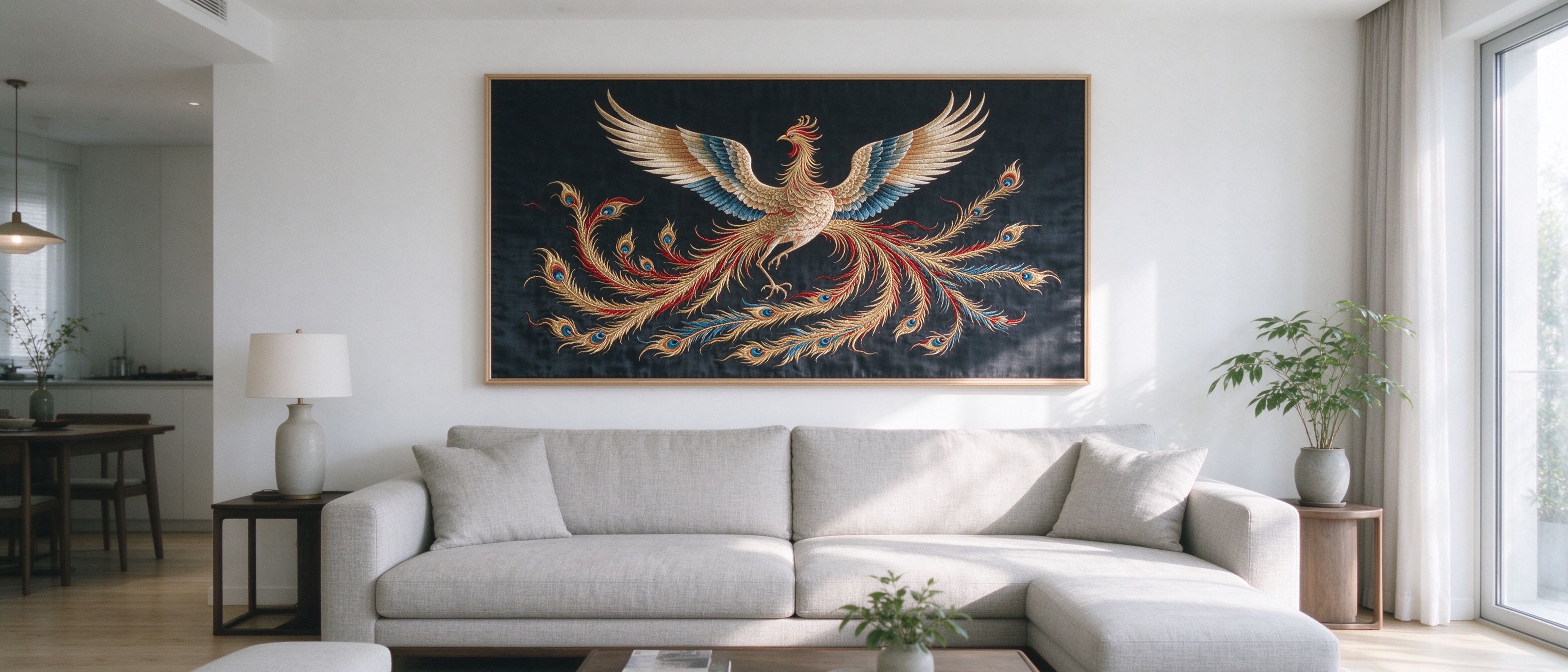
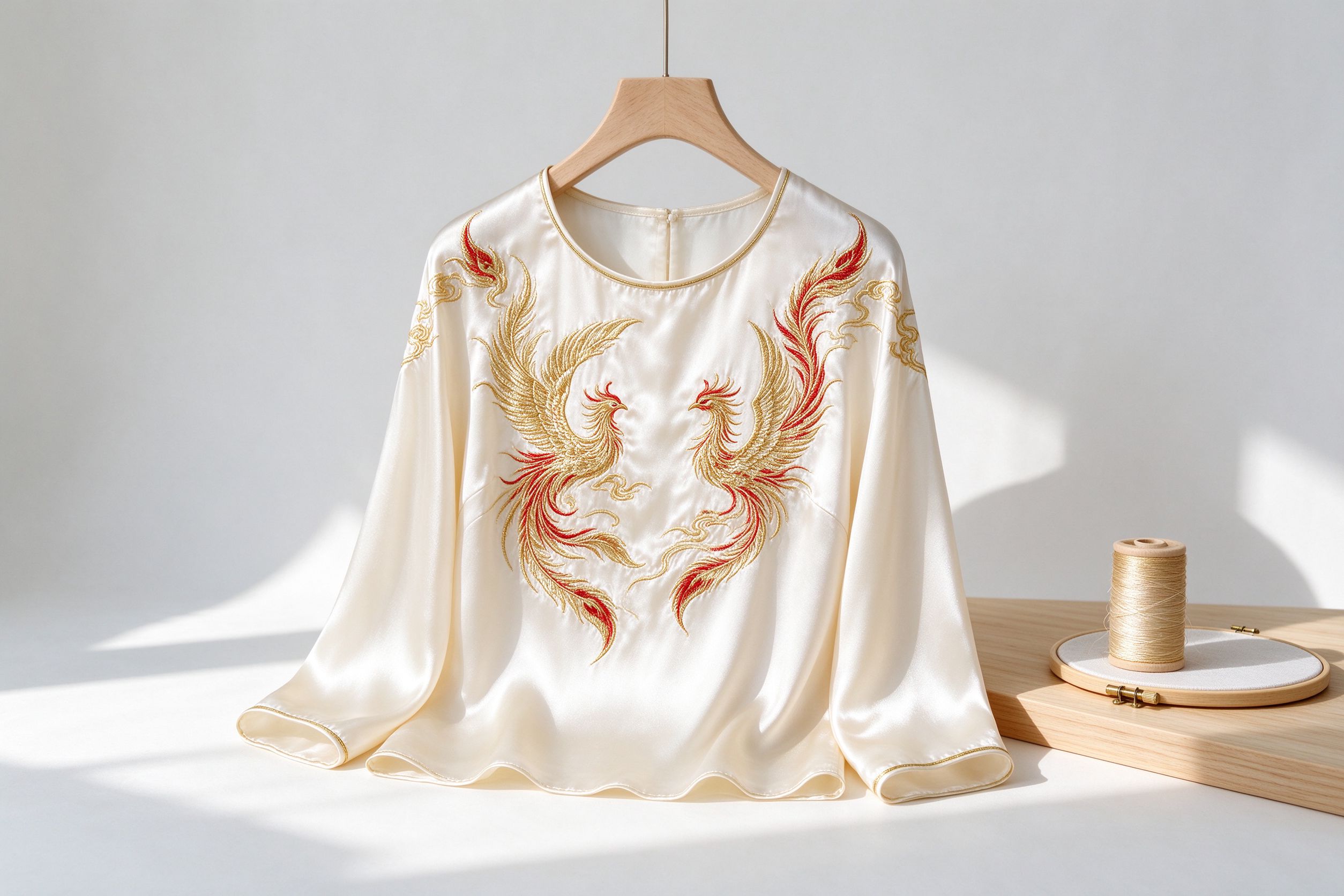
刺绣 · 绣在衣服上
图 02刺绣 · 绣在衣服上AI 复原示意图 · AI reconstruction点击查看提示词 · prompt
刺绣 · 运针
图 03刺绣 · 运针AI 复原示意图 · AI reconstruction点击查看提示词 · prompt
刺绣 · 摆在玄关
图 04刺绣 · 摆在玄关AI 复原示意图 · AI reconstruction点击查看提示词 · prompt
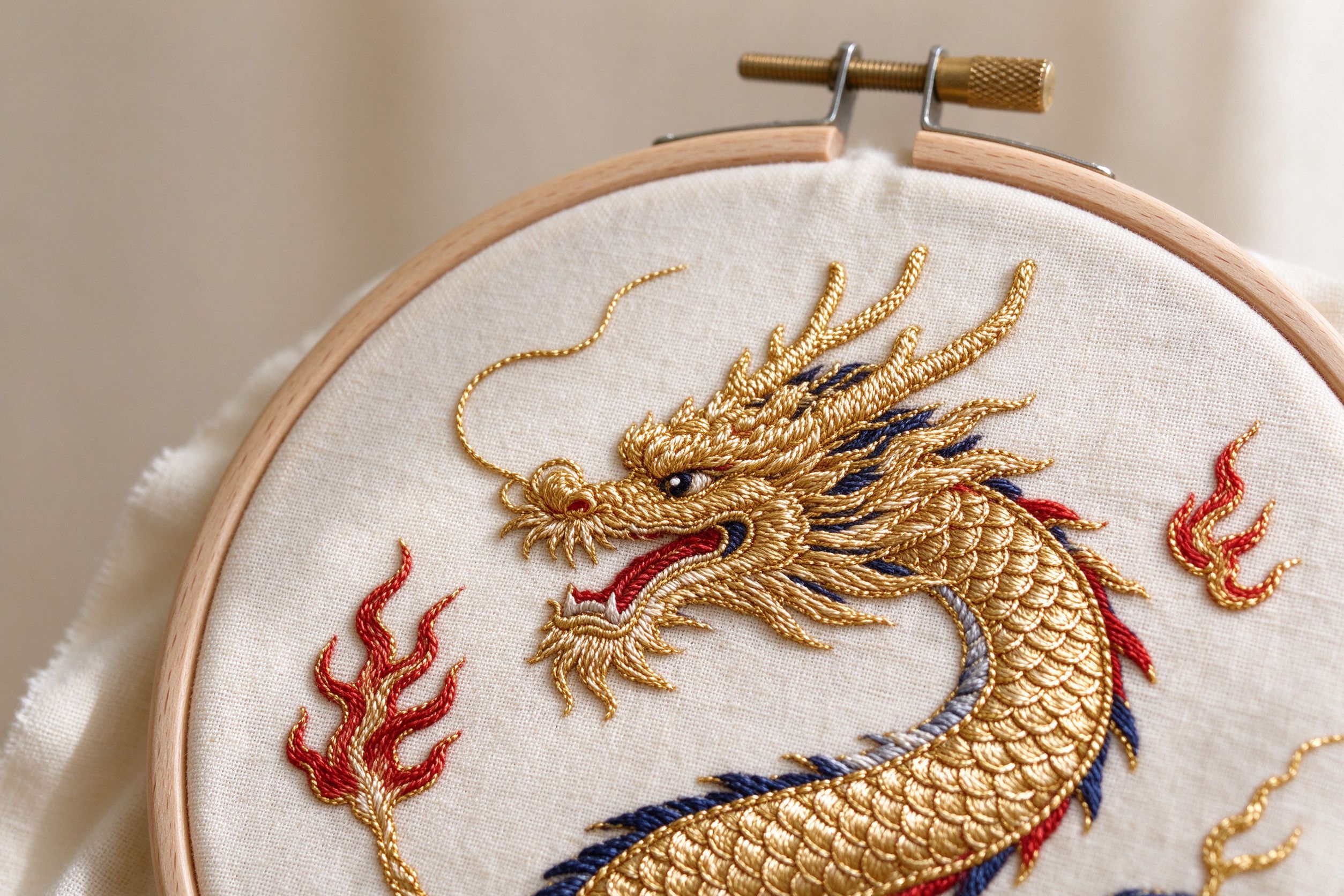
刺绣 · 龙纹近看
图 05刺绣 · 龙纹近看AI 复原示意图 · AI reconstruction点击查看提示词 · prompt

权威档案 · Official archives

想要查阅官方档案、馆藏原始记载,可点击下方链接跳转至国家级权威平台阅读。

以上链接为国家平台的项目档案页,页内不设个人联系方式;站点侧栏的公众号二维码属机构自有渠道,非个人账号。

五

剪纸专区Paper Cutting

/paper-cutting

1. 页面导语

剪纸

一张红纸,一把剪刀,剪出的是日子的形状

纸便宜,剪刀家家都有,所以剪纸一直是最贴近生活的一门手作。它不靠稀有材料,也不靠复杂设备,全部功夫都在手上:一刀下去不断线,图案才立得住;断了一处,整张就散。

这一页按四层写:这门手艺从哪来,一刀怎么走,纹样在讲什么,今天它还出现在哪里。

2. 来历

起源:剪纸的出现与纸的普及同步。汉代造纸之后,剪刻纸张用于祭祀与装饰的做法逐渐出现;现存最早的剪纸实物出自南北朝,纹样是团花。唐宋以后,剪纸进入岁时节令:立春剪春幡,端午剪五毒,过年贴窗花,婚嫁贴喜花。

从窗上到墙上:过去剪纸的主要位置是窗纸、门楣和嫁妆箱柜。今天城镇住宅多用玻璃窗,窗纸早已退场,剪纸的位置也跟着变了:贴在玻璃内侧的静电贴,装框挂在墙上的装饰画,做成灯罩、贺卡、包装上的纹样。材料还是纸,观看的距离却从“贴着窗”变成了“挂在墙上、拿在手里”。

3. 怎么做

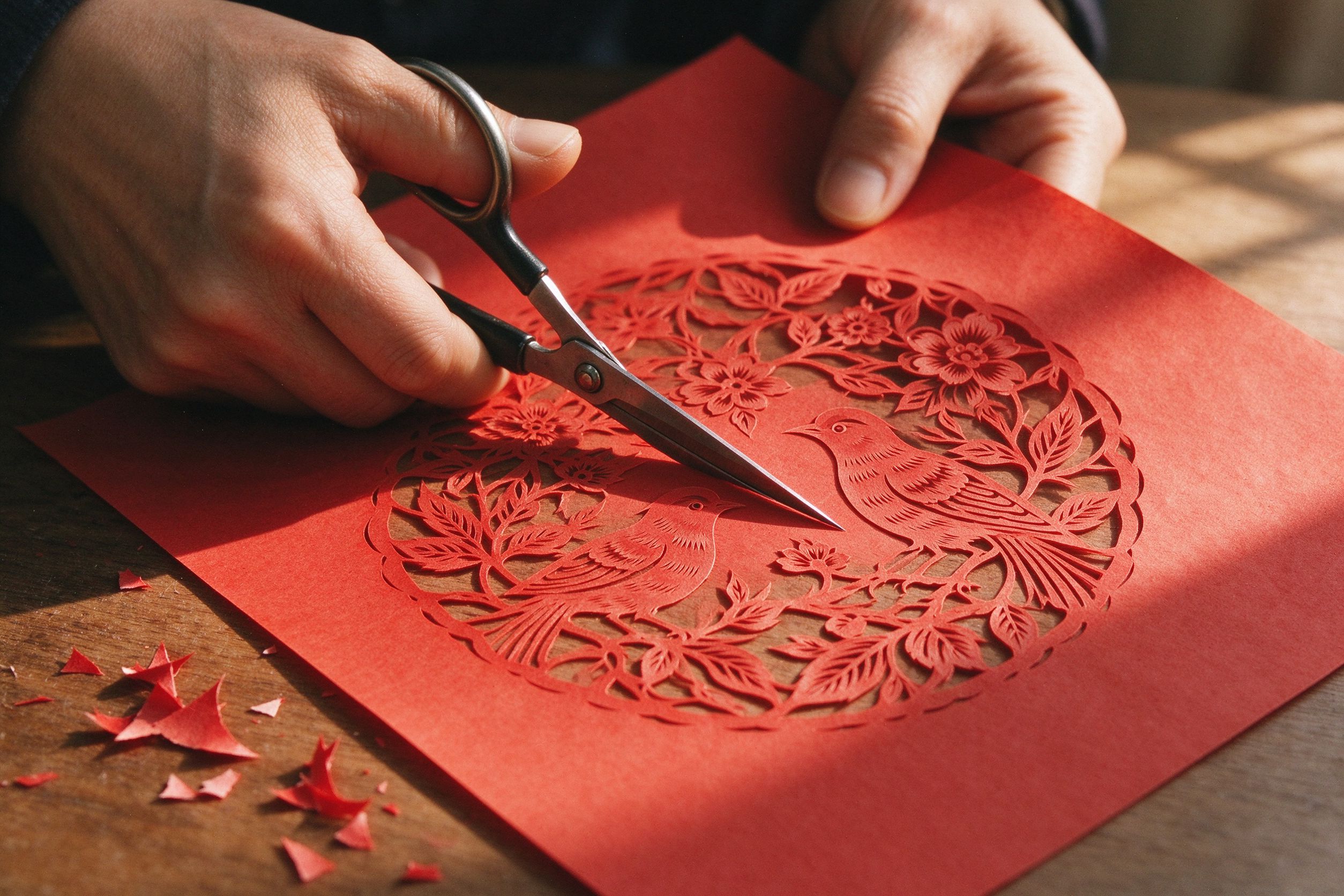
剪:一把小剪刀,一次成型,讲究“线线相连、刀刀不断”。剪之前先折纸,靠折痕定对称;下刀从内往外,先细部后轮廓,手一直悬着,不让纸压在桌上。

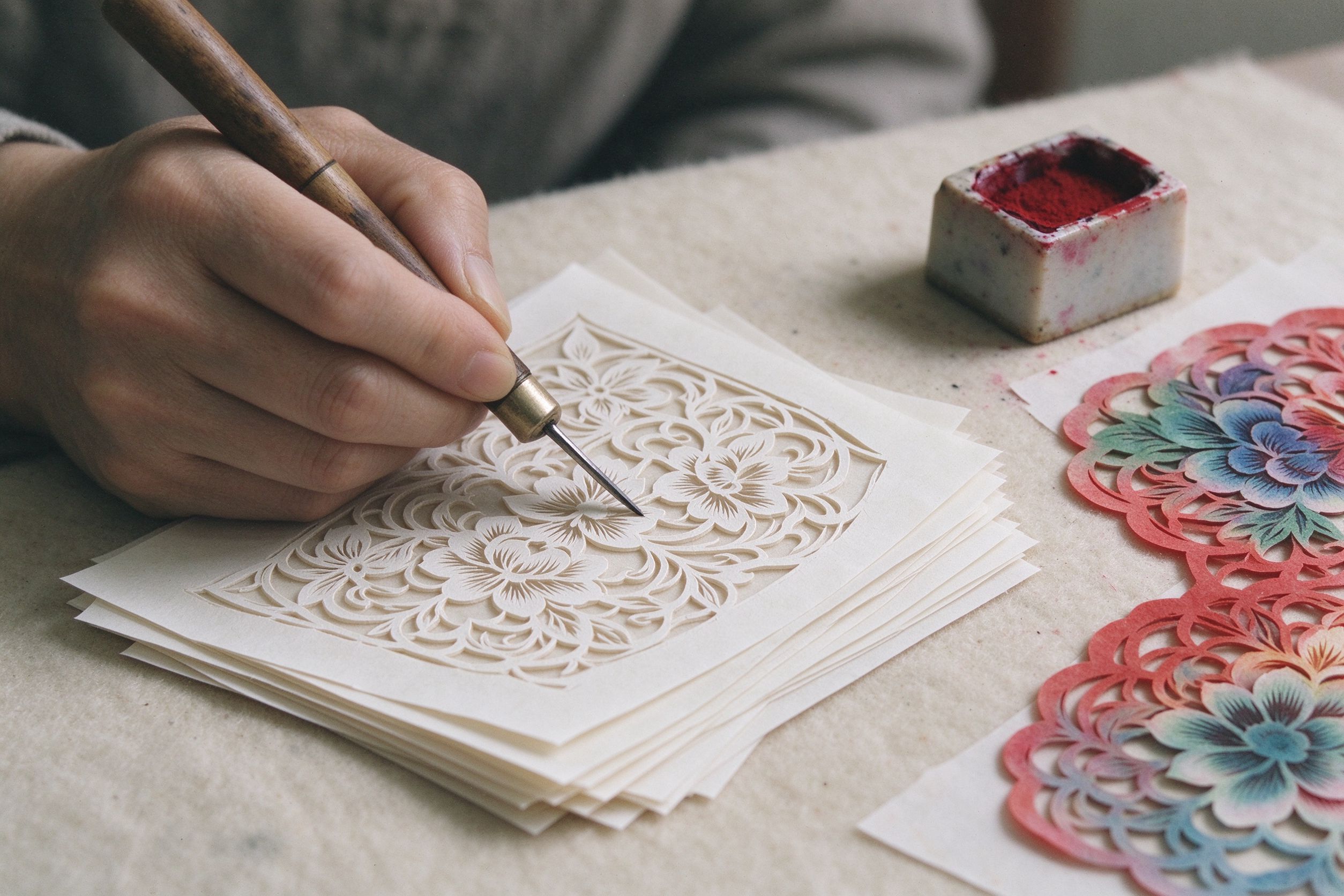
刻:蜡板上一叠纸,少则七八层,多则十几层,刻刀沿纹样走线。刻适合细密图案,一次能出十几张,但刀口要直,偏一点整叠都歪。

点染:河北蔚县的做法是先刻后染:白纸刻好,用品色一遍遍点上去,颜色透明,晾干后纸仍有挺括感。染的时候按区域上色,一笔不能出界。

4. 纹样在讲什么

团花与喜花:团花讲圆满,一圈一圈向内收;喜花多贴在新娘的箱柜上,龙凤、石榴、牡丹,取成双与多子。

抓髻娃娃:陕北常见,梳双髻、双手张开,老人说是驱邪招福的娃娃,也有人把它看作古老的护生形象。

老鼠娶亲:河南一带过年剪一队小老鼠抬轿吹打,贴在窗上给孩子看,讲的是“人勤鼠不欺”的老话。

留白:剪纸里留下的和剪掉的一样重要。线条围出来的空白是实心的,镂空处才是纹样的呼吸。看一张剪纸,先看它断没断,再看它空得对不对。

5. 今天怎么用

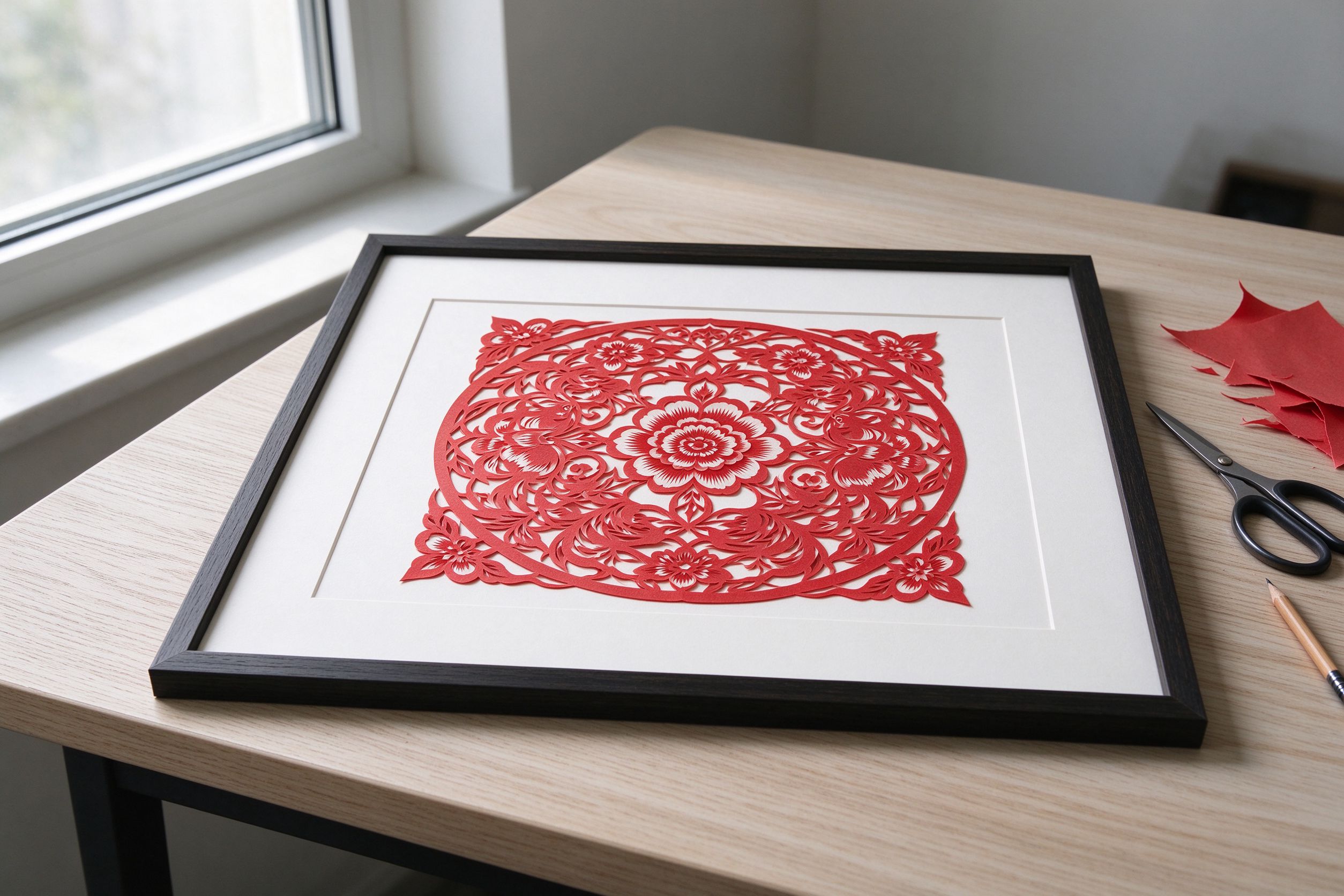
家里:小幅作品装框挂墙,或做成冰箱贴、杯垫;过年时用静电贴贴在玻璃内侧,撕下来不留胶。

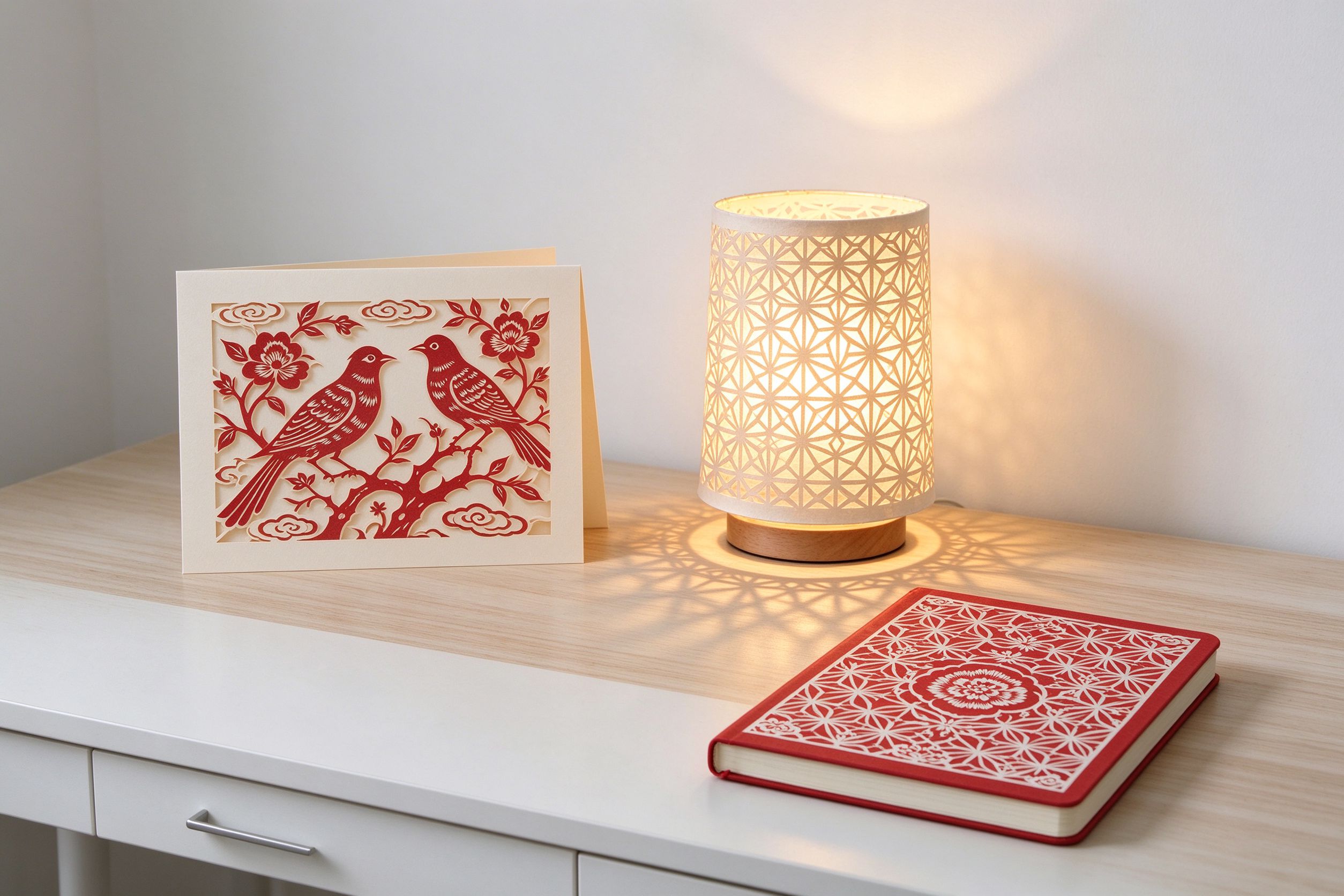
设计与出版:剪纸纹样被用在书籍封面、包装、舞台背景与展览海报上,多取局部放大,让镂空在光下出层次。

教学与体验:一把剪刀一张纸就能开课,是很多学校做传统手工课的入门项目。

6. 细作之处

看一件剪纸的功夫,看三处:线条有没有断口,转折处圆不圆,密的地方敢不敢再密一点。好的剪纸远看是一整片红,近看每一根线都还连着,光从镂空里透出来,影子落在墙上又是一层图案。

1. Page introduction

Paper Cutting

A sheet of red paper and a pair of scissors, cut into the shape of ordinary days

Paper is cheap and every household has scissors, which is why paper cutting has stayed the craft closest to daily life. It relies on no rare material and no complex equipment. All of the skill sits in the hand: one line must run without breaking, or the whole sheet falls apart.

This page follows four layers: where the craft came from, how a cut travels, what the patterns say, and where it still appears today.
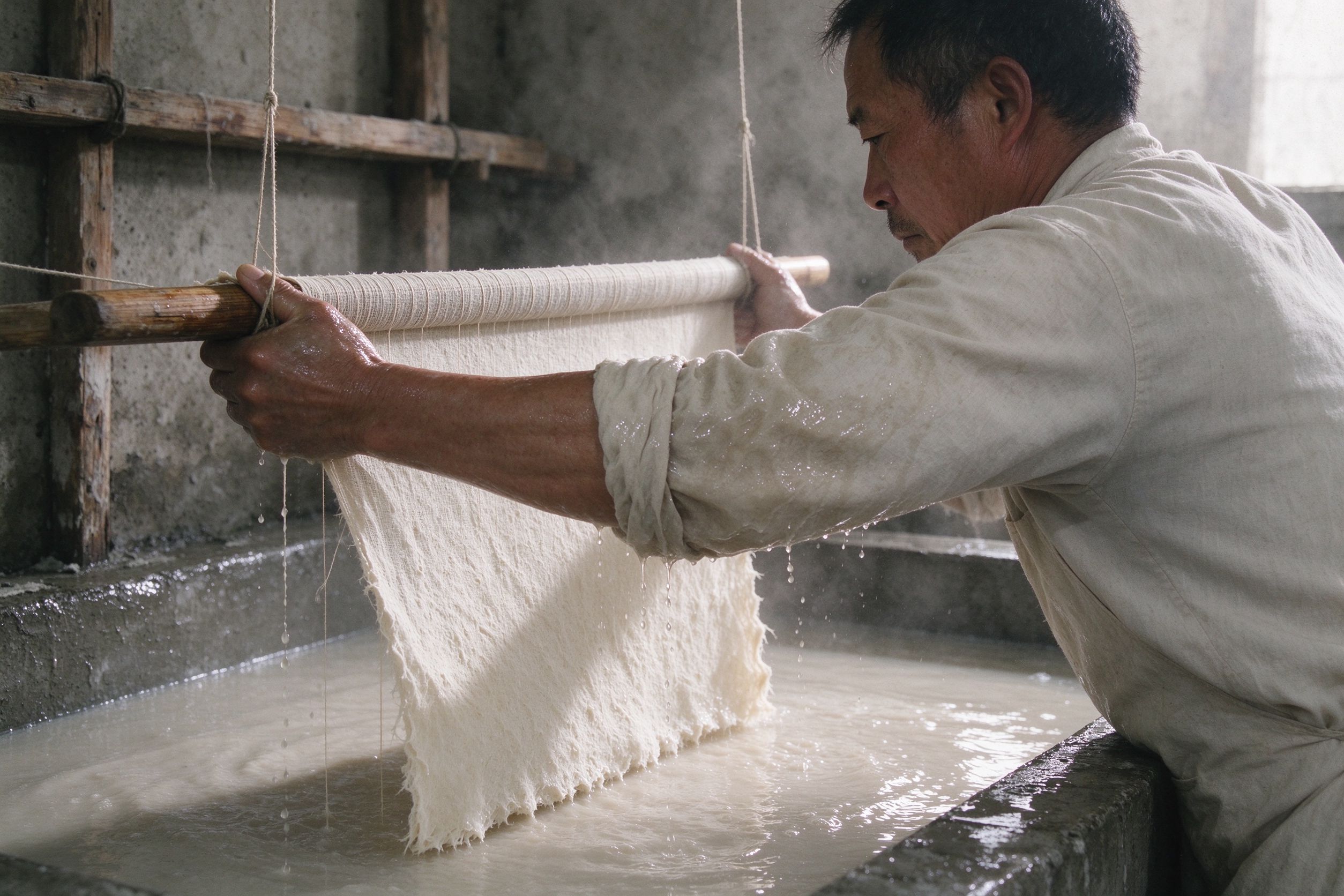
2. Where it came from

Beginnings: Paper cutting arrived with paper itself. After paper was made in the Han dynasty, cutting and carving paper for rituals and decoration slowly became common. The oldest surviving pieces date from the Northern and Southern Dynasties and carry a round flower pattern. From the Tang and Song dynasties on, paper cutting joined the calendar: spring banners at the start of spring, the five poisons at midsummer, window flowers at New Year, wedding flowers for marriages.

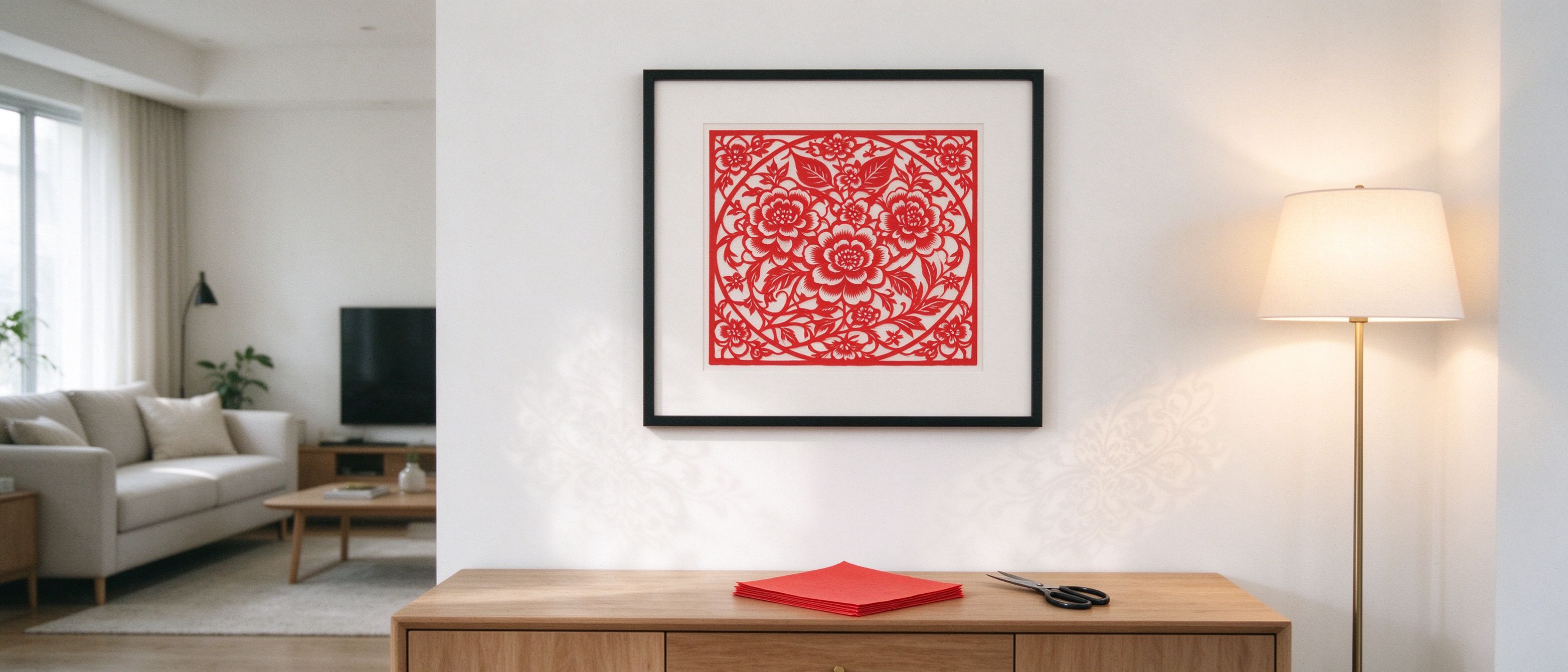
From the window to the wall: In the past, paper cutting lived on paper windows, door lintels and the chests that carried a bride's belongings. Most homes now have glass windows, and paper windows are long gone, so the place of paper cutting has shifted too: static decals on the inside of glass, framed pieces on a wall, patterns on lampshades, cards and packaging. The material is still paper, but the viewing distance has changed from close against a window to hung on a wall or held in the hand.

3. How it is made

Cutting: A small pair of scissors, one pass, no second chance. The rule is that lines stay connected and the blade never stops mid-line. The paper is folded first, so the creases set the symmetry; the cut starts from the inside and works outward, detail before outline, with the hand kept off the table so the sheet stays free.

Carving: A stack of paper on a wax board, seven or eight layers at the least and a dozen at most, with small knives following the pattern. Carving suits fine detail and can produce a dozen copies at once, but the blade has to run straight: lean it once and the whole stack goes crooked.

Dyeing: In Yuxian, Hebei, the order is carve first, dye second. A white sheet is carved, then color is dotted on layer by layer. The color is transparent, and the paper stays crisp when dry. Each area is dyed separately, and a brush cannot cross the line.

4. What the patterns say

Round flowers and wedding flowers: Round flowers speak of completeness, ring folding into ring. Wedding flowers go on the bride's chests: dragons and phoenixes, pomegranates, peonies, for a paired life and many children.

The doll with two buns: Common in northern Shaanxi: a figure with two buns of hair and open hands. Older people say it turns away evil and invites good fortune; others read it as an old protective figure.

The mouse wedding: Around Henan, New Year windows show a line of mice carrying a sedan and playing music, put up for children, from an old saying that diligent people are never cheated by mice.

The empty space: What is left matters as much as what is cut away. The blank space enclosed by lines is solid, and the openwork is where the pattern breathes. To read a piece, first check that no line is broken, then check whether the empty space is in the right place.
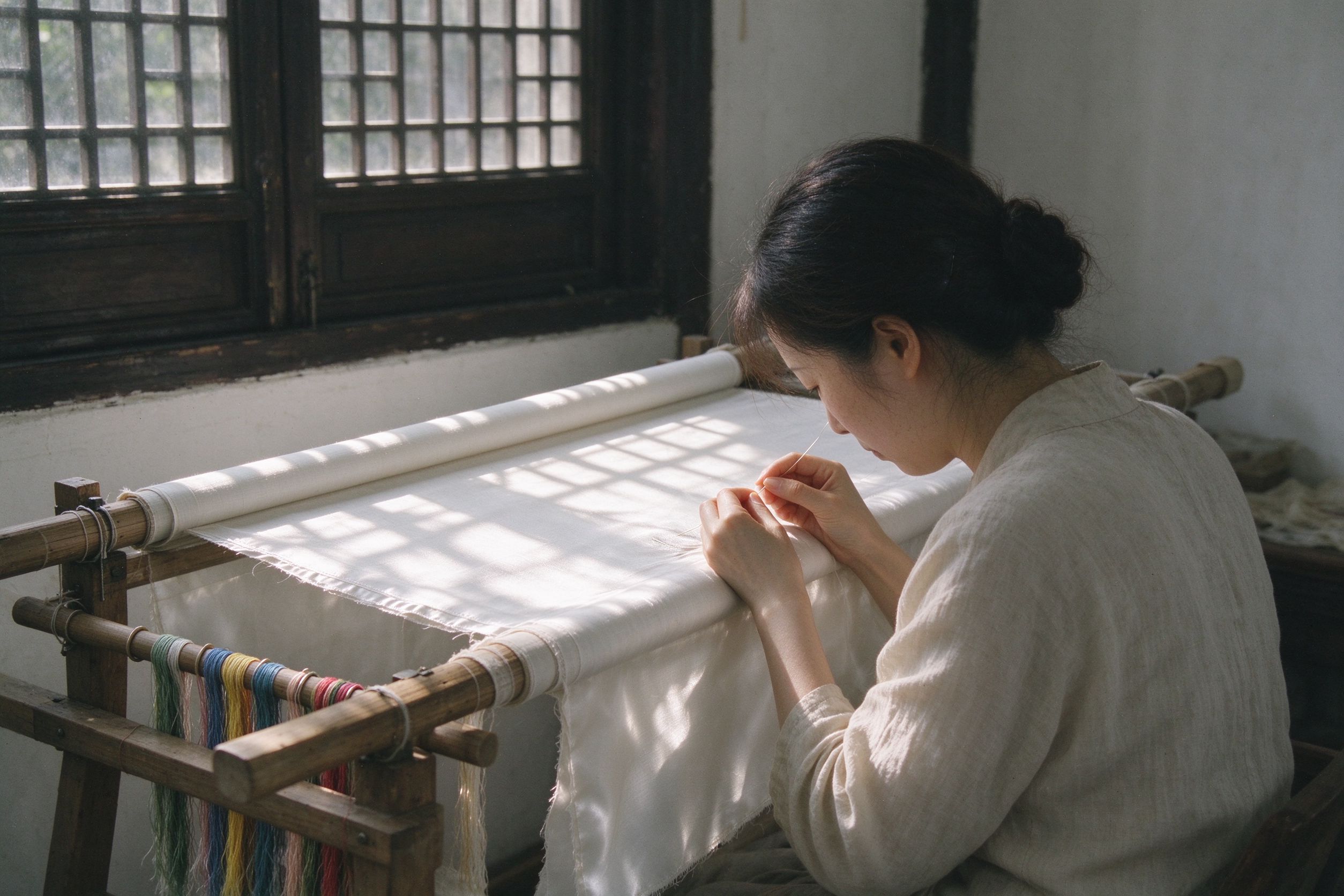
5. Where it is used today

At home: Small pieces are framed for a wall, or made into fridge magnets and coasters. At New Year, static decals go on the inside of glass and come off without leaving glue.

Design and publishing: Paper-cut patterns appear on book covers, packaging, stage backdrops and exhibition posters, usually a detail enlarged so the openwork can build depth in light.

Teaching: One pair of scissors and one sheet of paper are enough for a class, which makes it a common first project in school craft courses.

6. Where the fine work shows

Look at three things in a piece of paper cutting: whether any line is broken, whether the turns are round, and whether the dense passages dare to be denser. A good piece reads as one sheet of red from across a room; up close every line is still connected, light comes through the openwork, and the shadow on the wall becomes a second pattern.

配图 · Illustrations

受著作权相关法规限制,本站未使用第三方实拍照片。本图为AI参照传统实物形制1:1复原绘制,仅作文化示意,并非真实藏品实拍。

Due to copyright regulations, no third-party photographs are used on this site. This image is AI-generated, faithfully reconstructed based on the traditional craft form for cultural illustration only. It is not a photograph of a real artifact.
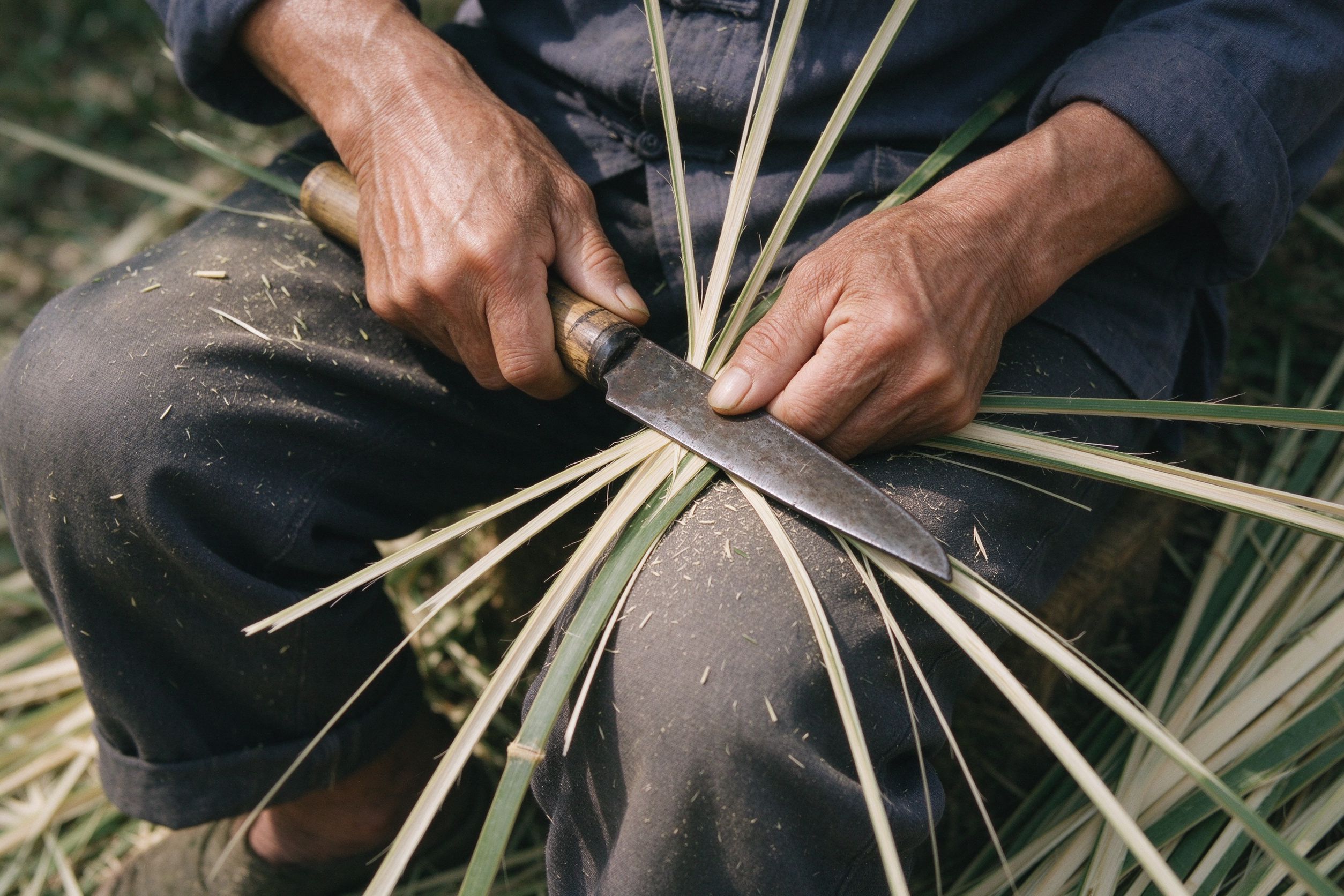
剪纸 · 页面横幅
图 01剪纸 · 页面横幅AI 复原示意图 · AI reconstruction点击查看提示词 · prompt
剪纸 · 剪刀走刀
图 02剪纸 · 剪刀走刀AI 复原示意图 · AI reconstruction点击查看提示词 · prompt
剪纸 · 刻与点染
图 03剪纸 · 刻与点染AI 复原示意图 · AI reconstruction点击查看提示词 · prompt
剪纸 · 装裱
图 04剪纸 · 装裱AI 复原示意图 · AI reconstruction点击查看提示词 · prompt
剪纸 · 今天的用法
图 05剪纸 · 今天的用法AI 复原示意图 · AI reconstruction点击查看提示词 · prompt

权威档案 · Official archives

想要查阅官方档案、馆藏原始记载,可点击下方链接跳转至国家级权威平台阅读。

以上链接为国家平台的项目档案页,页内不设个人联系方式;站点侧栏的公众号二维码属机构自有渠道,非个人账号。

六

竹编专区Bamboo Weaving

/bamboo-weaving

1. 页面导语

竹编

一根竹子,剖成能透光的篾

竹编比纸更古老。新石器时代的遗址里已经能看到竹篾编织的痕迹,而今天它同时活在两个地方:一个是山里的老作坊,一个是城市家里的灯罩、收纳篮和茶盘。

这一页讲四件事:竹子怎么选,篾怎么破,器物怎么编,以及它今天为什么又回到日常生活里。

2. 选竹与产地

产地:南方多竹,浙江嵊州、东阳,四川青神,福建安溪,都以竹编闻名。山里人编农具与背篓,水边人编鱼篓,平原上编晒席与箩筐——器物形状,先由用途决定。

选竹:看竹龄与竹节,三年左右的竹最韧,太嫩易蛀,太老易裂。砍下后要阴干一段时间,让水分走掉,篾才不容易缩。

3. 破篾与编织

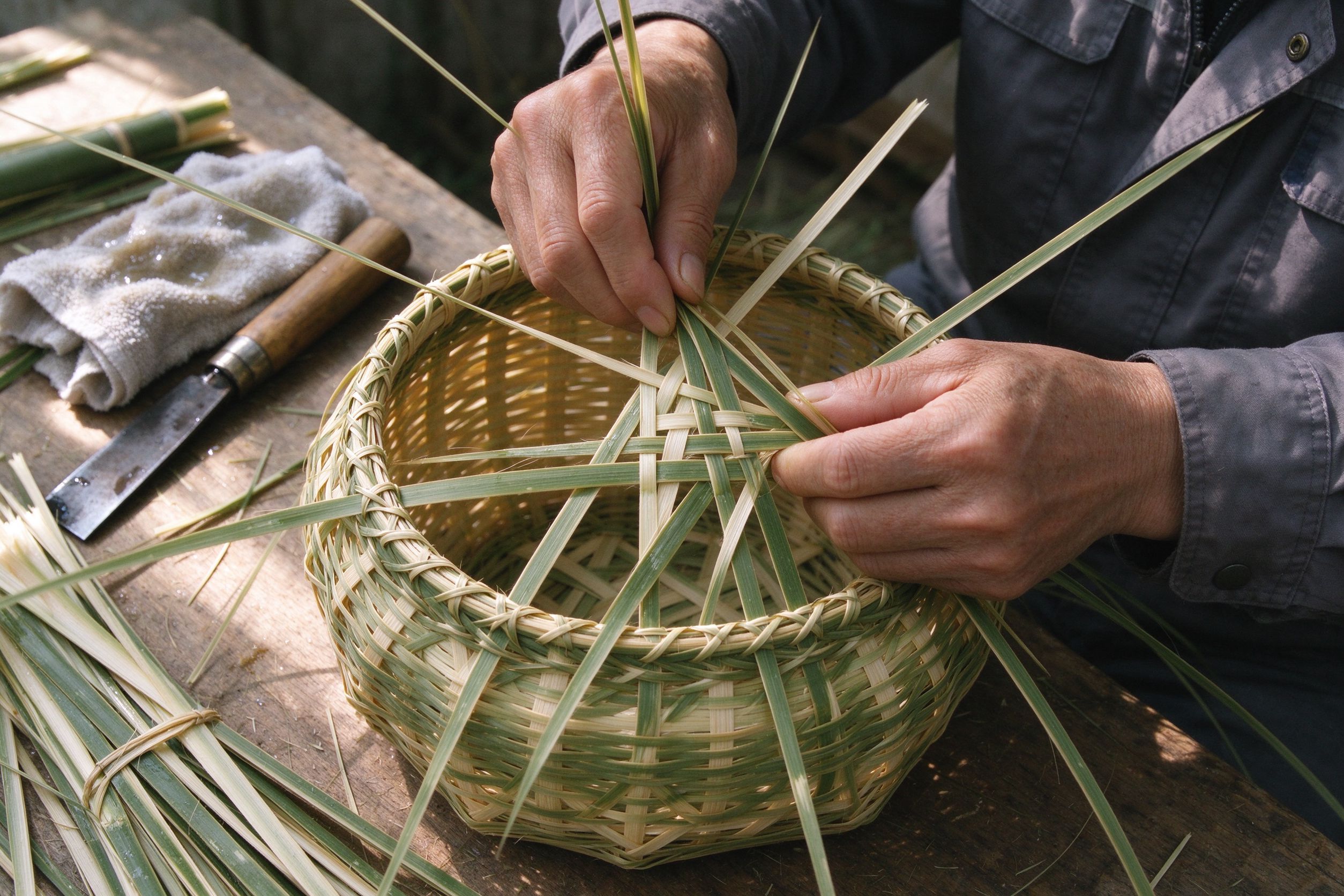
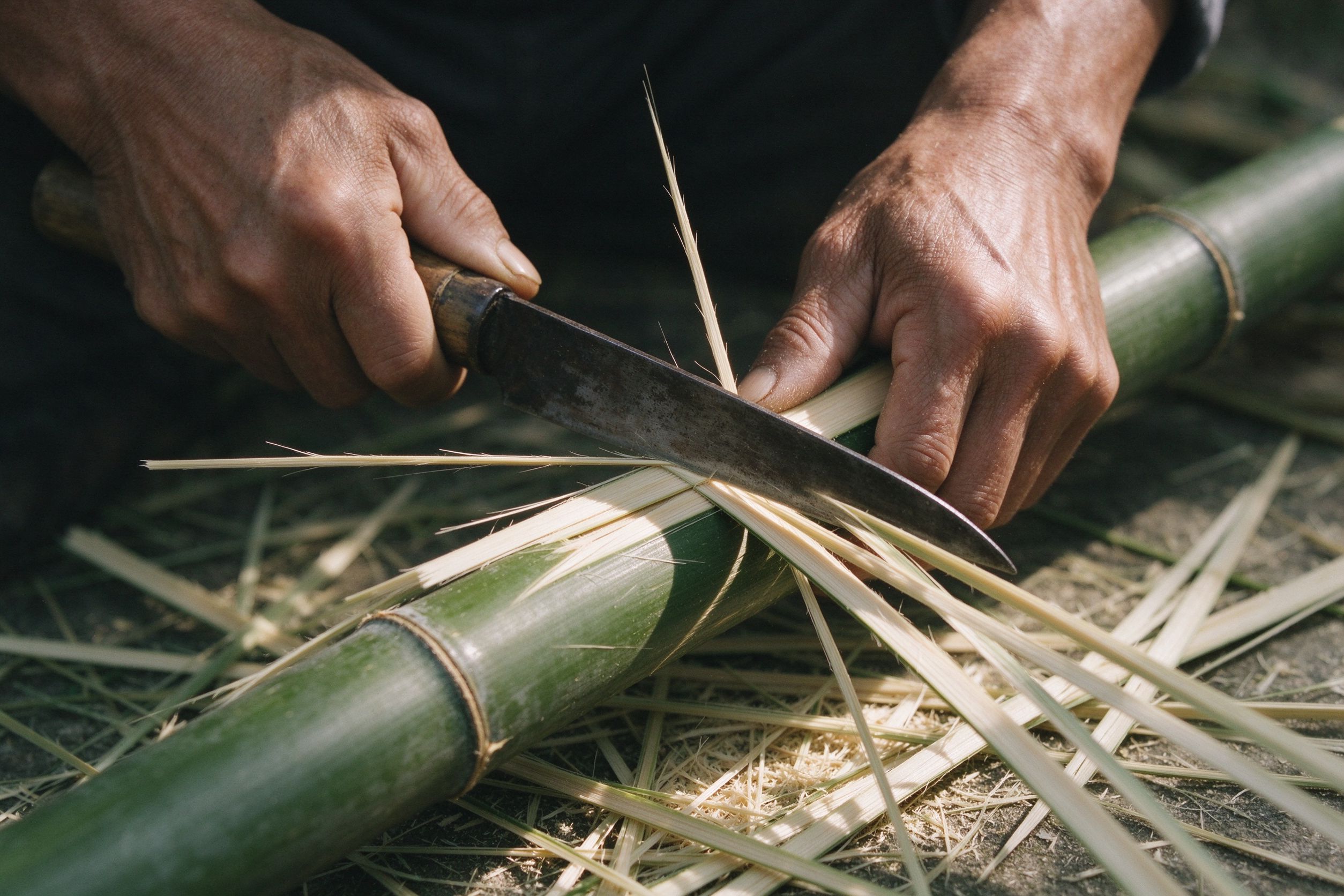
破篾:一破四、四破八,越分越薄;刮青去竹皮,剖丝定宽窄。篾要薄到能透光,编起来才服帖。宽窄差半毫米,整件器物就会歪。

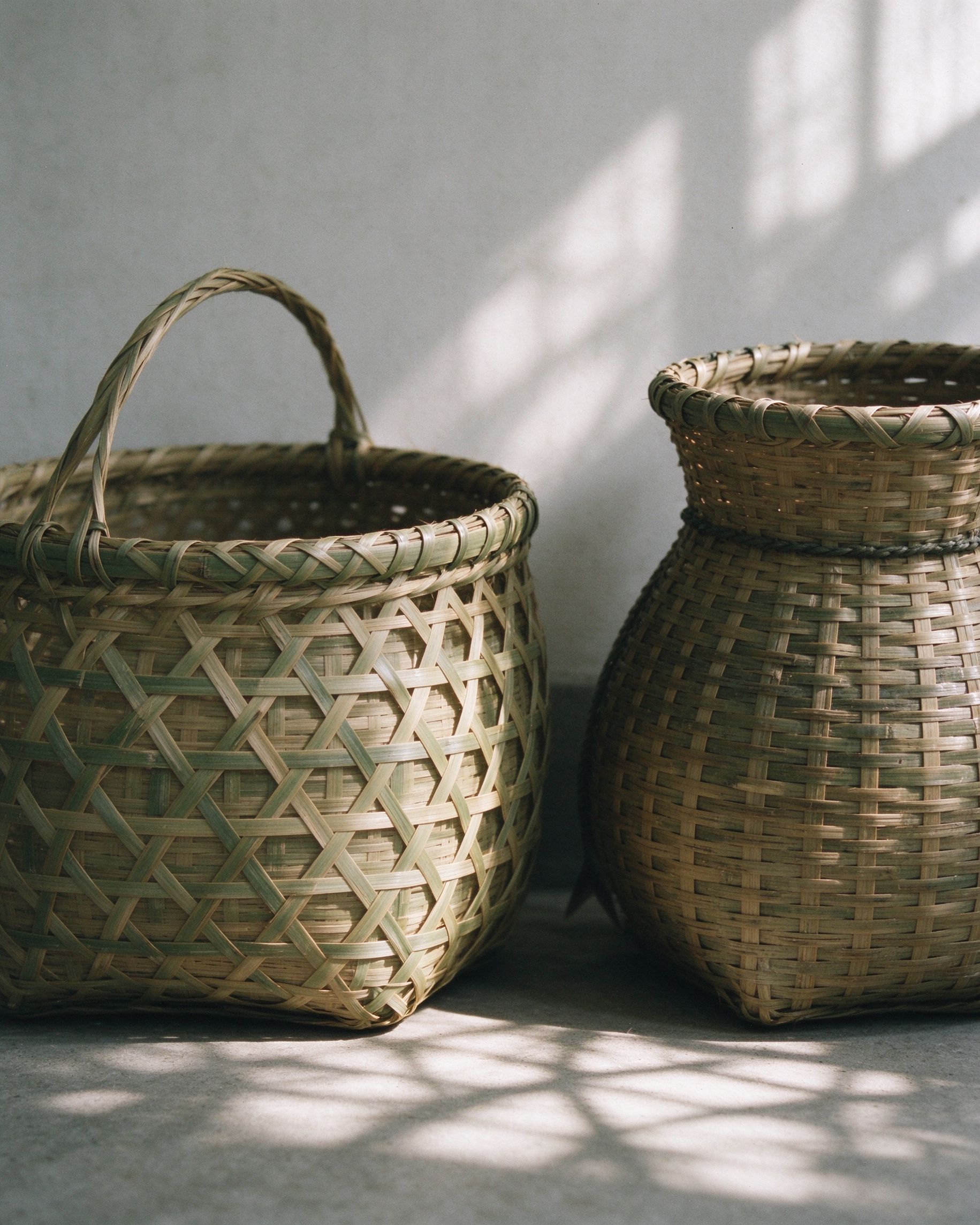
编织:常见有十字编、六角编、菊底编、穿丝编。底用密编求硬,口沿用疏编求软,同一件器物常混用几种。编完锁口、上漆或打蜡,边才不割手。

收口:收口是最考验人的一步:篾条要一圈圈绕紧,接头藏在里面,摸上去不能有凸起。

4. 器物与民俗

旧时:嫁女送一对竹篮,“篮”与“男”谐音,是早生贵子的祝愿;渔民编鱼篓,口小肚大,鱼进去出不来;山里的背篓在靠背处多压两道篾,走长路才不硌。

竹的性格:竹一节一节往上长,三年成材,砍了还会再发。编竹的人顺着竹性走,弯不过来的篾硬弯就会断——不是征服材料,是跟材料商量。

5. 今天怎么用

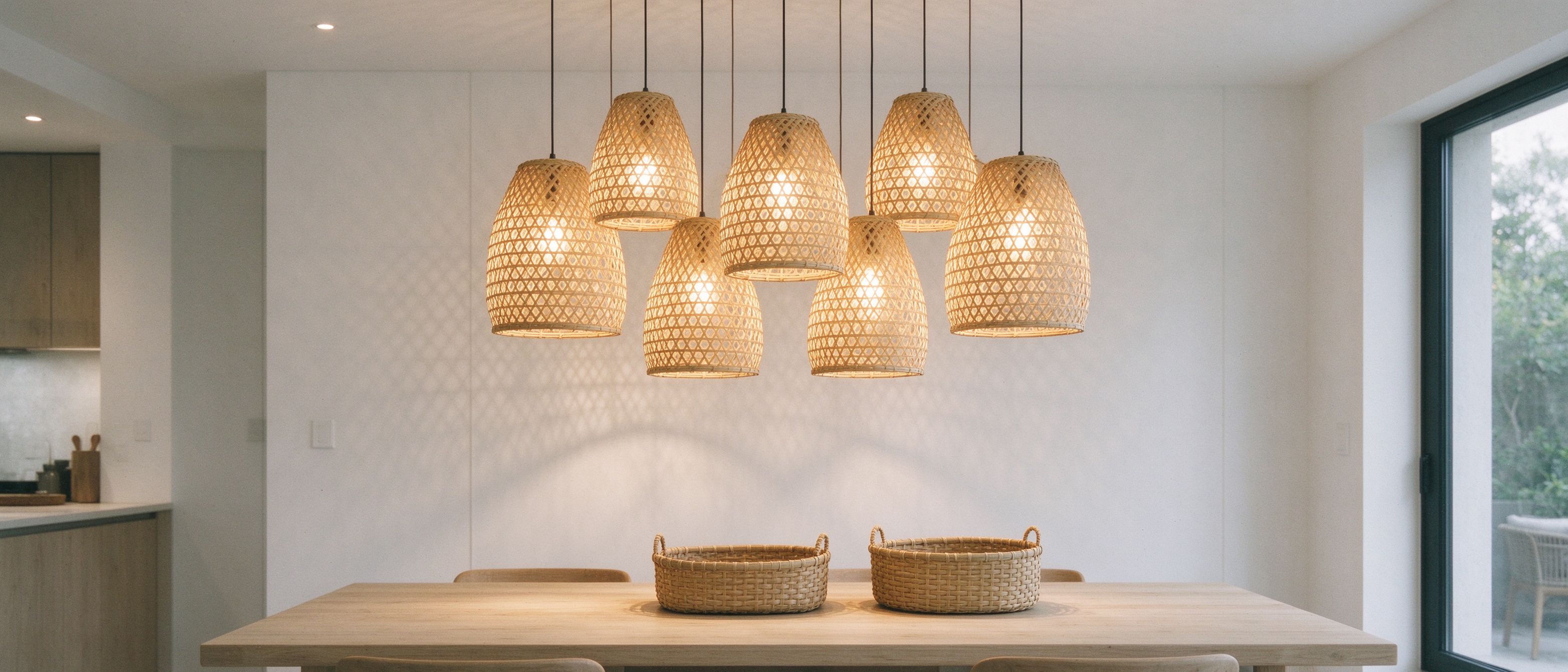
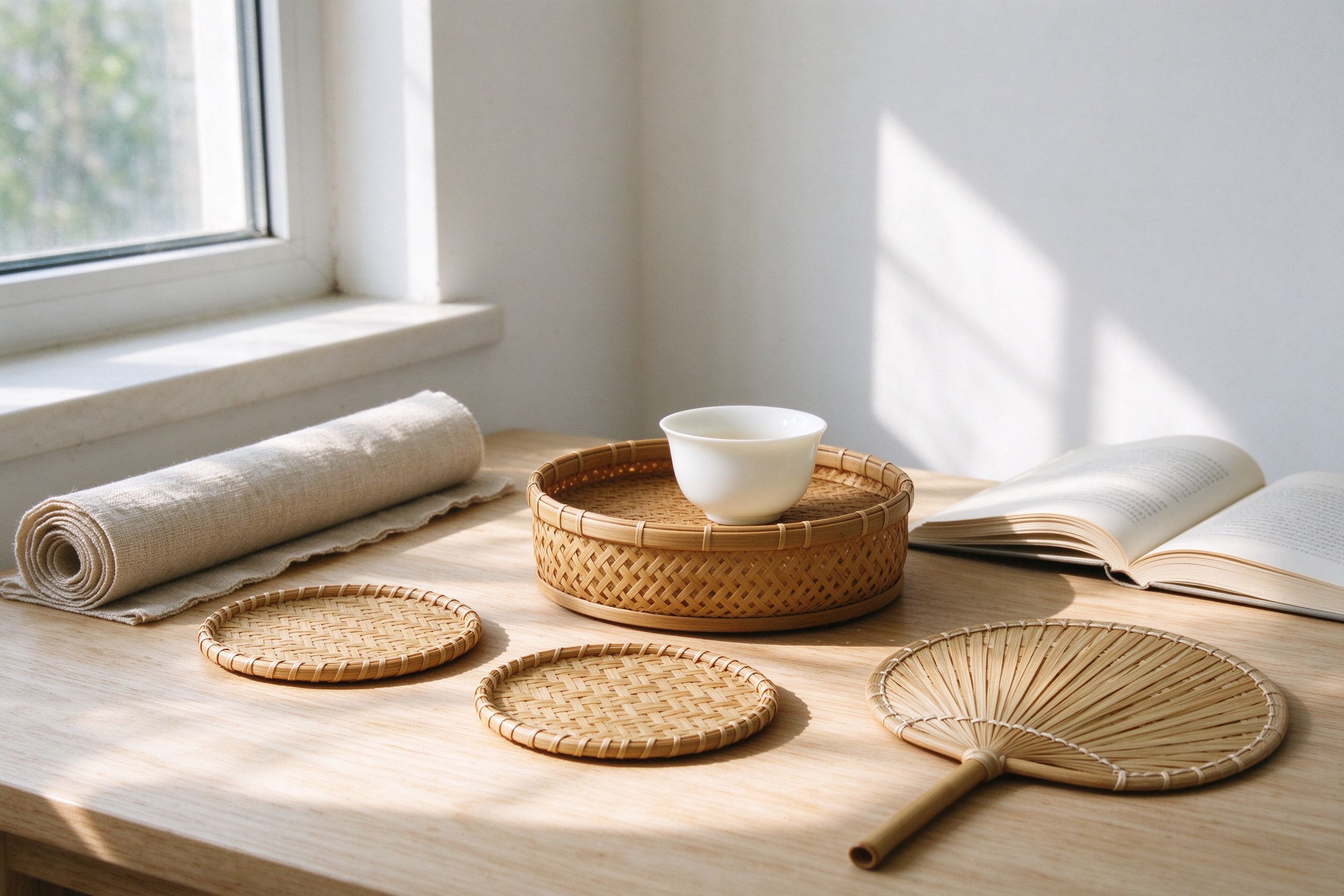
家里:收纳篮、脏衣篓、果盘、茶盘、杯垫、灯罩,都是这两年在城市家庭里重新多起来的东西。竹编透气、轻,摔不坏,用久了颜色会变深。

设计与建筑:吊灯灯罩、家具面板、屏风、餐厅隔断,竹编被当作一种有纹理的半透材料使用,光穿过篾缝会在墙面留下细密的影子。

耐用与修补:竹编器物怕长时间浸水,擦干就行;局部断了可以补篾,老匠人补一只篮子只要半小时。

6. 细作之处

看一只竹篮,先看口沿:锁边是否匀,接头藏没藏住;再看篾条:宽窄是否一致,颜色是否统一;最后对着光看,篾缝是否细而匀。好的竹编,装满东西也不变形,空着放也立得住。

1. Page introduction

Bamboo Weaving

One culm, split into strips thin enough to pass light

Bamboo weaving is older than paper. Woven bamboo traces appear at Neolithic sites, and the craft lives in two places at once today: the workshops in the hills, and the lampshades, baskets and tea trays in city homes.

This page covers four things: how bamboo is chosen, how a strip is split, how an object is woven, and why it has come back into daily use.

2. Choosing bamboo

Where it grows: Bamboo grows widely in the south. Shengzhou and Dongyang in Zhejiang, Qingshen in Sichuan and Anxi in Fujian are known for the craft. People in the hills wove farm tools and pack baskets, people by the water wove fish traps, people on the plains wove drying mats and panniers. Use decides shape first.

Choosing a culm: Age and joint matter. Bamboo around three years old is the most flexible: younger culms are easily bored, older ones split. After cutting, the culm is dried in shade so the moisture goes and the strips shrink less later.

3. Splitting and weaving

Splitting: One into four, four into eight, each strip thinner than the last. The green skin is scraped off and strips are cut to an even width. A strip has to be thin enough to pass light before it will lie flat. Half a millimeter of difference and the whole object goes crooked.

Weaving: The common weaves are square, hexagonal, spiral base and inlaid. A dense base gives stiffness, a loose rim gives softness, and one object often uses several. When the weaving is done, the rim is bound and the piece is lacquered or waxed so the edge does not cut the hand.

Closing the rim: Closing is the hardest step: strips are wound tight ring by ring, the joins hidden inside, and nothing should feel raised under the fingers.

4. Objects and customs

In the past: A pair of bamboo baskets went with a daughter's dowry; the word for basket sounds like the word for boy, so it stood for sons. Fishermen wove traps with a narrow mouth and a wide belly. Pack baskets for mountain paths were woven with two extra layers of strip at the back, so the load would not dig into the spine.

The character of bamboo: Bamboo rises joint by joint, matures in three years and grows again after cutting. Weavers follow the grain rather than forcing it: a strip that will not bend will break if you make it. This is not conquering the material but negotiating with it.

5. Where it is used today

At home: Storage baskets, laundry hampers, fruit bowls, tea trays, coasters and lampshades have all come back into city homes in the past few years. Bamboo breathes, weighs little, survives a fall, and darkens with use.

Design and building: Pendant shades, furniture panels, screens and restaurant partitions use bamboo weaving as a textured, half-transparent material; light crosses the strips and leaves a fine shadow on the wall.

Care: Bamboo objects dislike long soaking; wiping dry is enough. A broken section can be rewoven, and an experienced weaver can repair a basket in half an hour.

6. Where the fine work shows

Look at a basket rim first: whether the binding is even and the joins are hidden. Then look at the strips: whether the width and the color match. Then hold it to the light and see whether the gaps are fine and regular. A good basket keeps its shape when full, and still stands when empty.

配图 · Illustrations

受著作权相关法规限制,本站未使用第三方实拍照片。本图为AI参照传统实物形制1:1复原绘制,仅作文化示意,并非真实藏品实拍。

Due to copyright regulations, no third-party photographs are used on this site. This image is AI-generated, faithfully reconstructed based on the traditional craft form for cultural illustration only. It is not a photograph of a real artifact.

竹编 · 页面横幅
图 01竹编 · 页面横幅AI 复原示意图 · AI reconstruction点击查看提示词 · prompt
竹编 · 编织
图 02竹编 · 编织AI 复原示意图 · AI reconstruction点击查看提示词 · prompt
竹编 · 破篾
图 03竹编 · 破篾AI 复原示意图 · AI reconstruction点击查看提示词 · prompt
竹编 · 成品
图 04竹编 · 成品AI 复原示意图 · AI reconstruction点击查看提示词 · prompt
竹编 · 今天的用法
图 05竹编 · 今天的用法AI 复原示意图 · AI reconstruction点击查看提示词 · prompt

权威档案 · Official archives

想要查阅官方档案、馆藏原始记载,可点击下方链接跳转至国家级权威平台阅读。

以上链接为国家平台的项目档案页,页内不设个人联系方式;站点侧栏的公众号二维码属机构自有渠道,非个人账号。

七

瓷器专区Porcelain

/porcelain

1. 页面导语

瓷器

土、火与釉,三样都对,器才成

瓷器是中国手艺里最日常的一种:饭碗、茶杯、花器、香插,多数人家里都有几件。它也是最少被讲清楚的——大家看得见颜色,看不见土怎么练、坯怎么拉、釉怎么配、火怎么控。

这一页只讲今天还在做、还在用的器:龙泉的青瓷、德化的白瓷、景德镇的青花。博物馆里的重器与官窑礼器不在范围内,我们把篇幅留给能端在手上的那一类。

2. 三个产区

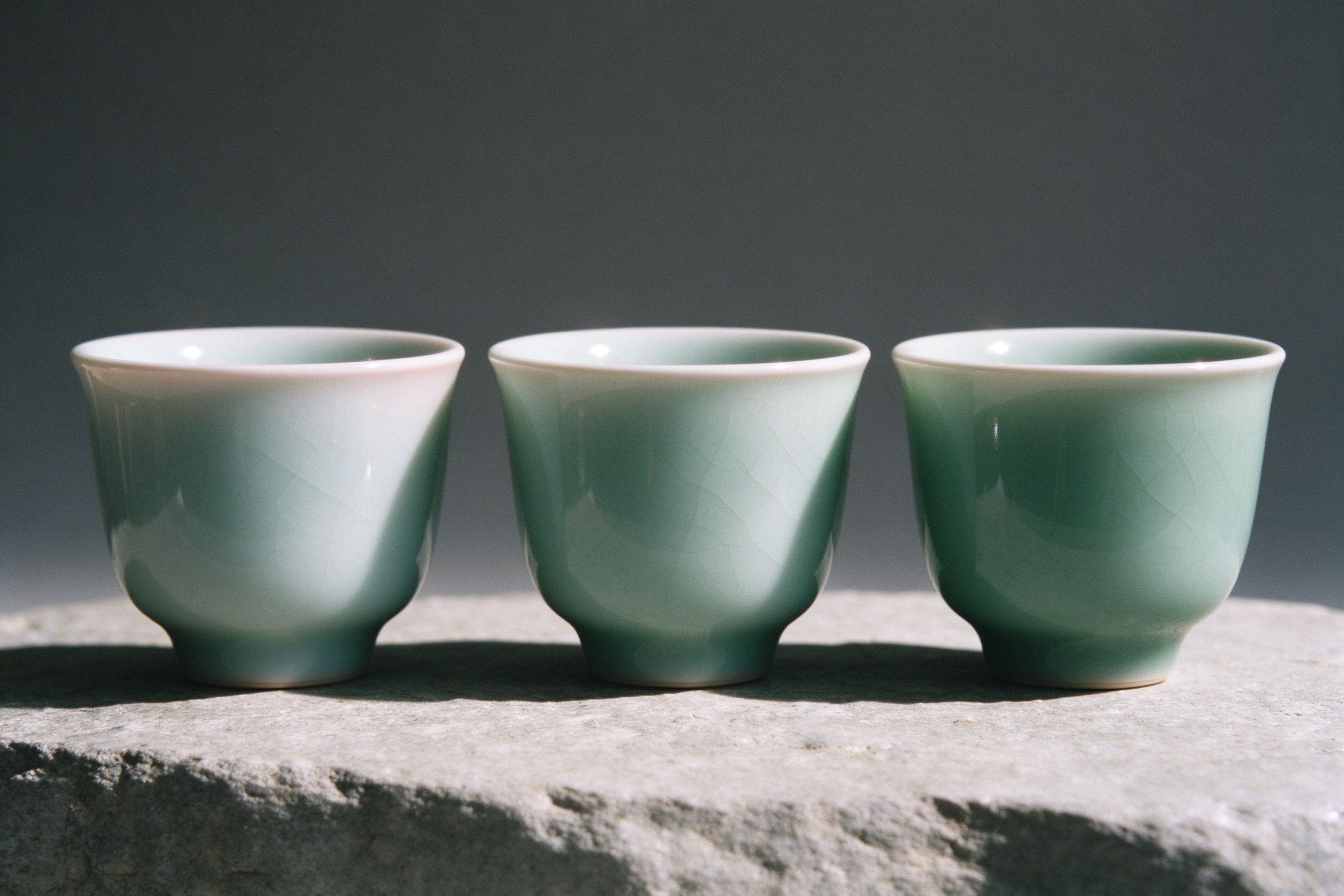
龙泉青瓷:浙江龙泉一带,以瓷土、紫金土、石灰石与石英为料,高温还原焰烧成,釉色粉青或梅子青,厚釉的要施三四层、每层素烧一次。今天常见的是茶器、花器与餐具。

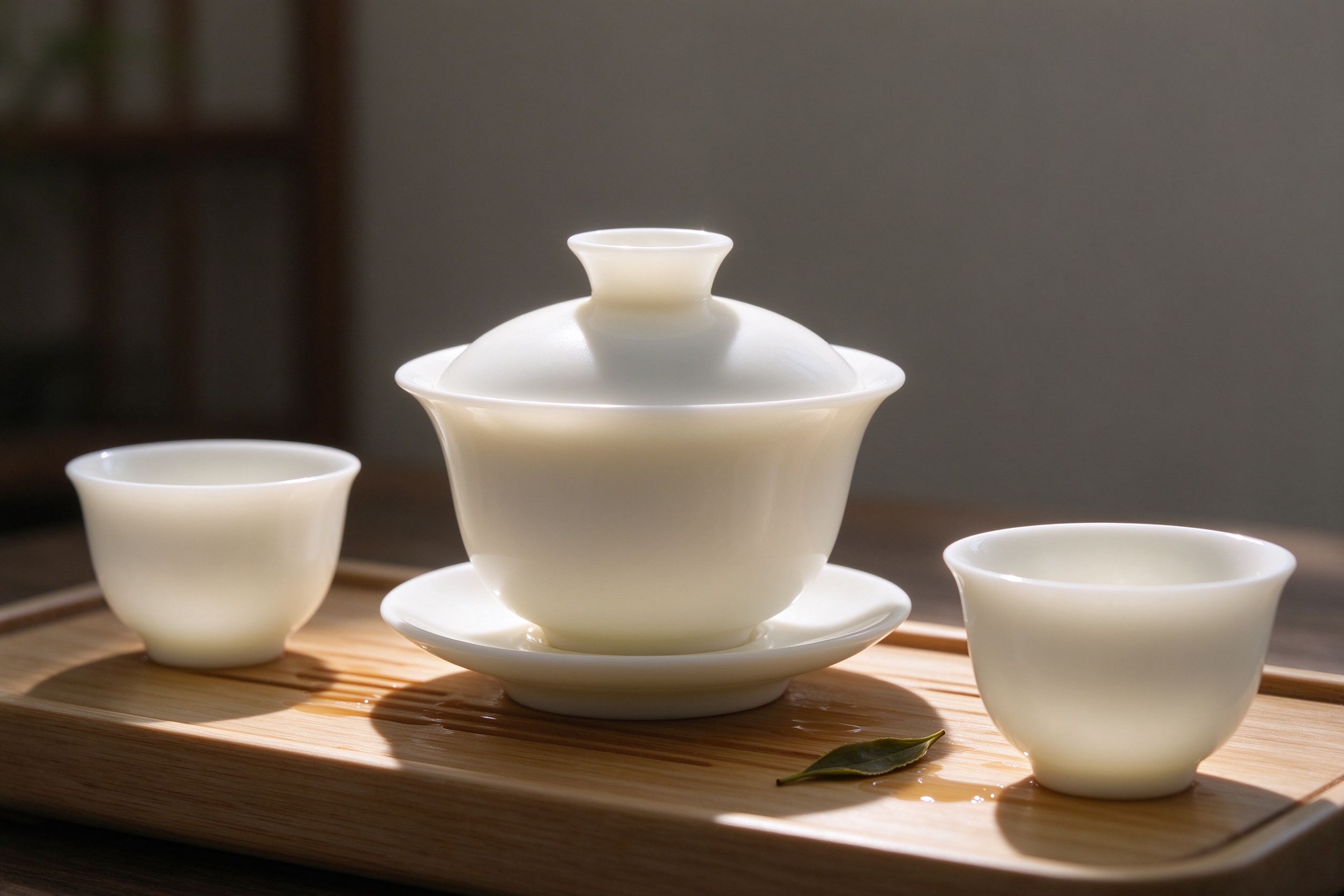
德化白瓷:福建德化,高岭土纯净、含铁低,烧出来的胎体细白、器壁薄到透光,明代经海路大量外销,欧洲人称之为“中国白”。今天多是茶器、塑像与日用器皿。

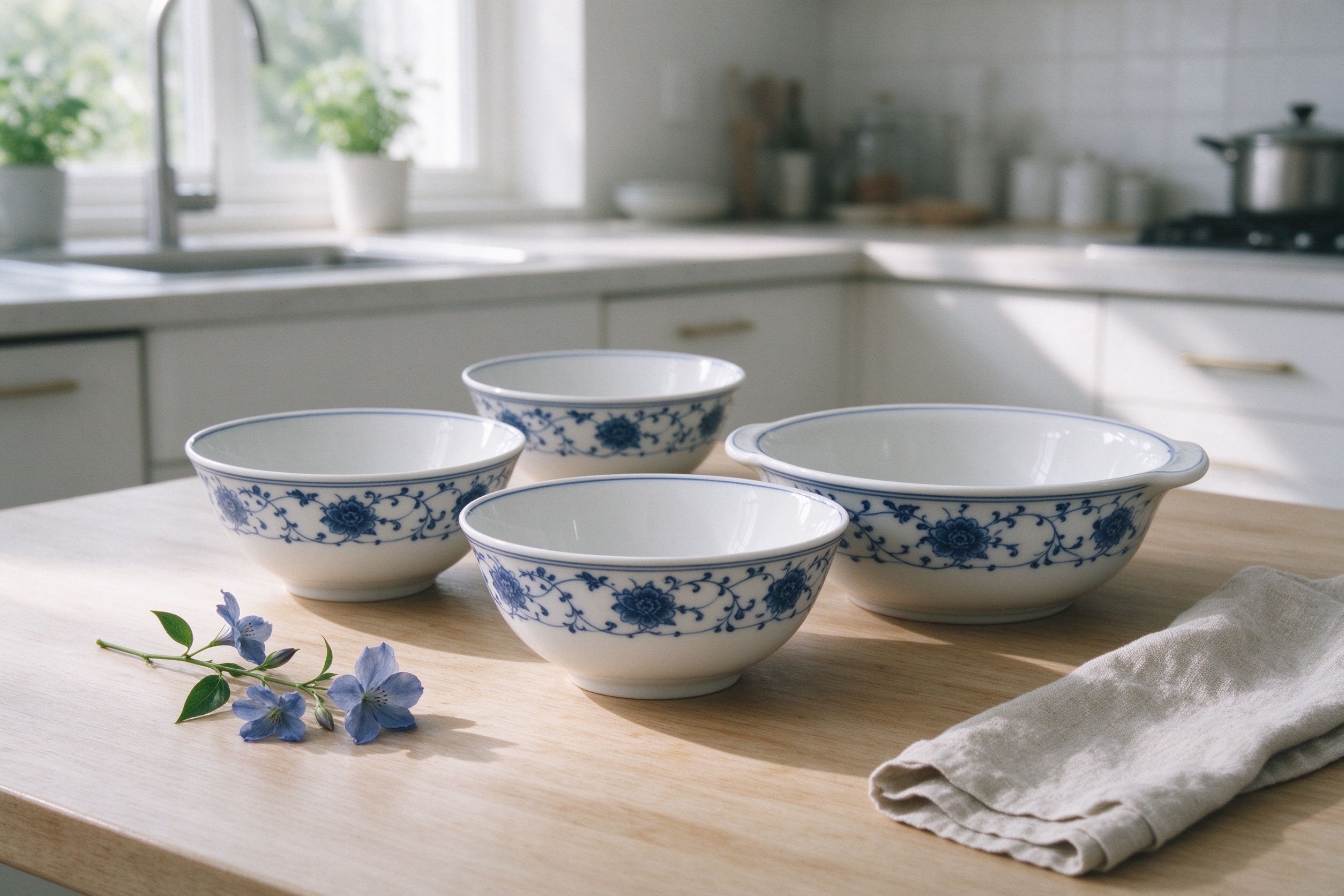
景德镇青花:江西景德镇,元代起用瓷石加高岭土的二元配方,釉下用钴料画纹,罩一层透明釉后高温一次烧成。今天最常见的是碗、盘、碟与茶具。

3. 工序

练泥:瓷土经粉碎、淘洗、陈腐、练泥,把空气与粗颗粒排掉;泥练得匀,拉出来的坯壁才不夹层。

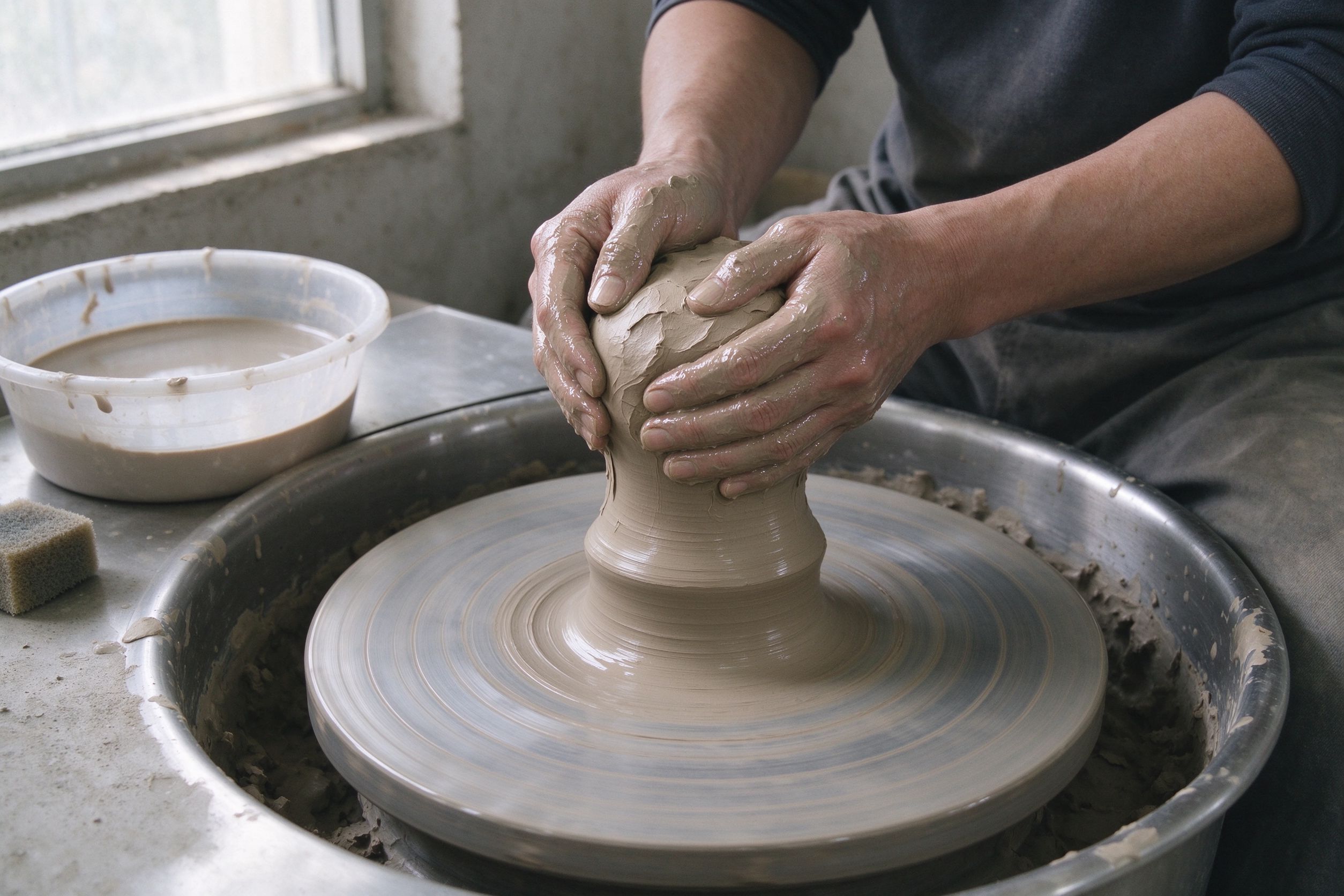
拉坯与修坯:拉坯在转盘上完成,双手从泥团中心开口、提壁、定形;半干后上利坯台修坯,把壁修到匀薄,圈足修圆。这一步差一毫米,烧完就看得见。

施釉:荡釉、浸釉、涂釉、喷釉各用在不同部位。厚釉类要施了素烧、素烧后再施,反复几次,釉层才够厚而不流。

装窑与烧成:坯体装匣后入窑,青瓷约 1300℃ 上下还原烧成,青花一次高温烧成。火候与气氛差一点,颜色就偏。

4. 釉与火讲什么

青:青瓷的颜色不是画上去的,是釉里的铁在还原气氛中还出来的。同一配方,窑位不同,颜色也会有深浅,所以一窑里能分出好几种青。

白:白瓷靠的是胎土干净。铁的含量越低,白越正;胎越薄,光透得越柔。

青花:钴料画在坯上,罩釉后一次烧成, blue 在釉下,不会磨掉。发色取决于钴料的纯度与火候,好的一枝纹,蓝里有层次。

5. 今天怎么用

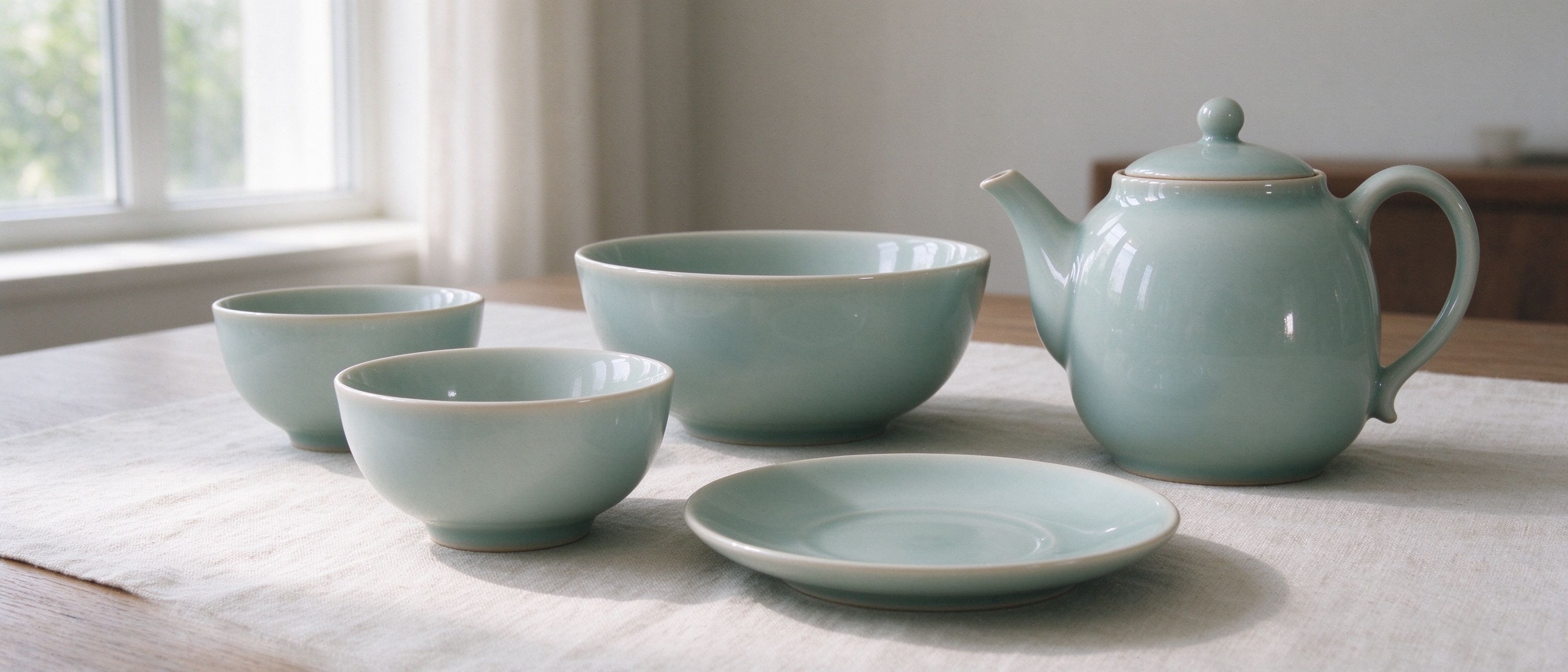
餐桌:青瓷饭碗、白瓷汤碗、青花盘子,是很多家庭日常在用的东西。釉面不吸味,洗起来也省事。

茶席:盖碗、小杯、公道杯,白瓷看汤色,青瓷看釉光。

陈设:花器、香插、灯座;一件器放在桌上,光从侧面过来,釉面和器形的关系就出来了。

6. 细作之处

看一件日用瓷,看四处:口沿是否薄而匀,摸上去不刮嘴;圈足是否修得圆,放在桌上不摇;釉面是否匀净,有没有积釉与缩釉;青花的花纹是否清晰,蓝里有没有浓淡。好器不用凑近看,放在桌上,光一照就立得住。

1. Page introduction

Porcelain

Clay, fire and glaze, all three right, and the vessel holds

Porcelain is the most everyday of Chinese crafts: rice bowls, tea cups, vases, incense holders. Most homes have a few pieces. It is also the least explained. People see the color but not how the clay is worked, the wall thrown, the glaze mixed, the fire controlled.

This page covers only what is still made and still used: celadon from Longquan, white porcelain from Dehua, blue-and-white from Jingdezhen. Museum masterpieces and imperial ritual wares are out of scope; the space is kept for pieces you can hold.

2. Three places

Longquan celadon: Around Longquan in Zhejiang, porcelain stone, purple-gold clay, limestone and quartz are fired at high temperature in reduction. The glaze reads either powder blue or plum green; thick glazes are applied in three or four layers, each bisque-fired before the next. What is common today is tea ware, vases and tableware.

Dehua white: In Dehua, Fujian, kaolin is clean and low in iron, so the body fires fine and white and the wall can be thin enough to pass light. Large quantities went overseas by sea in the Ming dynasty, and Europeans called it blanc de chine. Today it is mostly tea ware, figures and tableware.

Jingdezhen blue-and-white: In Jingdezhen, Jiangxi, porcelain stone was combined with kaolin from the Yuan dynasty on. Cobalt is painted under the glaze, a clear glaze goes over it, and the piece is fired once at high temperature. What is common today is bowls, plates, dishes and tea sets.

3. The steps

Working the clay: Porcelain stone is crushed, washed, aged and wedged to take out air and coarse grains. Clay worked evenly is clay whose walls will not trap air when thrown.

Throwing and turning: Throwing happens on the wheel: the center is opened, the wall lifted, the form set. When the piece is half dry it goes onto the turning lathe, where the wall is trimmed to an even thickness and the foot ring rounded. A millimeter here shows after firing.

Glazing: Pouring, dipping, brushing and spraying are used on different parts. Thick glazes are applied, bisque-fired, applied again, several times over, so the layer ends up deep without running.

Setting and firing: The piece goes into a saggar and then the kiln. Celadon is fired around 1300°C in reduction; blue-and-white is fired once at high temperature. A small difference in temperature or atmosphere shifts the color.

4. What glaze and fire decide

Green: Celadon color is not painted on. It comes from iron in the glaze returning under reduction. The same recipe gives different depths at different points in the kiln, so one firing can produce several greens.

White: White porcelain depends on a clean body. The lower the iron, the truer the white; the thinner the wall, the softer the light that passes through.

Blue: Cobalt is painted on the raw body, the glaze goes over it, and the piece is fired once. The blue sits under the glaze and cannot wear off. The tone depends on the purity of the cobalt and the firing; in a good branch pattern the blue has depth.

5. Where it is used today

The table: Celadon rice bowls, white soup bowls and blue-and-white plates are what many households actually eat from. Glazed surfaces take no flavor and are easy to wash.

The tea table: Lidded bowls, small cups and fairness pitchers. White shows the color of the tea; celadon shows the light on the glaze.

Display: Vases, incense holders, lamp bases. Put one piece on a table with light coming from the side and the relation between glaze and form appears.

6. Where the fine work shows

Look at four places in a piece of everyday porcelain: whether the rim is thin and even and does not cut the lip; whether the foot ring is round and the piece sits without rocking; whether the glaze is even, with no pooling or bare patches; whether the blue-and-white pattern is clear and the blue has depth. A good piece does not need a close look. Put it on a table and let the light find it.

配图 · Illustrations

受著作权相关法规限制,本站未使用第三方实拍照片。本图为AI参照传统实物形制1:1复原绘制,仅作文化示意,并非真实藏品实拍。

Due to copyright regulations, no third-party photographs are used on this site. This image is AI-generated, faithfully reconstructed based on the traditional craft form for cultural illustration only. It is not a photograph of a real artifact.

瓷器 · 页面横幅
图 01瓷器 · 页面横幅AI 复原示意图 · AI reconstruction点击查看提示词 · prompt
瓷器 · 拉坯
图 02瓷器 · 拉坯AI 复原示意图 · AI reconstruction点击查看提示词 · prompt
瓷器 · 青釉
图 03瓷器 · 青釉AI 复原示意图 · AI reconstruction点击查看提示词 · prompt
瓷器 · 白瓷
图 04瓷器 · 白瓷AI 复原示意图 · AI reconstruction点击查看提示词 · prompt
瓷器 · 青花
图 05瓷器 · 青花AI 复原示意图 · AI reconstruction点击查看提示词 · prompt

权威档案 · Official archives

想要查阅官方档案、馆藏原始记载,可点击下方链接跳转至国家级权威平台阅读。

以上链接为国家平台的项目档案页,页内不设个人联系方式;站点侧栏的公众号二维码属机构自有渠道,非个人账号。

八

工艺纪实Craft Notes

/craft-notes

1. 页面导语

工艺纪实

网页上的工序是整齐的,现场里的工序是有声音的

这一页记录三类工序:造纸、刺绣、竹编。影像取自产区的作坊与车间,保留原声与环境光,不调色、不加字幕特效。我们留下的不是“好看”,而是那道工序真实的样子:水有多凉,光有多斜,人要等多久。

2. 现场是什么样子

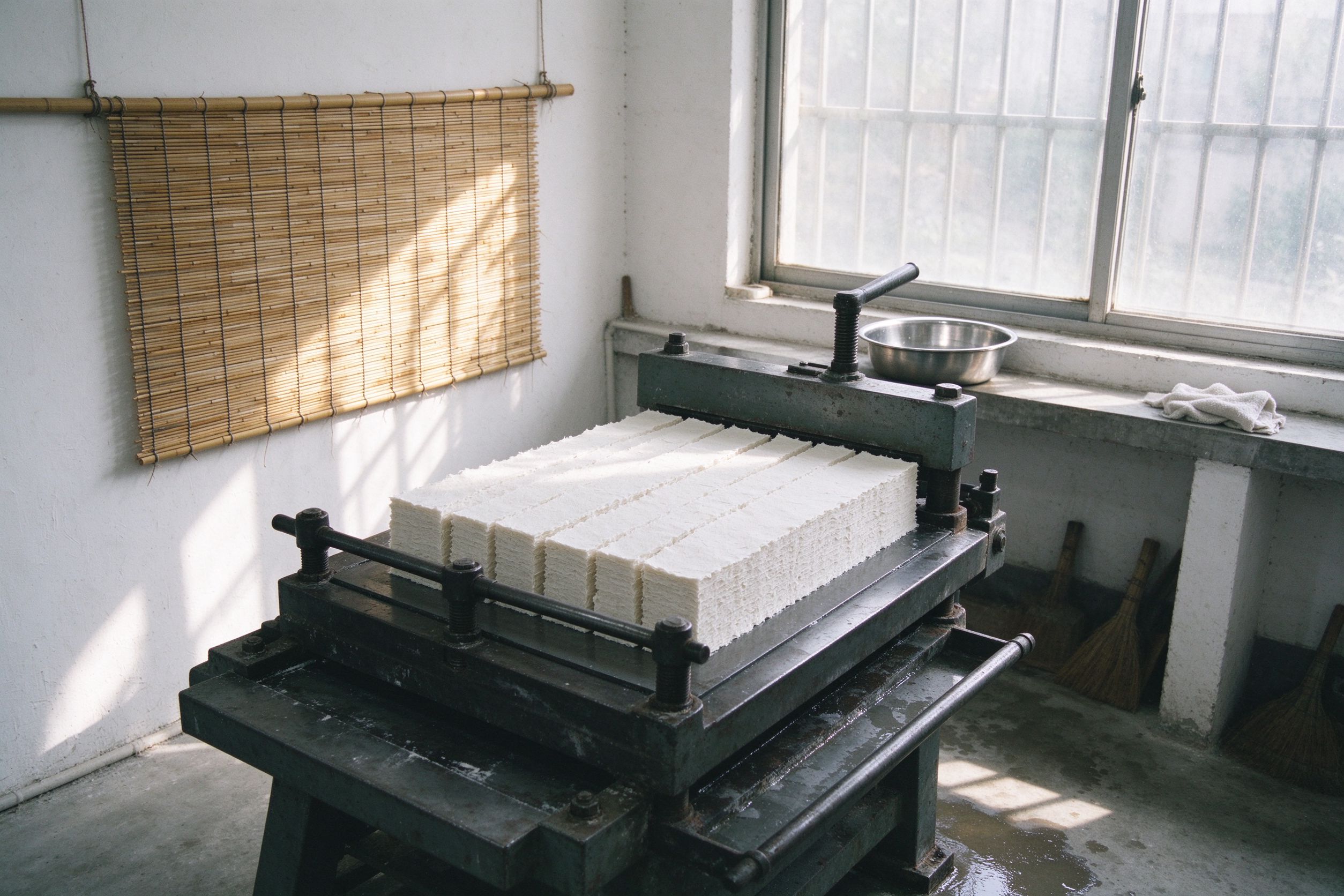
这些作坊多在老屋或厂房的一角。捞纸槽是水泥与木架拼起来的,纸帘挂在墙上晾着;绣房一定要靠窗,光线要斜着进来,才看得清丝线的颜色差别;墨室的温度不能太高,否则墨锭晾着晾着就会裂。地上常年有水、竹屑和纸边,空气里是胶、松烟和晒纸的味道。

我们去拍的时候只带一台机器和一支录音笔,不摆拍,也不要求工序停下来配合。拍得到多少,就写多少;没拍到的部分,宁可不写。

3. 匠人与他们的手

捞纸师傅:一天要抬几百次帘,手腕不能抖。他说最难的是“匀”:纸厚一分则涩,薄一分则漏,同一槽浆要抄出一样厚的纸,靠的是腰、腕和呼吸的配合。

绣娘:一件小幅双面绣要做三到六个月。她习惯从最深的一色开始绣,一层层往上提亮,绣到最亮处只留几针。她说不着急,急的那一针一定看得见。

篾匠:破篾时刀口要正,篾条宽窄差半毫米,编出来就会歪。他编一只篮子不用尺,靠拇指量:篾条卡在指节与指甲之间,刚好就是那个宽度。

4. 影像说明

影像按“选料—成型—修整”的顺序剪辑,一段只讲一道工序,片长两到四分钟,方便课堂与教研引用。画面保留现场原有的墙面、木架、水痕与粉尘,不做滤镜、不做加速;同期声保留,可以听见水声、刀声与说话声。

每段影像都标注拍摄地点、工序阶段与拍摄时间,便于查证。若用于教学、展览或出版,请先通过联系页面告知用途,我们会提供对应的工序说明与拍摄信息。

5. 关于这套记录

有一点需要说明:本站不是作坊,也不经营手艺,只做记录。这里没有门店,也不接待参观。画面来自产区里可走访的作坊,文字来自工序访谈与公开的工艺资料;凡是我们没有亲眼见过的,都会写明“相传”或“一般认为”。

如果你想更靠近这门手艺,更好的路径是去当地的传习所、非遗馆,或者本身就开放参观的作坊。来信可以问工序上的细节,我们按看过的东西回答;至于去哪儿看,我们只说看见过什么、按什么顺序看更清楚。

这套记录会一直往下写:一次只加一类材质、一道工序。它不是一个导览,也不是一份目录,只是一些把时间花在材料上的笔记。

1. Page introduction

Craft Notes

A process looks tidy on a web page. On site it has a sound

This page records three kinds of work: paper making, embroidery and bamboo weaving. The footage comes from workshops in the regions where these crafts are still made, with original sound and available light, no color grading and no added effects. What we keep is not how good it looks, but how the step actually is: how cold the water is, how low the sun sits, how long someone waits.

2. What the places are like

Most of these workshops sit in an old house or in one corner of a factory. The paper vat is built from cement and timber frames, with screens hanging on the wall to dry. An embroidery room has to face a window, and the light has to come in at an angle, or you cannot tell one shade of silk from another. An ink room cannot be too warm, or the sticks will crack as they dry. There is always water, bamboo shavings and paper trimmings on the floor. The air smells of glue, pine soot and drying paper.

We take one camera and one recorder, we do not stage shots, and we do not ask anyone to stop working for us. We write down only what we were able to see; what we missed stays out.

3. The makers and their hands

The paper lifter: He raises the screen several hundred times a day and his wrist cannot shake. He says the hard part is evenness: a sheet slightly too thick feels rough, slightly too thin leaks, and every sheet from the same vat has to come out the same. It depends on the waist, the wrist and the breath.

The embroiderer: A small double-sided piece takes three to six months. She starts from the darkest tone and builds light layer by layer, leaving only a few stitches at the brightest point. She says there is no hurry; a hurried stitch always shows.

The bamboo weaver: The knife has to run true. Half a millimeter of difference in a strip and the weave goes crooked. He weaves a basket without a ruler, measuring with his thumb: a strip held between the joint and the nail comes out exactly the right width.

4. About the footage

The footage is edited in the order of the work itself: selecting, forming, finishing. Each clip covers one step, runs two to four minutes, and is made to be used in classrooms and teaching. The walls, timber frames, water marks and dust stay in frame. No filters, no speed changes, and the location sound is kept — water, knives and conversation included.

Each clip is labelled with location, stage of the process and date, so it can be checked. For teaching, exhibition or publication, please tell us the purpose through the contact page first, and we will pass on the process notes and shooting details we have.

5. About these notes

One thing should be clear: this site is not a workshop and does not run a craft business. It only keeps records. There is no shop here and no studio visit. The images come from workshops in the regions that can be visited; the text comes from talks on the work floor and from published material on the processes. Where we did not see something ourselves, we say so.

If you want to get closer to the craft, the better route is a local teaching center, a craft museum, or a workshop that already takes visitors. Write to us about a step and we will answer from what we saw. As for where to go, we can only say what we have seen and in what order it is easier to look.

These notes will keep growing: one material and one step at a time. They are not a guide and not a catalog, just notes from time spent with materials.

配图 · Illustrations

受著作权相关法规限制,本站未使用第三方实拍照片。本图为AI参照传统实物形制1:1复原绘制,仅作文化示意,并非真实藏品实拍。

Due to copyright regulations, no third-party photographs are used on this site. This image is AI-generated, faithfully reconstructed based on the traditional craft form for cultural illustration only. It is not a photograph of a real artifact.

工艺纪实 · 页面横幅
图 01工艺纪实 · 页面横幅AI 复原示意图 · AI reconstruction点击查看提示词 · prompt
工艺纪实 · 捞纸师傅
图 02工艺纪实 · 捞纸师傅AI 复原示意图 · AI reconstruction点击查看提示词 · prompt
工艺纪实 · 绣娘
图 03工艺纪实 · 绣娘AI 复原示意图 · AI reconstruction点击查看提示词 · prompt
工艺纪实 · 篾匠
图 04工艺纪实 · 篾匠AI 复原示意图 · AI reconstruction点击查看提示词 · prompt
工艺纪实 · 现场工具
图 05工艺纪实 · 现场工具AI 复原示意图 · AI reconstruction点击查看提示词 · prompt

权威档案 · Official archives

想要查阅官方档案、馆藏原始记载,可点击下方链接跳转至国家级权威平台阅读。

以上链接为国家平台的项目档案页,页内不设个人联系方式;站点侧栏的公众号二维码属机构自有渠道,非个人账号。

九

联系我们Contact

/contact

1. 页面导语

联系我们

写信给我们,比留言更容易被看见

无论是学习、教学、田野调查、媒体采访,还是只想确认某一道工序的细节,都欢迎写信。邮件是我们最主要的方式,通常在两到三个工作日内回复。

如果你只是想到一个问题,或者想聊聊某一项手艺的用法、内容、历史、文化来源,也不必另外找理由,直接写信来就好,我们按问题回复。

2. 联系方式

项目内容
邮箱orientalcraft-heritage@outlook.com
电话+86 13641088824
微信13641088824(与手机号同号)
工作时间周一至周五 10:00—17:00(GMT+8)
回复时限两到三个工作日内
邮件主题请注明「工艺咨询 / 教学使用 / 媒体采访」,便于分流

说明:电话与微信主要用于已在沟通中的读者;首次联系建议优先使用邮箱,并附上具体问题,我们回复会更快。

3. 中英备注

微信在部分国家和地区可能无法正常使用。若以微信联系,请同时留一个邮箱;我们的回复有可能被归入垃圾邮件,如未及时收到回复,请检查垃圾邮件文件夹。

WeChat may not be accessible in some countries. Our reply may land in your spam folder, please check your spam box if you do not hear back in time.

1. Page introduction

Contact

A letter reaches us more reliably than a comment

Whether you are studying, teaching, doing field research, writing an article, or simply want to check one detail of a process, you are welcome to write. Email is our main channel, and we usually reply within two or three working days.

If a question has occurred to you, or you would like to talk about how a craft is used, what it means, its history, or where the tradition comes from, there is no need for any other reason. Write to us and we will answer the question itself.

2. How to reach us

ItemDetails
Emailorientalcraft-heritage@outlook.com
Tel+86 13641088824
WeChat13641088824 (same number as the mobile)
Office hoursMonday to Friday, 10:00–17:00 (GMT+8)
Reply timeWithin two to three working days
Subject linePlease mark it as Craft question / Teaching use / Press

Notes: telephone and WeChat are mainly for readers already in conversation with us. For a first message, email is better. Include your question, and the reply will come faster.

3. Note on WeChat and email

WeChat may not be accessible in some countries. Our reply may land in your spam folder, please check your spam box if you do not hear back in time.

If you write to us on WeChat, please leave an email address as well. Filters and spam folders misplace messages more often than people expect.

配图 · Illustrations

受著作权相关法规限制,本站未使用第三方实拍照片。本图为AI参照传统实物形制1:1复原绘制,仅作文化示意,并非真实藏品实拍。

Due to copyright regulations, no third-party photographs are used on this site. This image is AI-generated, faithfully reconstructed based on the traditional craft form for cultural illustration only. It is not a photograph of a real artifact.

联系 · 页面横幅
图 01联系 · 页面横幅AI 复原示意图 · AI reconstruction点击查看提示词 · prompt
联系 · 写信的桌面
图 02联系 · 写信的桌面AI 复原示意图 · AI reconstruction点击查看提示词 · prompt
联系 · 山脚下的老纸坊
图 03联系 · 山脚下的老纸坊AI 复原示意图 · AI reconstruction点击查看提示词 · prompt

权威档案 · Official archives

想要查阅官方档案、馆藏原始记载,可点击下方链接跳转至国家级权威平台阅读。

以上链接为国家平台的项目档案页,页内不设个人联系方式;站点侧栏的公众号二维码属机构自有渠道,非个人账号。