六
竹编专区Bamboo Weaving
/bamboo-weaving
1. 页面导语
竹编
一根竹子,剖成能透光的篾
竹编比纸更古老。新石器时代的遗址里已经能看到竹篾编织的痕迹,而今天它同时活在两个地方:一个是山里的老作坊,一个是城市家里的灯罩、收纳篮和茶盘。
这一页讲四件事:竹子怎么选,篾怎么破,器物怎么编,以及它今天为什么又回到日常生活里。
2. 选竹与产地
产地:南方多竹,浙江嵊州、东阳,四川青神,福建安溪,都以竹编闻名。山里人编农具与背篓,水边人编鱼篓,平原上编晒席与箩筐——器物形状,先由用途决定。
选竹:看竹龄与竹节,三年左右的竹最韧,太嫩易蛀,太老易裂。砍下后要阴干一段时间,让水分走掉,篾才不容易缩。
3. 破篾与编织
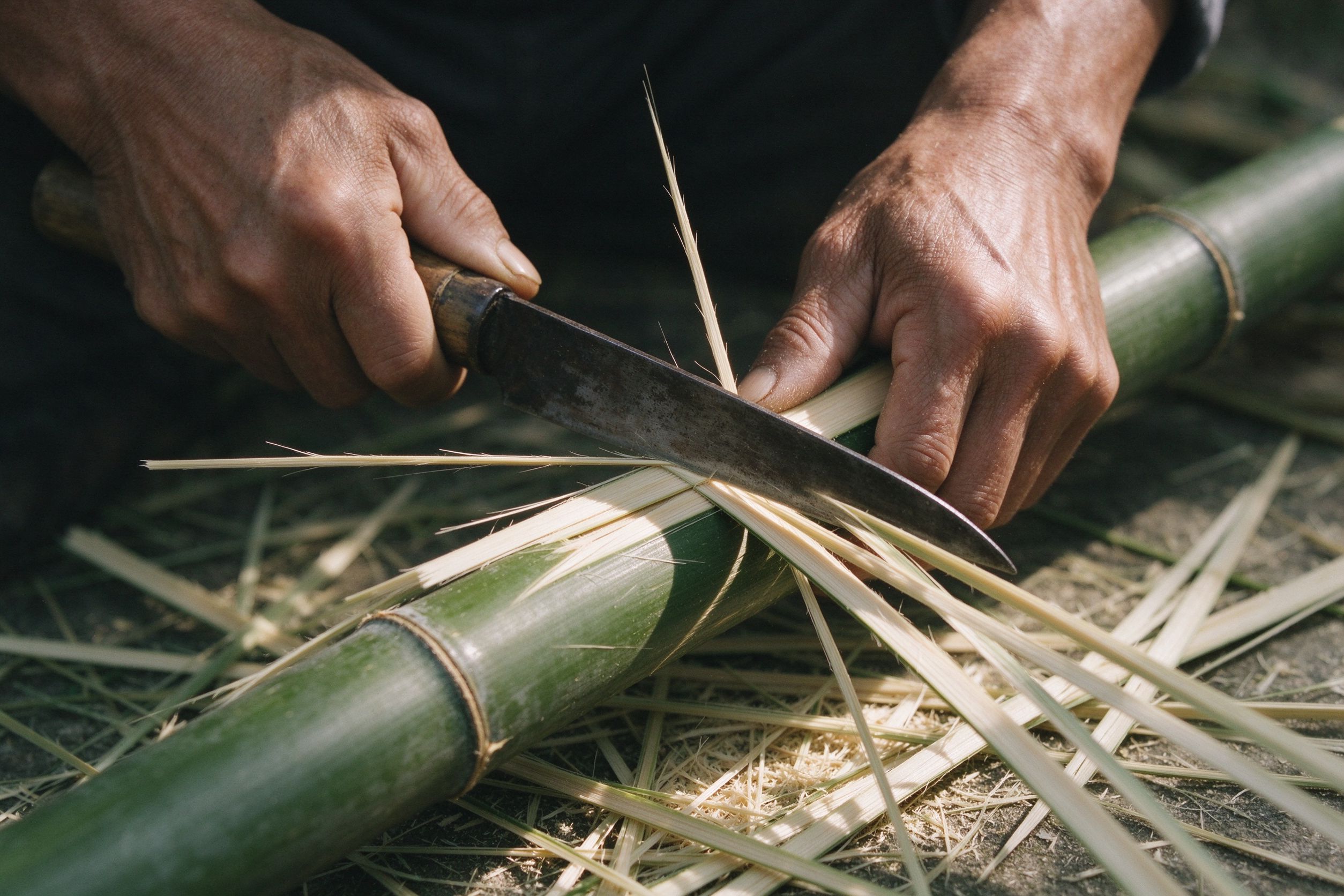
破篾:一破四、四破八,越分越薄;刮青去竹皮,剖丝定宽窄。篾要薄到能透光,编起来才服帖。宽窄差半毫米,整件器物就会歪。
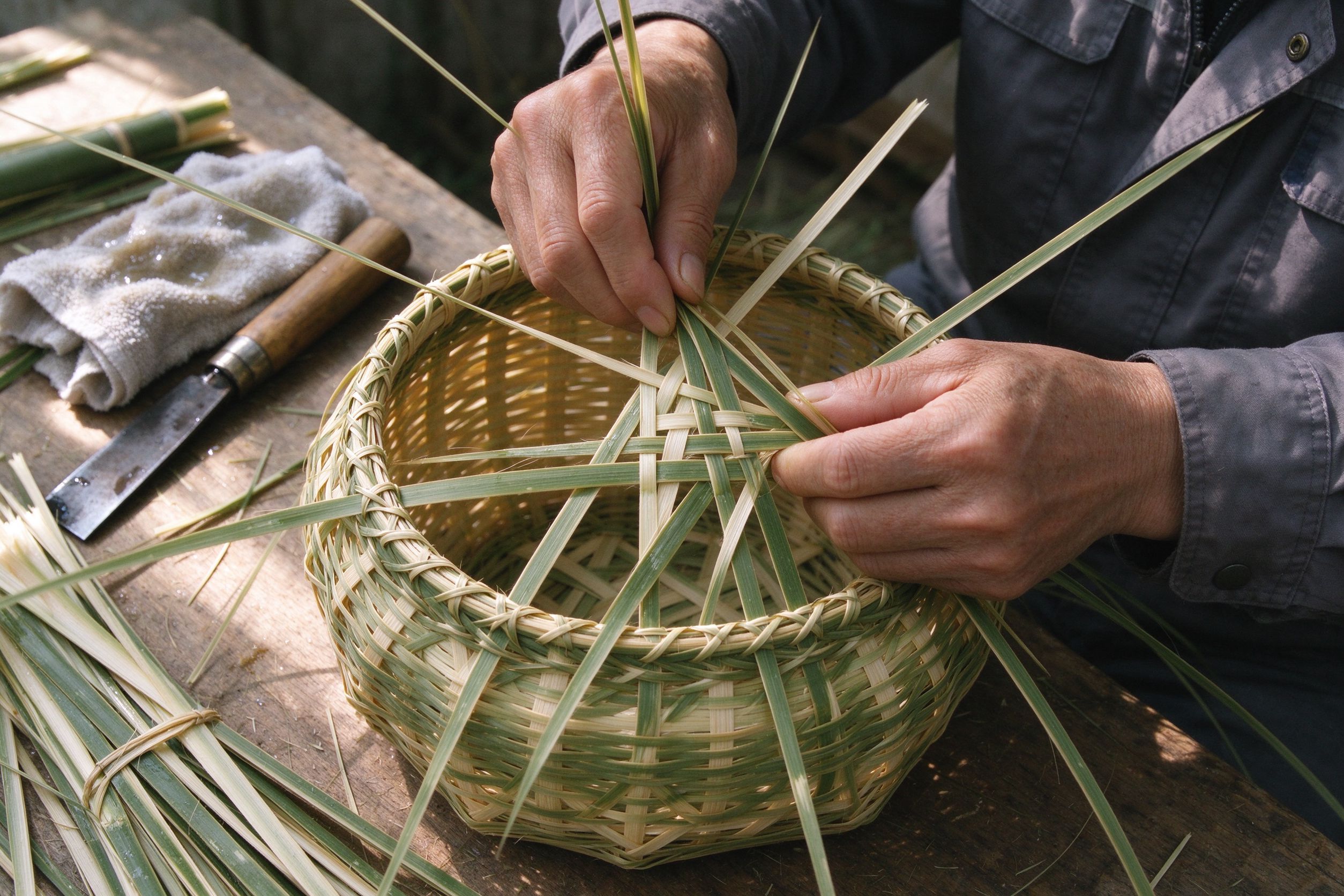
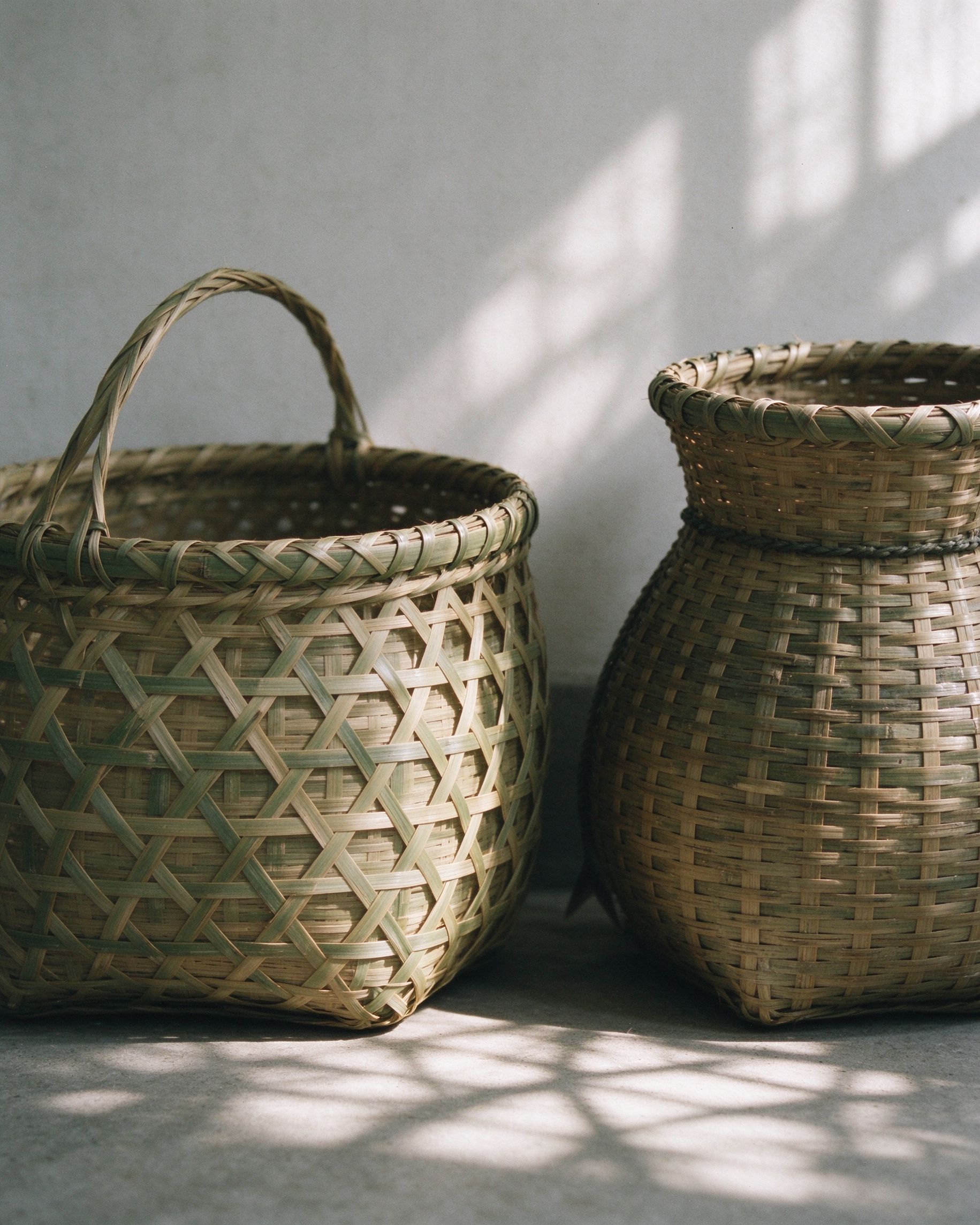
编织:常见有十字编、六角编、菊底编、穿丝编。底用密编求硬,口沿用疏编求软,同一件器物常混用几种。编完锁口、上漆或打蜡,边才不割手。
收口:收口是最考验人的一步:篾条要一圈圈绕紧,接头藏在里面,摸上去不能有凸起。
4. 器物与民俗
旧时:嫁女送一对竹篮,“篮”与“男”谐音,是早生贵子的祝愿;渔民编鱼篓,口小肚大,鱼进去出不来;山里的背篓在靠背处多压两道篾,走长路才不硌。
竹的性格:竹一节一节往上长,三年成材,砍了还会再发。编竹的人顺着竹性走,弯不过来的篾硬弯就会断——不是征服材料,是跟材料商量。
5. 今天怎么用
家里:收纳篮、脏衣篓、果盘、茶盘、杯垫、灯罩,都是这两年在城市家庭里重新多起来的东西。竹编透气、轻,摔不坏,用久了颜色会变深。
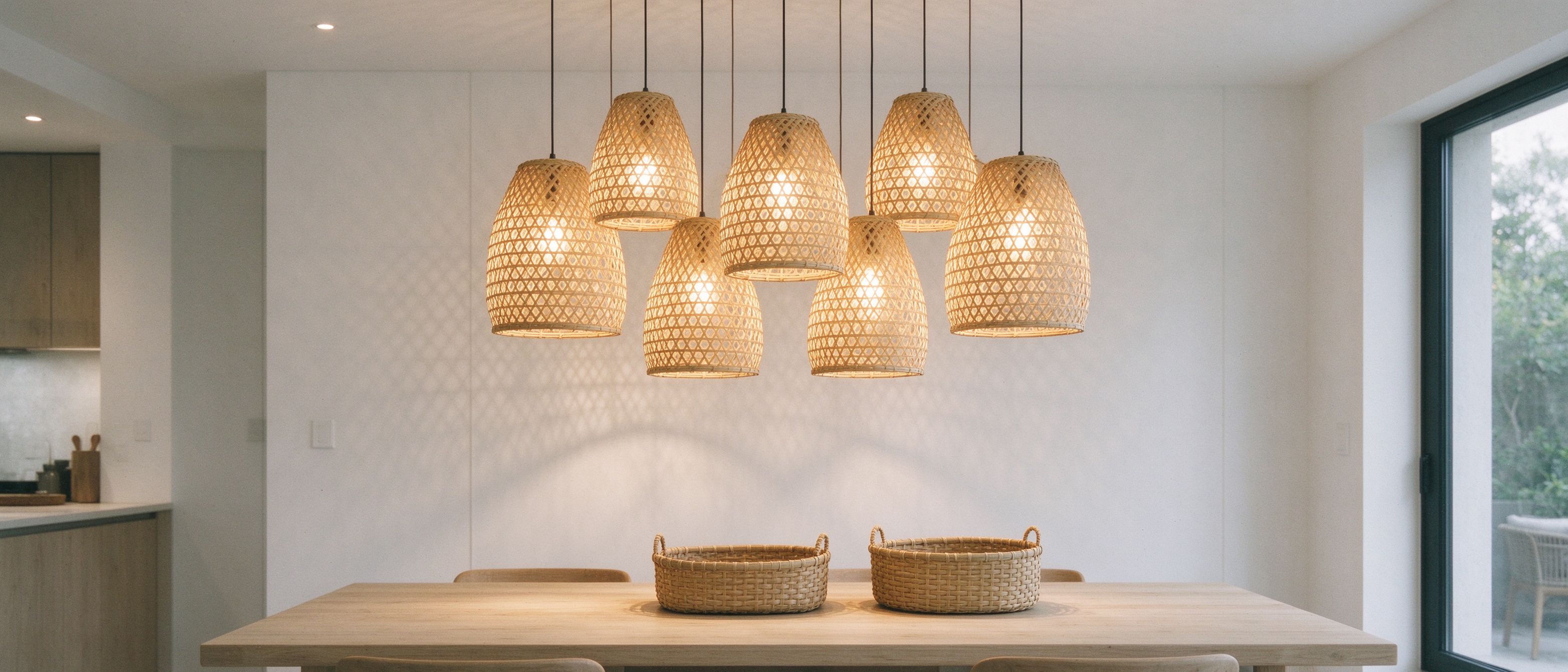
设计与建筑:吊灯灯罩、家具面板、屏风、餐厅隔断,竹编被当作一种有纹理的半透材料使用,光穿过篾缝会在墙面留下细密的影子。
耐用与修补:竹编器物怕长时间浸水,擦干就行;局部断了可以补篾,老匠人补一只篮子只要半小时。
6. 细作之处
看一只竹篮,先看口沿:锁边是否匀,接头藏没藏住;再看篾条:宽窄是否一致,颜色是否统一;最后对着光看,篾缝是否细而匀。好的竹编,装满东西也不变形,空着放也立得住。
1. Page introduction
Bamboo Weaving
One culm, split into strips thin enough to pass light
Bamboo weaving is older than paper. Woven bamboo traces appear at Neolithic sites, and the craft lives in two places at once today: the workshops in the hills, and the lampshades, baskets and tea trays in city homes.
This page covers four things: how bamboo is chosen, how a strip is split, how an object is woven, and why it has come back into daily use.
2. Choosing bamboo
Where it grows: Bamboo grows widely in the south. Shengzhou and Dongyang in Zhejiang, Qingshen in Sichuan and Anxi in Fujian are known for the craft. People in the hills wove farm tools and pack baskets, people by the water wove fish traps, people on the plains wove drying mats and panniers. Use decides shape first.
Choosing a culm: Age and joint matter. Bamboo around three years old is the most flexible: younger culms are easily bored, older ones split. After cutting, the culm is dried in shade so the moisture goes and the strips shrink less later.
3. Splitting and weaving
Splitting: One into four, four into eight, each strip thinner than the last. The green skin is scraped off and strips are cut to an even width. A strip has to be thin enough to pass light before it will lie flat. Half a millimeter of difference and the whole object goes crooked.
Weaving: The common weaves are square, hexagonal, spiral base and inlaid. A dense base gives stiffness, a loose rim gives softness, and one object often uses several. When the weaving is done, the rim is bound and the piece is lacquered or waxed so the edge does not cut the hand.
Closing the rim: Closing is the hardest step: strips are wound tight ring by ring, the joins hidden inside, and nothing should feel raised under the fingers.
4. Objects and customs
In the past: A pair of bamboo baskets went with a daughter's dowry; the word for basket sounds like the word for boy, so it stood for sons. Fishermen wove traps with a narrow mouth and a wide belly. Pack baskets for mountain paths were woven with two extra layers of strip at the back, so the load would not dig into the spine.
The character of bamboo: Bamboo rises joint by joint, matures in three years and grows again after cutting. Weavers follow the grain rather than forcing it: a strip that will not bend will break if you make it. This is not conquering the material but negotiating with it.
5. Where it is used today
At home: Storage baskets, laundry hampers, fruit bowls, tea trays, coasters and lampshades have all come back into city homes in the past few years. Bamboo breathes, weighs little, survives a fall, and darkens with use.
Design and building: Pendant shades, furniture panels, screens and restaurant partitions use bamboo weaving as a textured, half-transparent material; light crosses the strips and leaves a fine shadow on the wall.
Care: Bamboo objects dislike long soaking; wiping dry is enough. A broken section can be rewoven, and an experienced weaver can repair a basket in half an hour.
6. Where the fine work shows
Look at a basket rim first: whether the binding is even and the joins are hidden. Then look at the strips: whether the width and the color match. Then hold it to the light and see whether the gaps are fine and regular. A good basket keeps its shape when full, and still stands when empty.
配图 · Illustrations
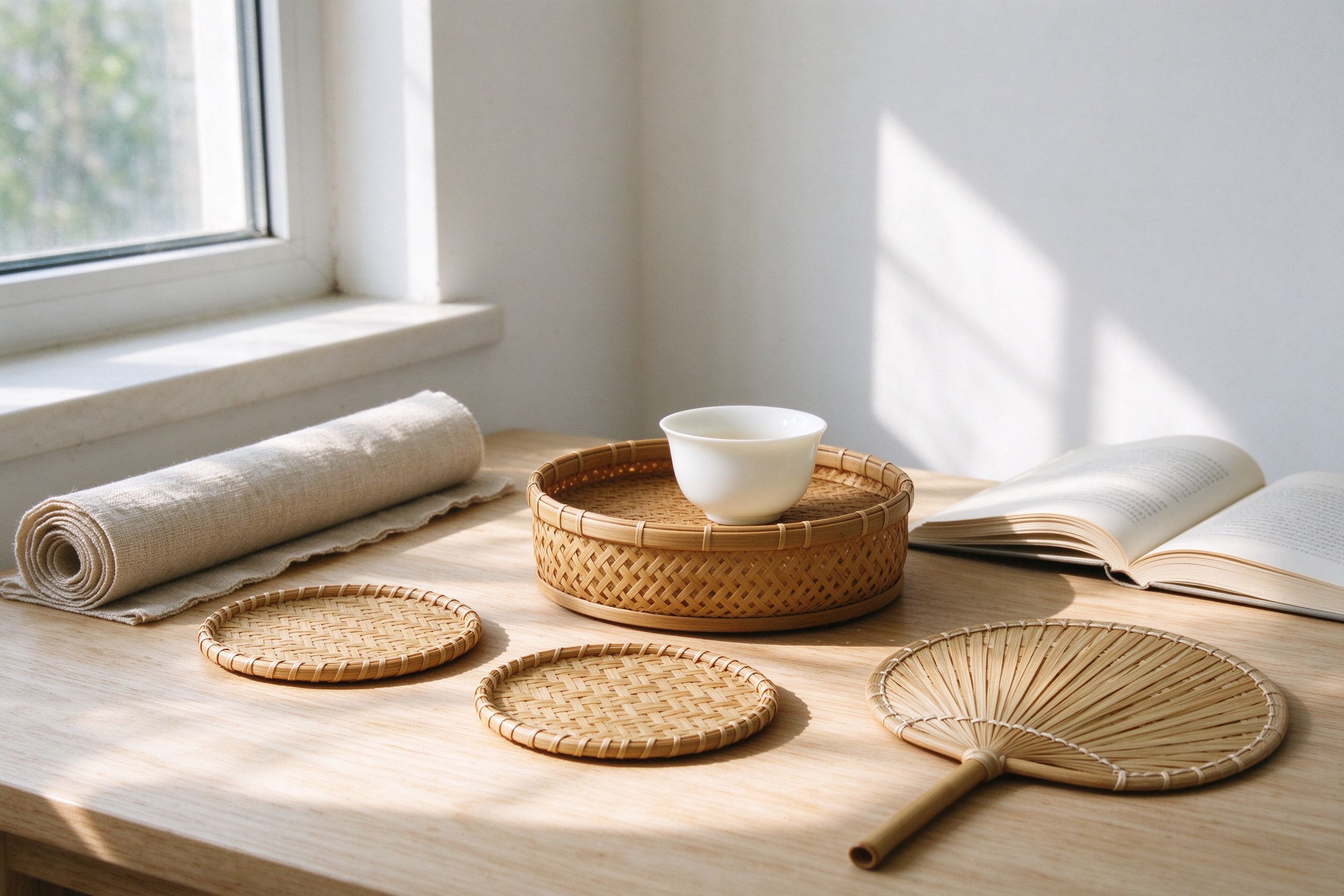
受著作权相关法规限制,本站未使用第三方实拍照片。本图为AI参照传统实物形制1:1复原绘制,仅作文化示意,并非真实藏品实拍。
Due to copyright regulations, no third-party photographs are used on this site. This image is AI-generated, faithfully reconstructed based on the traditional craft form for cultural illustration only. It is not a photograph of a real artifact.
权威档案 · Official archives
想要查阅官方档案、馆藏原始记载,可点击下方链接跳转至国家级权威平台阅读。
以上链接为国家平台的项目档案页,页内不设个人联系方式;站点侧栏的公众号二维码属机构自有渠道,非个人账号。