七
瓷器专区Porcelain
/porcelain
1. 页面导语
瓷器
土、火与釉,三样都对,器才成
瓷器是中国手艺里最日常的一种:饭碗、茶杯、花器、香插,多数人家里都有几件。它也是最少被讲清楚的——大家看得见颜色,看不见土怎么练、坯怎么拉、釉怎么配、火怎么控。
这一页只讲今天还在做、还在用的器:龙泉的青瓷、德化的白瓷、景德镇的青花。博物馆里的重器与官窑礼器不在范围内,我们把篇幅留给能端在手上的那一类。
2. 三个产区
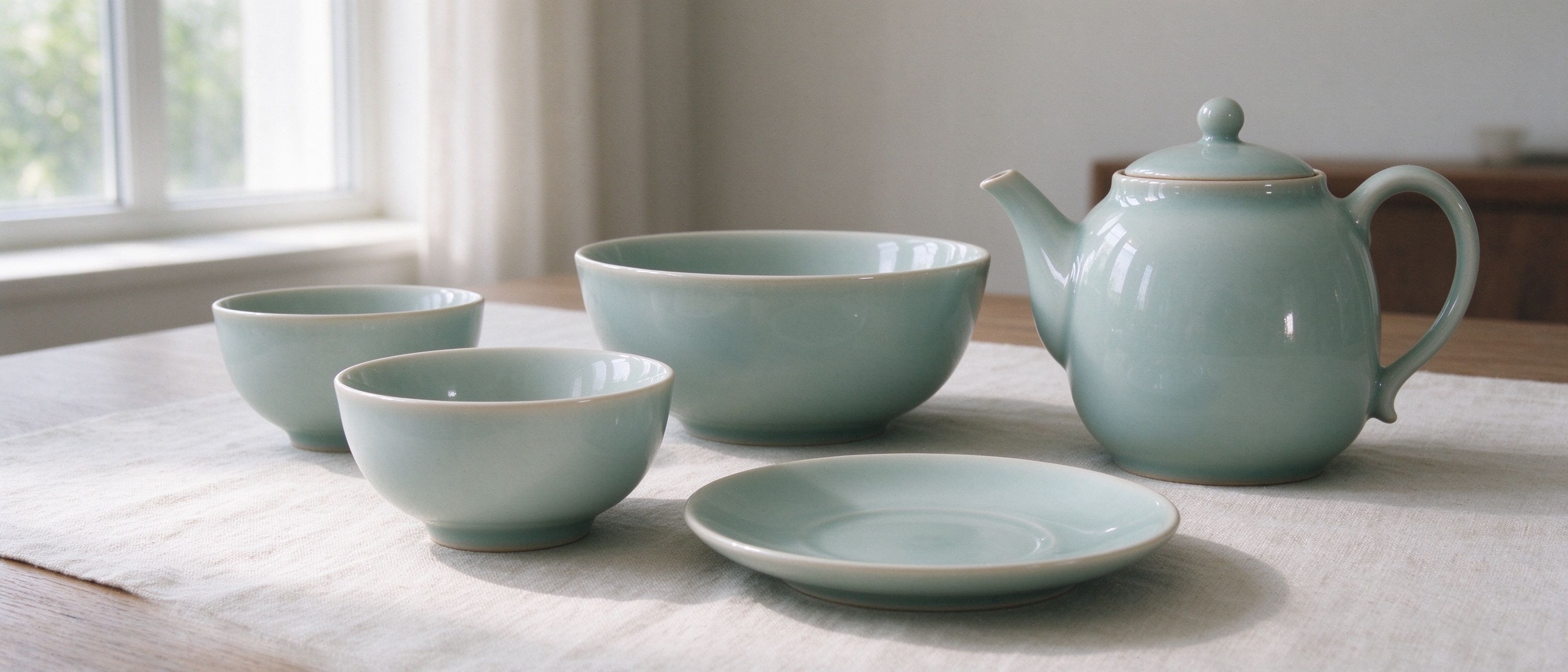
龙泉青瓷:浙江龙泉一带,以瓷土、紫金土、石灰石与石英为料,高温还原焰烧成,釉色粉青或梅子青,厚釉的要施三四层、每层素烧一次。今天常见的是茶器、花器与餐具。
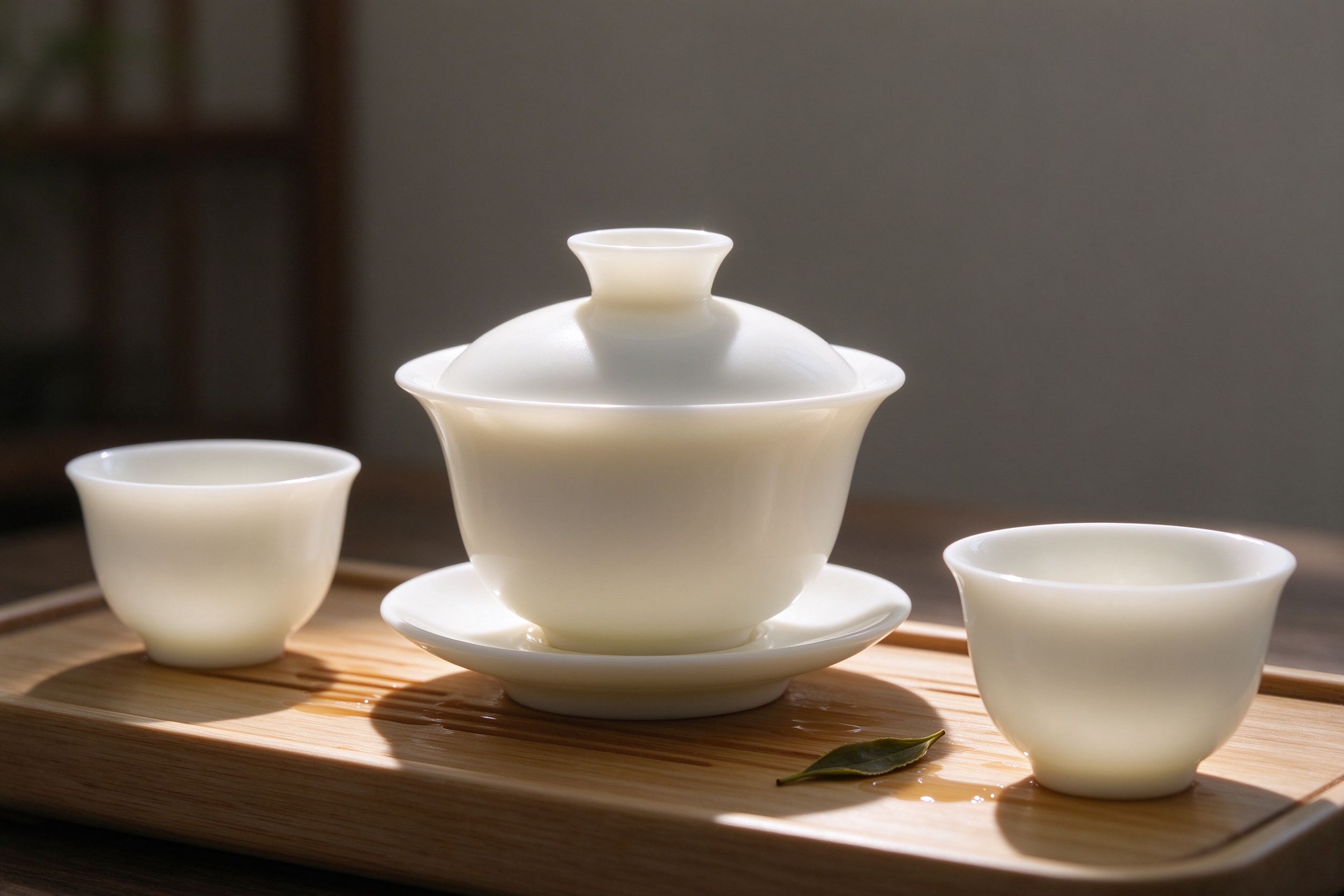
德化白瓷:福建德化,高岭土纯净、含铁低,烧出来的胎体细白、器壁薄到透光,明代经海路大量外销,欧洲人称之为“中国白”。今天多是茶器、塑像与日用器皿。
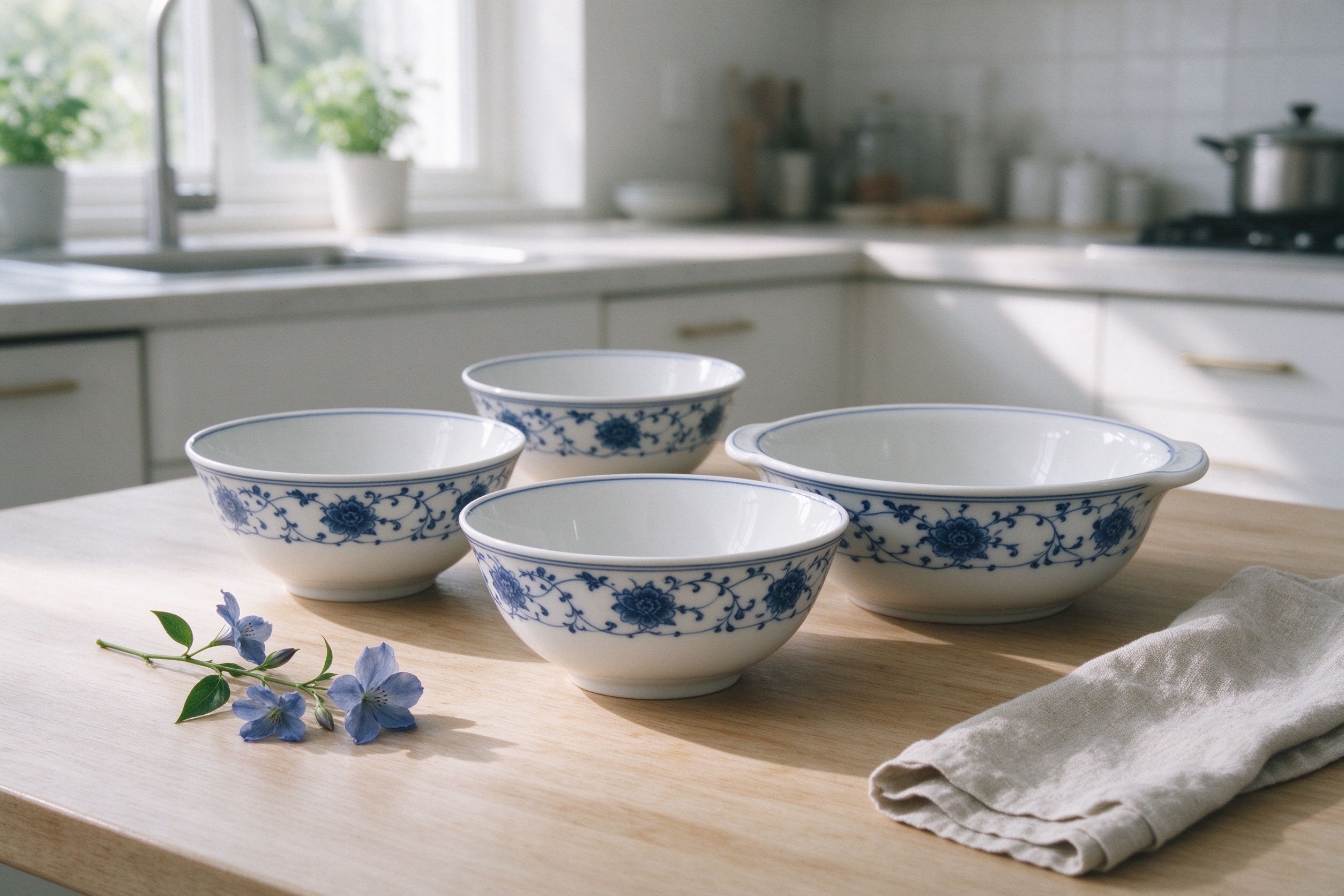
景德镇青花:江西景德镇,元代起用瓷石加高岭土的二元配方,釉下用钴料画纹,罩一层透明釉后高温一次烧成。今天最常见的是碗、盘、碟与茶具。
3. 工序
练泥:瓷土经粉碎、淘洗、陈腐、练泥,把空气与粗颗粒排掉;泥练得匀,拉出来的坯壁才不夹层。
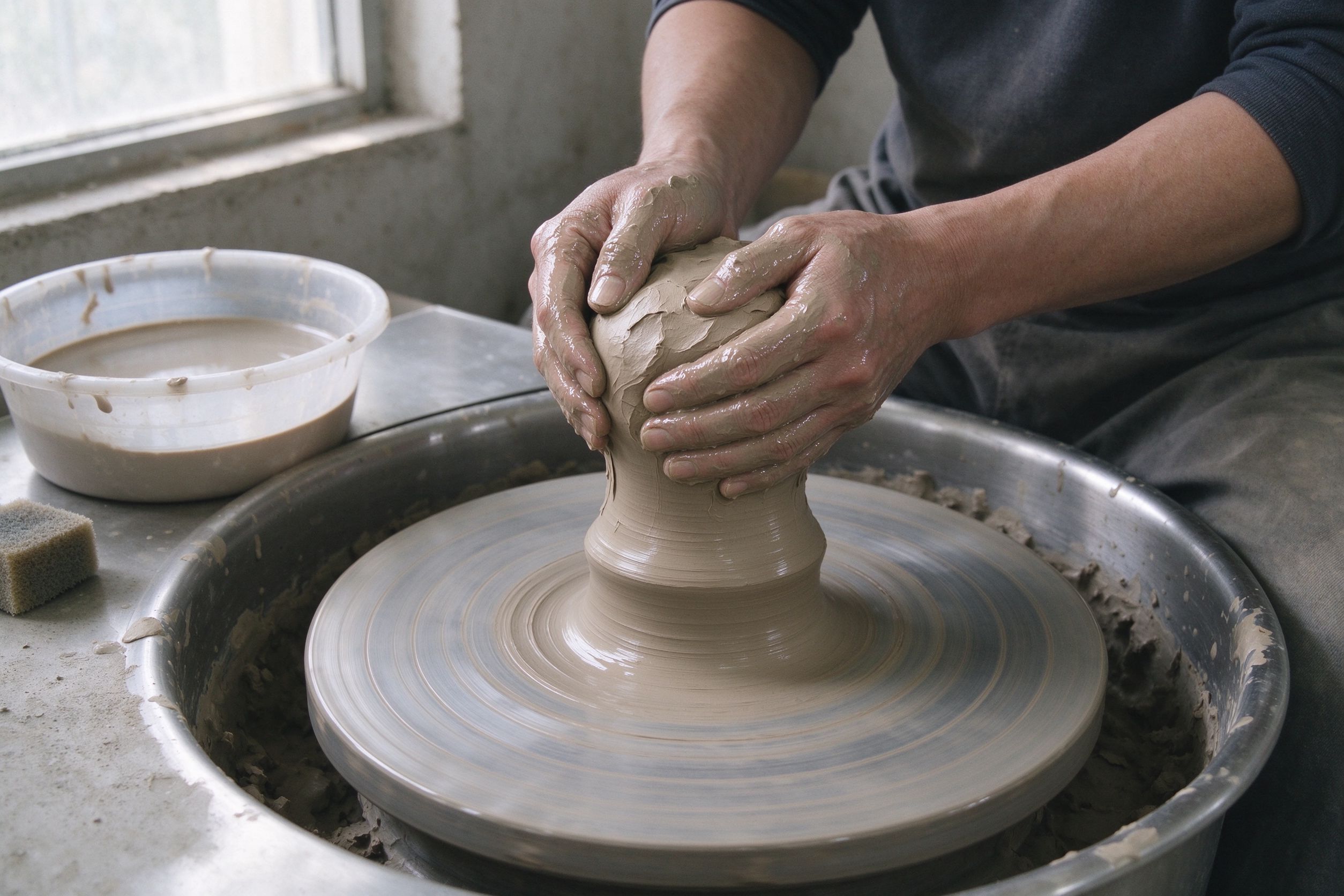
拉坯与修坯:拉坯在转盘上完成,双手从泥团中心开口、提壁、定形;半干后上利坯台修坯,把壁修到匀薄,圈足修圆。这一步差一毫米,烧完就看得见。
施釉:荡釉、浸釉、涂釉、喷釉各用在不同部位。厚釉类要施了素烧、素烧后再施,反复几次,釉层才够厚而不流。
装窑与烧成:坯体装匣后入窑,青瓷约 1300℃ 上下还原烧成,青花一次高温烧成。火候与气氛差一点,颜色就偏。
4. 釉与火讲什么
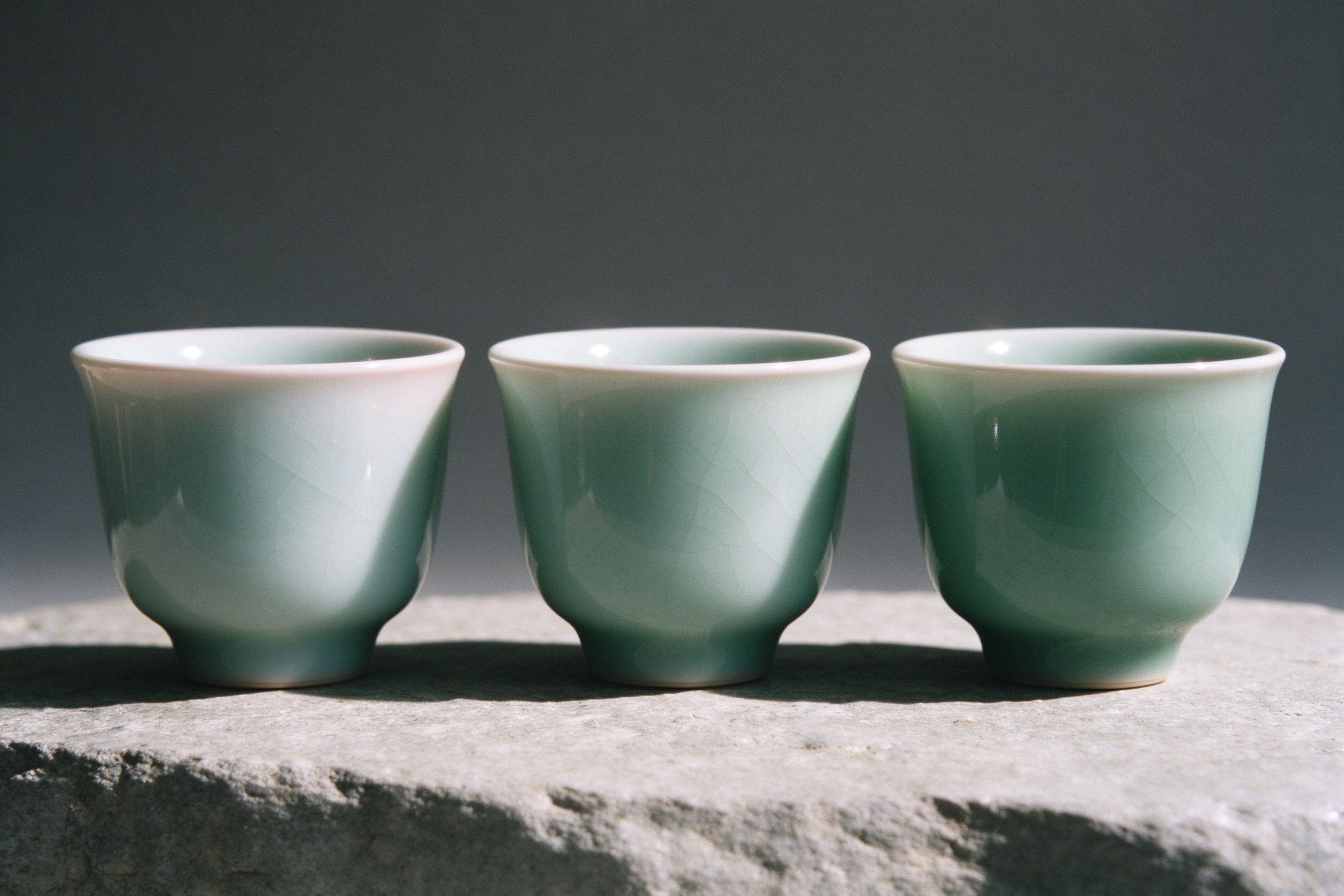
青:青瓷的颜色不是画上去的,是釉里的铁在还原气氛中还出来的。同一配方,窑位不同,颜色也会有深浅,所以一窑里能分出好几种青。
白:白瓷靠的是胎土干净。铁的含量越低,白越正;胎越薄,光透得越柔。
青花:钴料画在坯上,罩釉后一次烧成, blue 在釉下,不会磨掉。发色取决于钴料的纯度与火候,好的一枝纹,蓝里有层次。
5. 今天怎么用
餐桌:青瓷饭碗、白瓷汤碗、青花盘子,是很多家庭日常在用的东西。釉面不吸味,洗起来也省事。
茶席:盖碗、小杯、公道杯,白瓷看汤色,青瓷看釉光。
陈设:花器、香插、灯座;一件器放在桌上,光从侧面过来,釉面和器形的关系就出来了。
6. 细作之处
看一件日用瓷,看四处:口沿是否薄而匀,摸上去不刮嘴;圈足是否修得圆,放在桌上不摇;釉面是否匀净,有没有积釉与缩釉;青花的花纹是否清晰,蓝里有没有浓淡。好器不用凑近看,放在桌上,光一照就立得住。
1. Page introduction
Porcelain
Clay, fire and glaze, all three right, and the vessel holds
Porcelain is the most everyday of Chinese crafts: rice bowls, tea cups, vases, incense holders. Most homes have a few pieces. It is also the least explained. People see the color but not how the clay is worked, the wall thrown, the glaze mixed, the fire controlled.
This page covers only what is still made and still used: celadon from Longquan, white porcelain from Dehua, blue-and-white from Jingdezhen. Museum masterpieces and imperial ritual wares are out of scope; the space is kept for pieces you can hold.
2. Three places
Longquan celadon: Around Longquan in Zhejiang, porcelain stone, purple-gold clay, limestone and quartz are fired at high temperature in reduction. The glaze reads either powder blue or plum green; thick glazes are applied in three or four layers, each bisque-fired before the next. What is common today is tea ware, vases and tableware.
Dehua white: In Dehua, Fujian, kaolin is clean and low in iron, so the body fires fine and white and the wall can be thin enough to pass light. Large quantities went overseas by sea in the Ming dynasty, and Europeans called it blanc de chine. Today it is mostly tea ware, figures and tableware.
Jingdezhen blue-and-white: In Jingdezhen, Jiangxi, porcelain stone was combined with kaolin from the Yuan dynasty on. Cobalt is painted under the glaze, a clear glaze goes over it, and the piece is fired once at high temperature. What is common today is bowls, plates, dishes and tea sets.
3. The steps
Working the clay: Porcelain stone is crushed, washed, aged and wedged to take out air and coarse grains. Clay worked evenly is clay whose walls will not trap air when thrown.
Throwing and turning: Throwing happens on the wheel: the center is opened, the wall lifted, the form set. When the piece is half dry it goes onto the turning lathe, where the wall is trimmed to an even thickness and the foot ring rounded. A millimeter here shows after firing.
Glazing: Pouring, dipping, brushing and spraying are used on different parts. Thick glazes are applied, bisque-fired, applied again, several times over, so the layer ends up deep without running.
Setting and firing: The piece goes into a saggar and then the kiln. Celadon is fired around 1300°C in reduction; blue-and-white is fired once at high temperature. A small difference in temperature or atmosphere shifts the color.
4. What glaze and fire decide
Green: Celadon color is not painted on. It comes from iron in the glaze returning under reduction. The same recipe gives different depths at different points in the kiln, so one firing can produce several greens.
White: White porcelain depends on a clean body. The lower the iron, the truer the white; the thinner the wall, the softer the light that passes through.
Blue: Cobalt is painted on the raw body, the glaze goes over it, and the piece is fired once. The blue sits under the glaze and cannot wear off. The tone depends on the purity of the cobalt and the firing; in a good branch pattern the blue has depth.
5. Where it is used today
The table: Celadon rice bowls, white soup bowls and blue-and-white plates are what many households actually eat from. Glazed surfaces take no flavor and are easy to wash.
The tea table: Lidded bowls, small cups and fairness pitchers. White shows the color of the tea; celadon shows the light on the glaze.
Display: Vases, incense holders, lamp bases. Put one piece on a table with light coming from the side and the relation between glaze and form appears.
6. Where the fine work shows
Look at four places in a piece of everyday porcelain: whether the rim is thin and even and does not cut the lip; whether the foot ring is round and the piece sits without rocking; whether the glaze is even, with no pooling or bare patches; whether the blue-and-white pattern is clear and the blue has depth. A good piece does not need a close look. Put it on a table and let the light find it.
配图 · Illustrations
受著作权相关法规限制,本站未使用第三方实拍照片。本图为AI参照传统实物形制1:1复原绘制,仅作文化示意,并非真实藏品实拍。
Due to copyright regulations, no third-party photographs are used on this site. This image is AI-generated, faithfully reconstructed based on the traditional craft form for cultural illustration only. It is not a photograph of a real artifact.
权威档案 · Official archives
想要查阅官方档案、馆藏原始记载,可点击下方链接跳转至国家级权威平台阅读。
以上链接为国家平台的项目档案页,页内不设个人联系方式;站点侧栏的公众号二维码属机构自有渠道,非个人账号。