三
文房专区:文房四宝The Scholar's Table
/studio-study
1. 页面导语
文房四宝
笔、墨、纸、砚,书房里最安静的四件工具
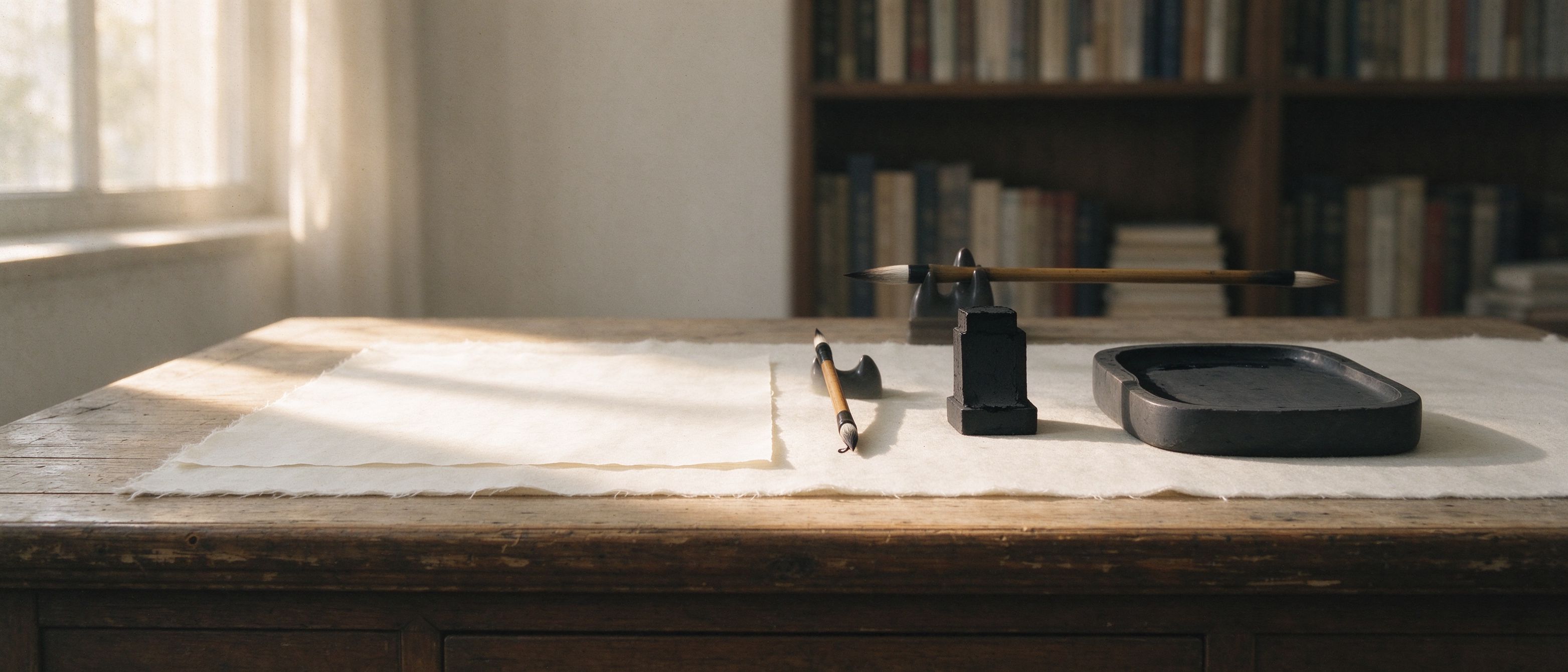
文房四宝不是四件东西的统称,而是一套配合关系:纸要能吃住墨,墨要能在砚上磨开,笔要能蓄住墨又送得出去。四件器物互相挑剔,也互相成全。缺一件,另外三件都发挥不出来。
这一页按“纸、笔、墨、砚”的顺序讲,每一件都分三层:它从哪里来,它怎么做成,它在中国人的心里意味着什么。
2. 宣纸
历史渊源:宣纸之名来自唐代的宣州。泾县一带山多水清,青檀树皮提供长纤维,沙田稻草提供柔韧,两样原料配在一起,才有了润墨而不易洇的纸性。宋元以后,书画用纸逐渐以宣纸为正宗,产地至今仍集中在皖南山区。
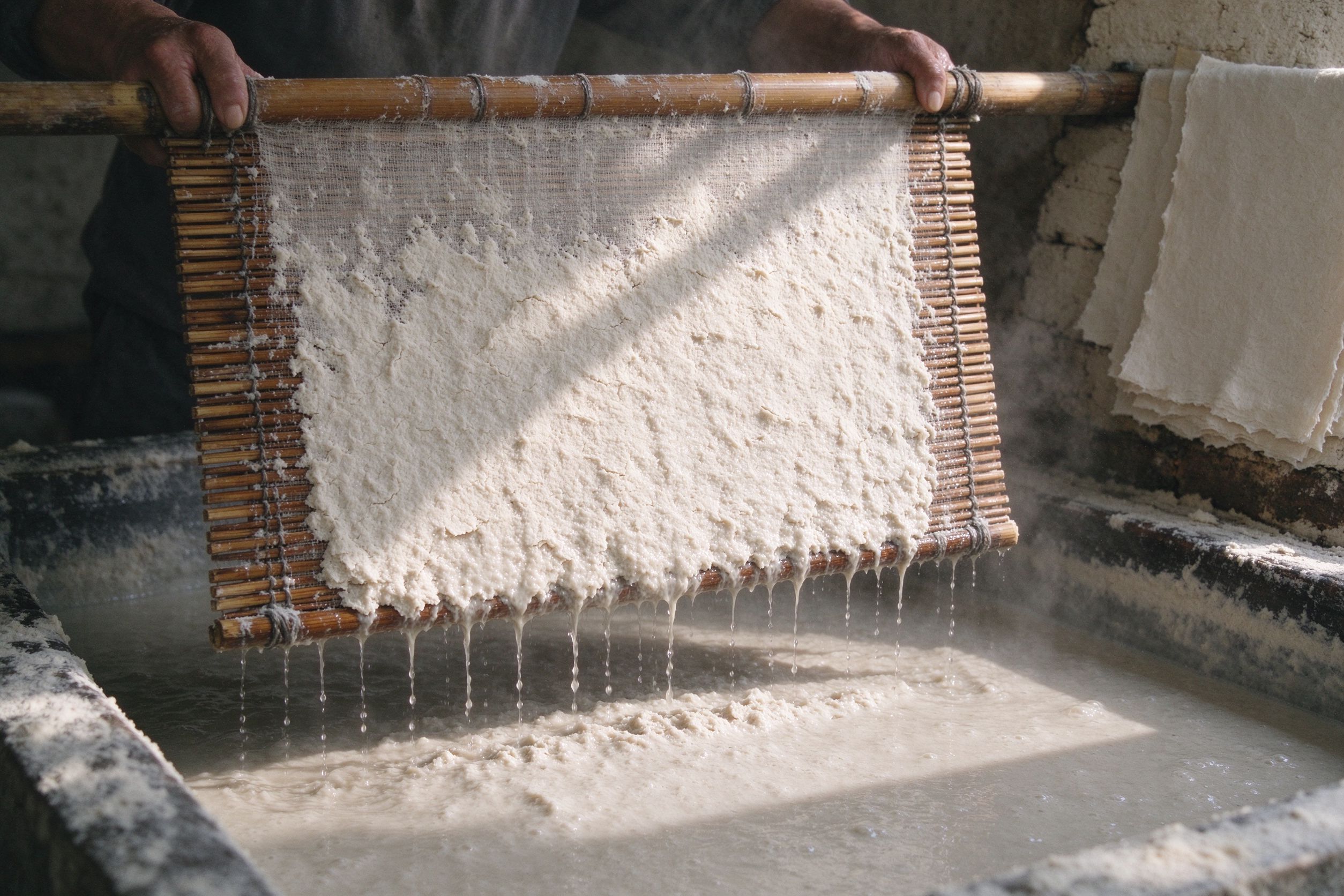
传统工艺:从树皮到成纸,前后要一年左右:选皮、浸泡、蒸煮、去杂、打浆、配浆、捞纸、压榨、烘干、拣选。最看功夫的是捞纸——两张帘同时入槽,抬手要平,纸的厚薄全在腰和腕上;厚一分则涩,薄一分则漏。烘干的纸贴在焙墙上,纸面才平整不起皱。
文化寓意:宣纸讲“生”与“熟”:生纸吸水快,适合写意;熟纸加矾,适合工笔与小楷。纸上的留白从来不是空的,那是给墨留的位置。中国人说“纸寿千年”,说的既是纸的耐久,也是一种希望文字留得久一点的心愿。
3. 毛笔
历史渊源:笔的形制在战国与秦代已经出现,蒙恬造笔是流传最广的说法。到明清,浙江湖州善琏镇的笔工以选料精、分工细著称,“湖笔”由此成名,一支笔往往要经过几个师傅的手。
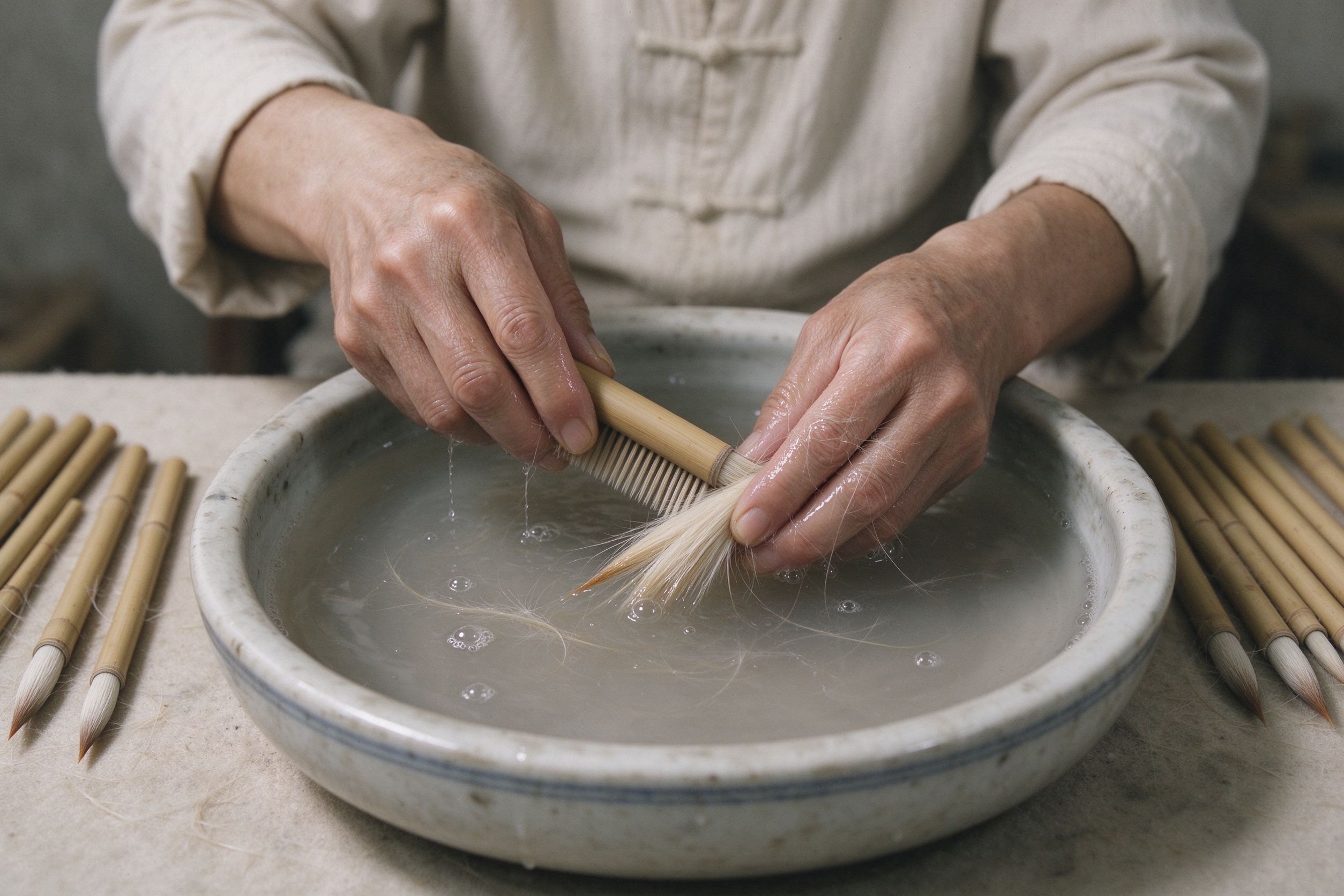
传统工艺:一支湖笔要走择料、水盆、结头、装套、择笔、刻字几道大工序。水盆一道全在手感:浸毛、梳毛、齐毛、卷笔柱、覆被毛,一根杂毛都要挑出来。所谓“尖、齐、圆、健”,说的是锋颖要尖、毛锋要齐、笔肚要圆、按下去要有弹性。
文化寓意:笔有四德,也像做人的四条标准。笔用久了会秃,秃笔多半不舍得扔,留在案头当个念想——这是读书人对工具的感情,也是手作器物少见的“用旧了更亲”。
4. 徽墨
历史渊源:徽墨产在古徽州,唐代已有制墨名家,南唐李廷珪一支被后世视为徽墨的源头。宋代以后徽州墨肆林立,墨不只是书写用品,也成了文人案头的收藏之物。
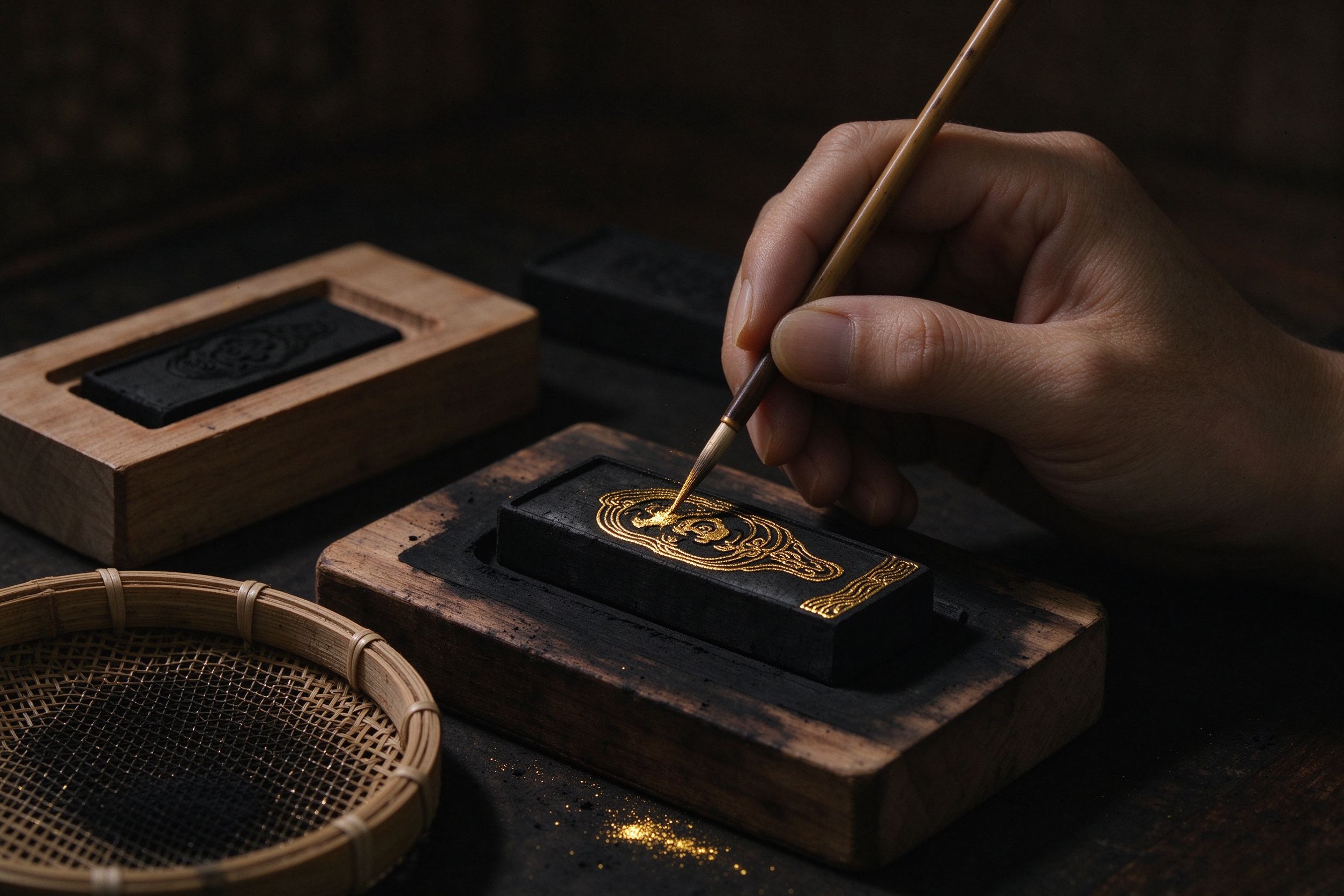
传统工艺:炼烟、筛烟、和胶、杵捣、成型、晾墨、锉边、描金。烟分松烟与油烟:松烟偏冷黑,油烟偏暖亮。和胶的比例决定墨的硬度与光泽;杵捣要让烟与胶彻底融在一起,捣得够次数,墨才磨得开、下笔才不滞。
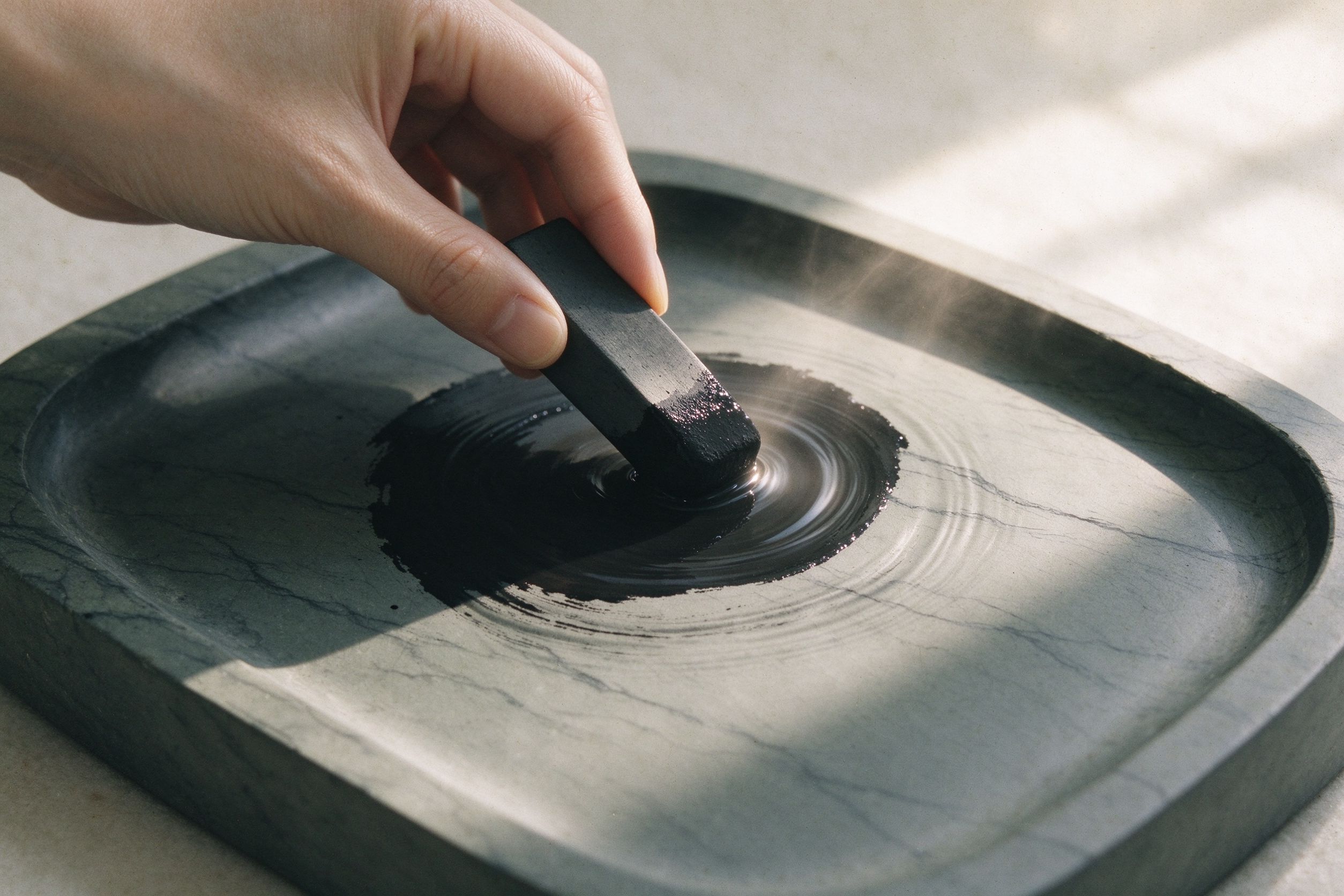
文化寓意:墨分五色——焦、浓、重、淡、清。同一块墨,靠水的多少调出不同层次,是中国人对“一生多”的理解。磨墨的过程也是一种预备:手在转,心在等,等墨色和墨绪都安定下来。
5. 砚台
历史渊源:砚的出现早于纸。汉代已有石砚,唐代以后,端砚、歙砚、洮砚、红丝砚被并称名砚。端砚出自广东肇庆端溪,歙砚出自安徽歙县龙尾山一带,两地都以石质细润著称。
传统工艺:砚的功夫一半在选石,一半在开池。选石要看细、看润、看有没有杂质与硬钉;开池要留出墨堂与墨池,边缘顺手,不挂墨。好砚发墨如油,磨起来不出响声、不滞笔。
文化寓意:砚最耐久,一方砚可以陪几代人。砚背与砚侧常刻铭文,写的是用砚人的自我提醒。书房里最沉默的器物,往往装着最长的时间。
6. 一次书写之前的准备
- 把纸铺平,用镇纸压住四角,先看清纸的吸水速度,决定落笔的轻重。
- 砚池里少加清水,执墨顺时针慢磨,磨到墨面起细密光晕再停。
- 笔尖在砚边理顺,让锋颖聚成一点,不要直接用干笔蘸墨。
- 落笔前在废纸上试一次,看纸、墨、笔三者的配合是否需要微调。
这四步不超过五分钟,却是文房器物真正被使用的方式——它们的价值不在陈列,而在每天被拿起的那一小会儿。
1. Page introduction
The Four Treasures of the Study
Brush, ink, paper and stone — the four quietest tools on a Chinese desk
The four treasures are not four separate objects. They are a set of relationships. Paper has to hold ink without letting it spread. Ink has to grind open on the stone. The brush has to store ink and release it again. Each one sets demands on the others, and each one makes the others work. Take one away and the other three stop performing.
This page follows the sequence paper, brush, ink and stone. Each part has three layers: where it comes from, how it is made, and what it has meant to the people who use it.
2. Xuan paper
Where it comes from: The name comes from Xuanzhou in the Tang dynasty. Around Jingxian the hills hold clear water. Bark of the blue sandalwood tree gives long fibers; rice straw gives softness. Together they make a sheet that holds ink without letting it bleed. From the Song and Yuan dynasties on, Xuan paper became the standard for painting and calligraphy, and it is still made in the same mountain valleys.
How it is made: From bark to finished sheet takes about a year: bark selected, soaked, steamed, cleaned, beaten, blended, lifted, pressed, dried and sorted. Lifting is where skill shows. Two screens go into the vat together and the frame has to rise level; thickness lives in the wrists and waist. A little too thick and the sheet feels rough; a little too thin and it leaks. The wet sheet is brushed onto a heated wall so that it dries flat.
What it means: Xuan paper comes raw or sized. Raw paper drinks water quickly and suits free brushwork; sized paper, treated with alum, suits fine line work and small regular script. Empty space on the page is never really empty. It is space kept for ink. The Chinese phrase 'paper lives a thousand years' speaks both of how long the sheet lasts and of a wish that writing might last longer than the writer.
3. The brush
Where it comes from: Brushes appear in Chinese records by the Warring States and Qin periods. The best known story credits Meng Tian with their invention. By the Ming and Qing dynasties, brush makers in Shanlian, Huzhou, were known for careful selection of hair and fine division of labor, and the Hu brush took its name from there. One brush often passes through several pairs of hands.
How it is made: A Hu brush goes through hair selection, the water basin stage, binding the head, fitting the shaft, final trimming and engraving. The water basin stage is all in the fingers: hair is soaked, combed, evened, rolled into a core and covered with an outer layer, and every stray hair is picked out. Brush makers look for four qualities: a pointed tip, an even front, a round belly and good spring.
What it means: Those four qualities are often read as four standards for a person. A brush wears down with use, and a worn brush is rarely thrown away; it stays on the desk as a reminder. Few handmade objects grow closer to their owner as they wear out.
4. Hui ink
Where it comes from: Hui ink comes from the old Huizhou region. Ink makers were already known there in the Tang dynasty, and the workshop of Li Tinggui under the Southern Tang is often named as its source. From the Song dynasty on, ink studios multiplied across Huizhou, and an ink stick became something a scholar kept and collected, not only something to write with.
How it is made: Soot is refined and sifted, glue is blended in, the mix is pounded, formed, rested, trimmed and finally traced with gold. Soot comes in two kinds: pine soot reads cool and black, oil soot reads warmer and brighter. The ratio of glue to soot sets hardness and sheen. Pounding has to bring soot and glue fully together; pound it enough and the stick grinds open smoothly and the brush does not drag.
What it means: Ink is said to have five tones: burnt, dense, heavy, pale and clear. One stick, adjusted with water, gives all five. It is a Chinese way of seeing many things inside one. Grinding ink is also a form of preparation: the hand turns, the mind waits, until both the ink and the mood settle.
5. The inkstone
Where it comes from: Inkstones came before paper. Stone inkstones exist from the Han dynasty. From the Tang dynasty on, the Duan, She, Tao and red-silk stones were named together as the great inkstones. Duan stone comes from the Duan stream in Zhaoqing, Guangdong; She stone from the Longwei mountain area in She county, Anhui. Both are valued for fine, moist grain.
How it is made: Half the craft is choosing the stone, half is cutting the pool. The stone is checked for fineness, moisture and hard flaws. The pool is cut with a flat grinding surface and a shallow well, with edges that let ink gather instead of clinging. A good stone grinds ink like oil: no rasping sound, no drag on the brush.
What it means: An inkstone outlasts almost everything else on a desk and can pass through several generations. Inscriptions are often carved on its back or side, usually a line the owner wanted to keep in mind. The quietest object in the study tends to carry the longest stretch of time.
6. Before writing
- Lay the paper flat and weight the corners. Check how fast it drinks water before deciding how heavy to press.
- Put a little clean water in the stone and grind the stick slowly, clockwise, until the surface shows a fine sheen.
- Straighten the tip against the stone edge so the hairs gather to a point. Never dip a dry brush straight into ink.
- Try one stroke on scrap paper to see whether paper, ink and brush need small adjustments.
The whole routine takes five minutes. It is also the only way these objects are truly used. Their value is not in being displayed. It is in being picked up for a short while each day.
配图 · Illustrations
受著作权相关法规限制,本站未使用第三方实拍照片。本图为AI参照传统实物形制1:1复原绘制,仅作文化示意,并非真实藏品实拍。
Due to copyright regulations, no third-party photographs are used on this site. This image is AI-generated, faithfully reconstructed based on the traditional craft form for cultural illustration only. It is not a photograph of a real artifact.
权威档案 · Official archives
想要查阅官方档案、馆藏原始记载,可点击下方链接跳转至国家级权威平台阅读。
以上链接为国家平台的项目档案页,页内不设个人联系方式;站点侧栏的公众号二维码属机构自有渠道,非个人账号。