四
刺绣布艺专区Embroidery and Cloth
/embroidery
1. 页面导语
刺绣与布艺
一根线穿过布,再穿回来
重复几千次之后,图案就长在布上了。刺绣是最费时间的一种手作,也是最看得出一个人性子的手作:急的人绣不平,懒的人绣不完。
这一页分两部分。一部分是苏绣,出自绣院与织造局,讲规矩、讲针法;一部分是民间刺绣,出自灶台边的母亲与祖母,讲心愿、讲日子。两者用的都是针与线,路数却完全不同。
2. 苏绣
传承历史:苏绣以苏州为中心,与湘绣、粤绣、蜀绣并称四大名绣。宋代苏州已有“户户有绣”的说法,明清设织造局,绣工的分工越来越细。清末民初,沈寿以仿真绣引入光影与透视,让绣面第一次有了明暗过渡,绣出来的物象开始接近照片。
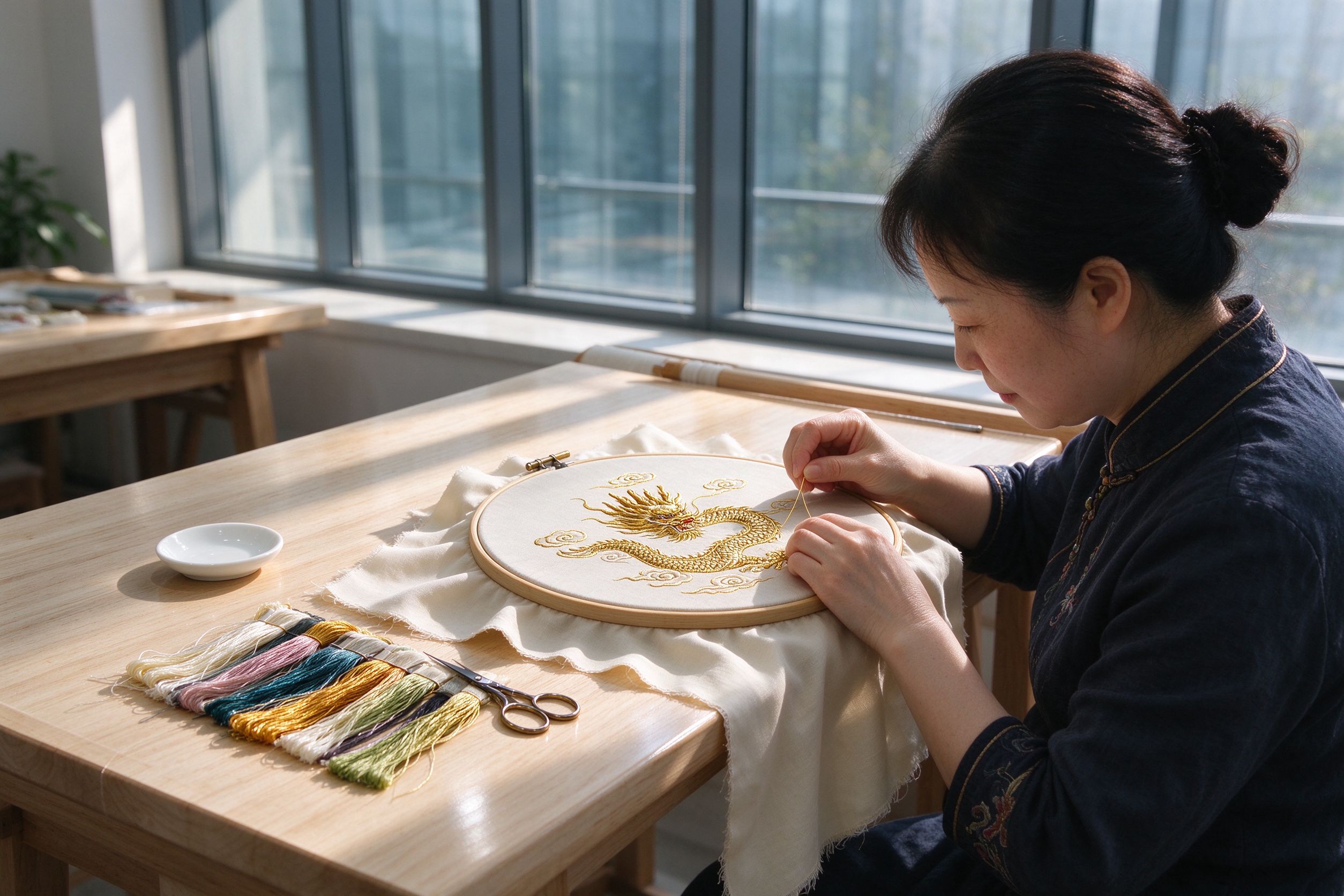
手工工序:主要工序是设计、上绷、勾稿、配线、劈丝、绣制、落绷、装裱。劈丝是最见功力的一步:一根丝线可以劈到十几分之一,绣猫须、绣鱼鳍、绣羽毛的绒感,全靠这个细度。针法有平针、套针、乱针、施针、打点等数十种,平针求匀,乱针求活,套针求过渡自然。
纹样含义:苏绣的传统题材多有出处:折枝花鸟取“花开富贵、鸟报佳音”,双鱼取“年年有余”,鸳鸯与并蒂莲取“成双”。纹样讲究成双成对、首尾呼应,忌讳孤零零一个。绣面上少留空,但空的地方要空得有意,比如一枝斜出的留白,是给风留的位置。
技艺的克制:苏绣讲“平、匀、光、顺”,成品背面几乎看不到线头。中国人把“看不出破绽”当作一种修养,功夫藏在看不见的地方。双面绣更进一步:两面同图,针脚全隐,转动时不露痕迹,是把克制做到了极处。
3. 民间刺绣
分布与来历:民间刺绣散在各地:陕西、山西的枕顶与鞋垫,贵州苗族的破线绣与锡绣,江南水乡的围裙与帐檐。它们不出自绣院,出自灯下的炕头与灶台边,图样靠口传与纸样流传,一代人照着上一代的样子改一点。
手工工序:多用棉线与土布,针法简单直接:平绣、锁绣、打籽绣、贴布绣。打籽绣用线绕针打成小疙瘩,绣面有颗粒感,耐磨也耐洗;贴布绣先剪出布片再缝上去,色块分明,做起来快。民间绣品不追求针脚细密,追求的是颜色亮、图形认得清、结实能穿。
纹样含义:石榴多子,蝙蝠纳福,鱼寓有余,牡丹寓富贵,虎头帽护小孩,五毒纹镇邪。纹样不是装饰,是说不出口的祝愿,用针线写在日常衣物上:一件常穿的上衣,一双鞋垫,一只随身的荷包,每一件都带着一句话。
为什么不对称也好看:民间绣品常常左右不完全对称,因为手不按图纸走,走的是心里的意思。这种不规整,恰恰是它比宫廷绣更亲近人的地方——你能看见那个人的手,也能看见她当时的心情。
4. 一件绣品的六道工序
- 起稿:把图样画在纸上,确定尺寸与配色,复杂画面先做小样。
- 上绷:布面绷紧在木架上,经纬拉正,松了会皱,紧了会变形。
- 勾稿:用淡墨或白粉把图样过到布面,线条要能盖住。
- 配线劈丝:按画面层次选线,把一根丝劈成需要的粗细。
- 绣制:从最深的一色起针,一层层提亮,先大体后细部。
- 落绷修整:下绷、熨平、修去背面线头,再装裱或缝制成器。
1. Page introduction
Embroidery and Cloth
A needle goes through the cloth, and comes back
After a few thousand repeats, the pattern is no longer on the cloth. It has grown into it. Embroidery takes more time than almost any other craft, and it shows a person's temperament more clearly: a hurried hand cannot stitch evenly, a lazy one never finishes.
This page has two parts. One is Su embroidery, which came out of embroidery rooms and imperial workshops and is governed by rules and stitch types. The other is folk embroidery, which came out of kitchens and lamp-lit beds, and is governed by wishes and daily life. Both use needle and thread, and they travel very different roads.
2. Su embroidery
History: Su embroidery is centered on Suzhou and is named together with the Hunan, Guangdong and Sichuan styles as one of the four great schools. By the Song dynasty, Suzhou was already described as a place where every household embroidered; in the Ming and Qing dynasties imperial workshops were set up there and the division of work grew finer. Around the end of the Qing dynasty, Shen Shou brought light, shadow and perspective into embroidery, and a stitched surface began to show gradual changes of tone, close to a photograph.
The process: The main steps are design, stretching, tracing, selecting threads, splitting silk, stitching, un-stretching and mounting. Splitting silk is where skill shows most: one thread can be divided into more than ten strands, and the softness of a cat's whisker, a fish fin or a feather depends on that fineness. There are dozens of stitches. Flat stitch aims at evenness, random stitch at life, layered stitch at smooth transition.
Patterns and their meanings: Traditional Su subjects carry meanings. A branch of flowers with a bird stands for prosperity and good news. Two fish stand for surplus year after year. Mandarin ducks and paired lotus stand for a couple. Patterns come in pairs that answer each other, and a single isolated motif is avoided. Little space is left empty, but what is left empty is left on purpose: a bare branch of white space is room for wind.
Restraint: Su embroidery is judged by four words: flat, even, bright and smooth. On the back of a finished piece you can barely find a thread end. In Chinese craft, hiding the seams counts as a form of discipline; the skill sits where you cannot see it. Double-sided embroidery goes further: the same pattern on both faces, every stitch hidden, nothing showing when the piece is turned. It is restraint taken to its limit.
3. Folk embroidery
Where it lives: Folk embroidery is scattered across the country: pillow ends and insoles in Shaanxi and Shanxi, split-thread and tin embroidery among the Miao in Guizhou, aprons and curtain borders in the water towns of the south. It did not come from workshops. It came from heated brick beds and kitchen tables, passed on by word of mouth and paper patterns, with each generation changing a small part of the last.
The process: Cotton thread on hand-woven cloth, with simple direct stitches: flat stitch, chain stitch, seed stitch and appliqué. Seed stitch wraps thread around the needle into small knots, which gives a grainy surface that wears well and survives washing. Appliqué cuts cloth shapes first and stitches them down, so colors stay clear and work goes fast. Folk pieces do not aim at fine stitches. They aim at bright color, readable shapes and cloth that holds up.
Patterns and their meanings: Pomegranate for many children, bat for good fortune, fish for surplus, peony for prosperity, tiger hats to protect a child, the five poisons to ward off evil. These patterns are not decoration. They are wishes too plain to say out loud, written in thread on everyday pieces: a jacket worn often, a pair of insoles, a pouch kept close. Each piece carries one sentence.
Why asymmetry still works: Folk pieces are often not quite symmetrical, because the hand does not follow a drawing; it follows a thought. That irregularity is exactly what makes them warmer than palace work. You can see the hand, and you can see how the maker felt that day.
4. Six steps of an embroidered piece
- Draw the design on paper, fix the size and colors, and make a small sample for complex scenes.
- Stretch the cloth on a frame, straighten the weave. Too loose and it wrinkles; too tight and it distorts.
- Trace the design onto the cloth in pale ink or white powder, with lines the stitches can cover.
- Choose threads by layer and split each thread to the thickness the image needs.
- Stitch from the darkest tone upward, building light in layers, broad shapes before detail.
- Take the piece off the frame, press it, trim the threads at the back, then mount or sew it into an object.
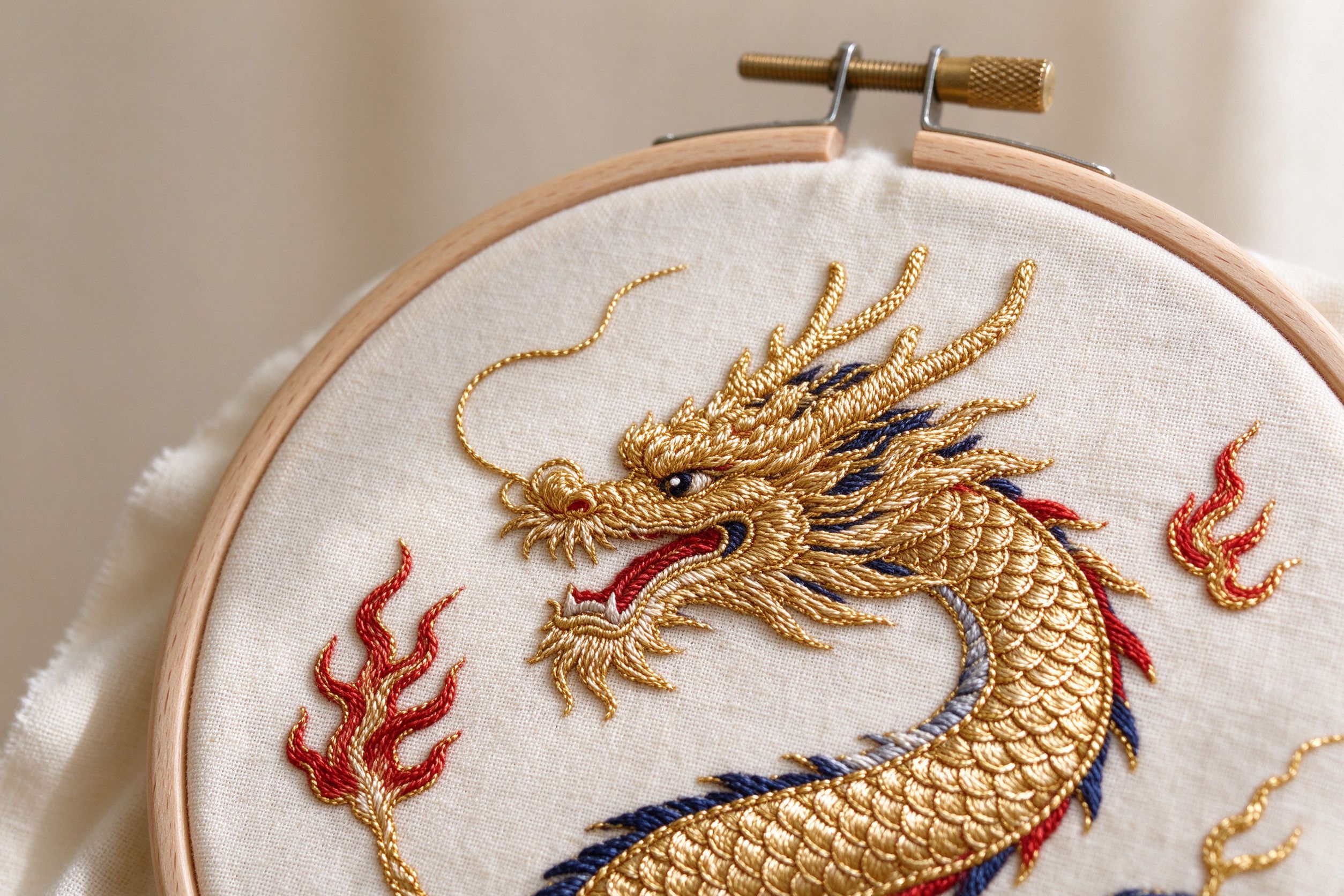
配图 · Illustrations
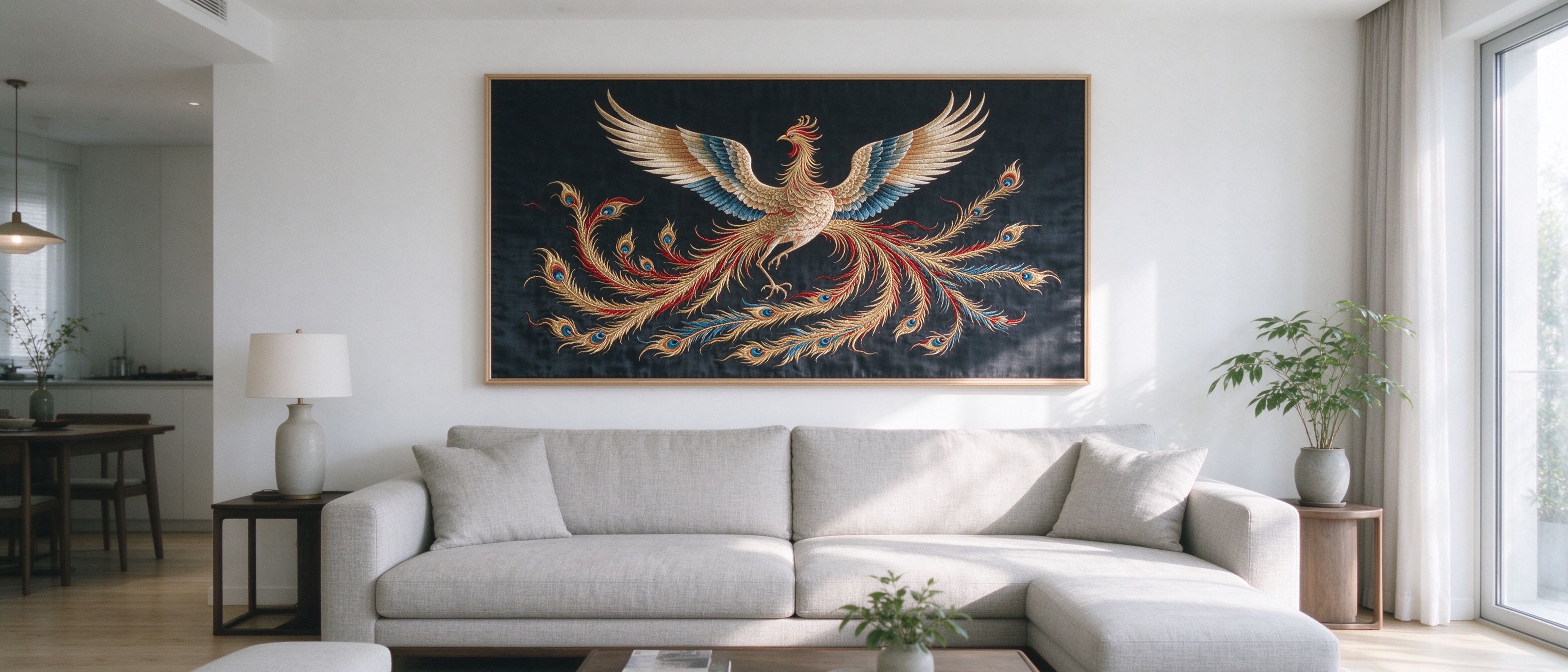
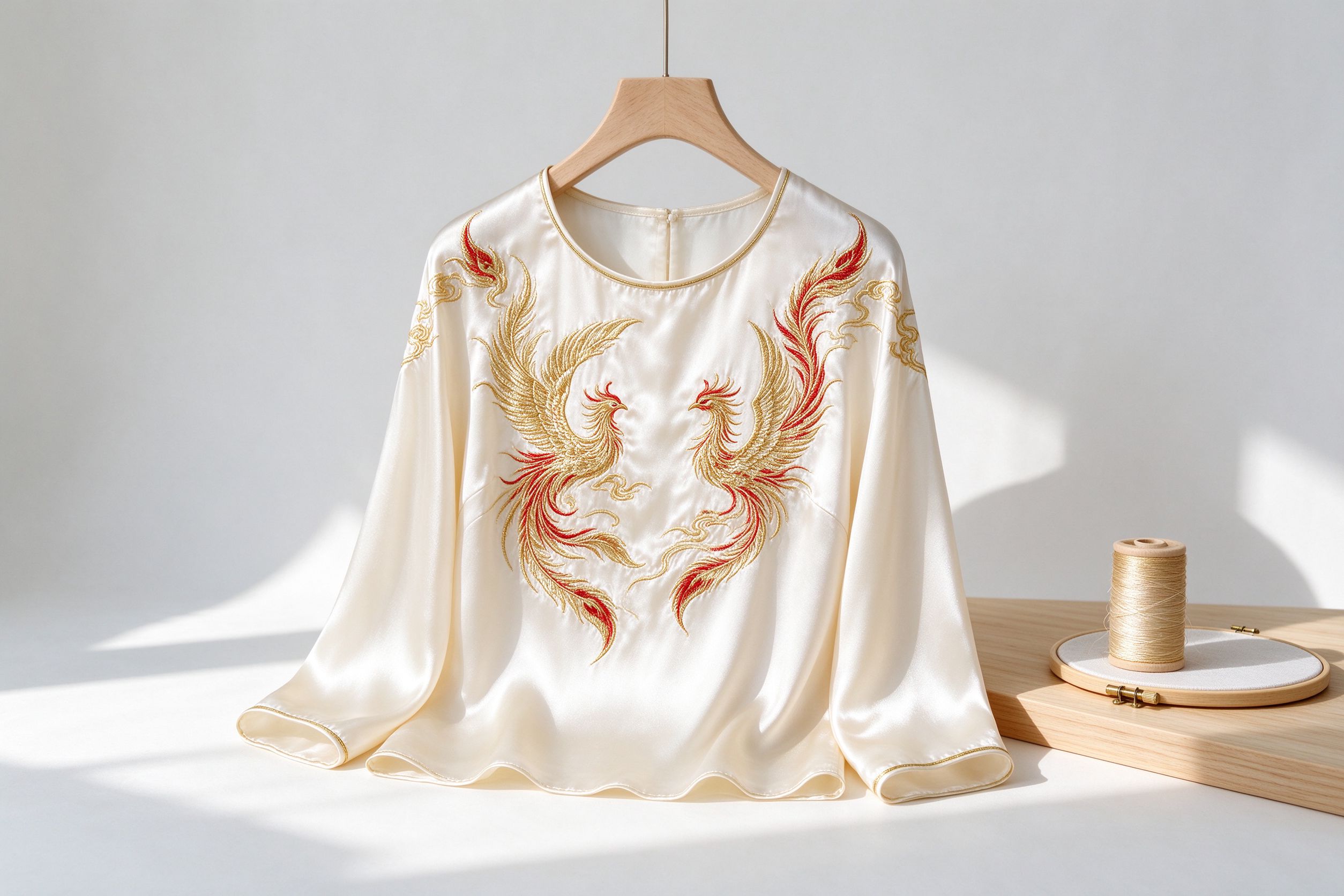
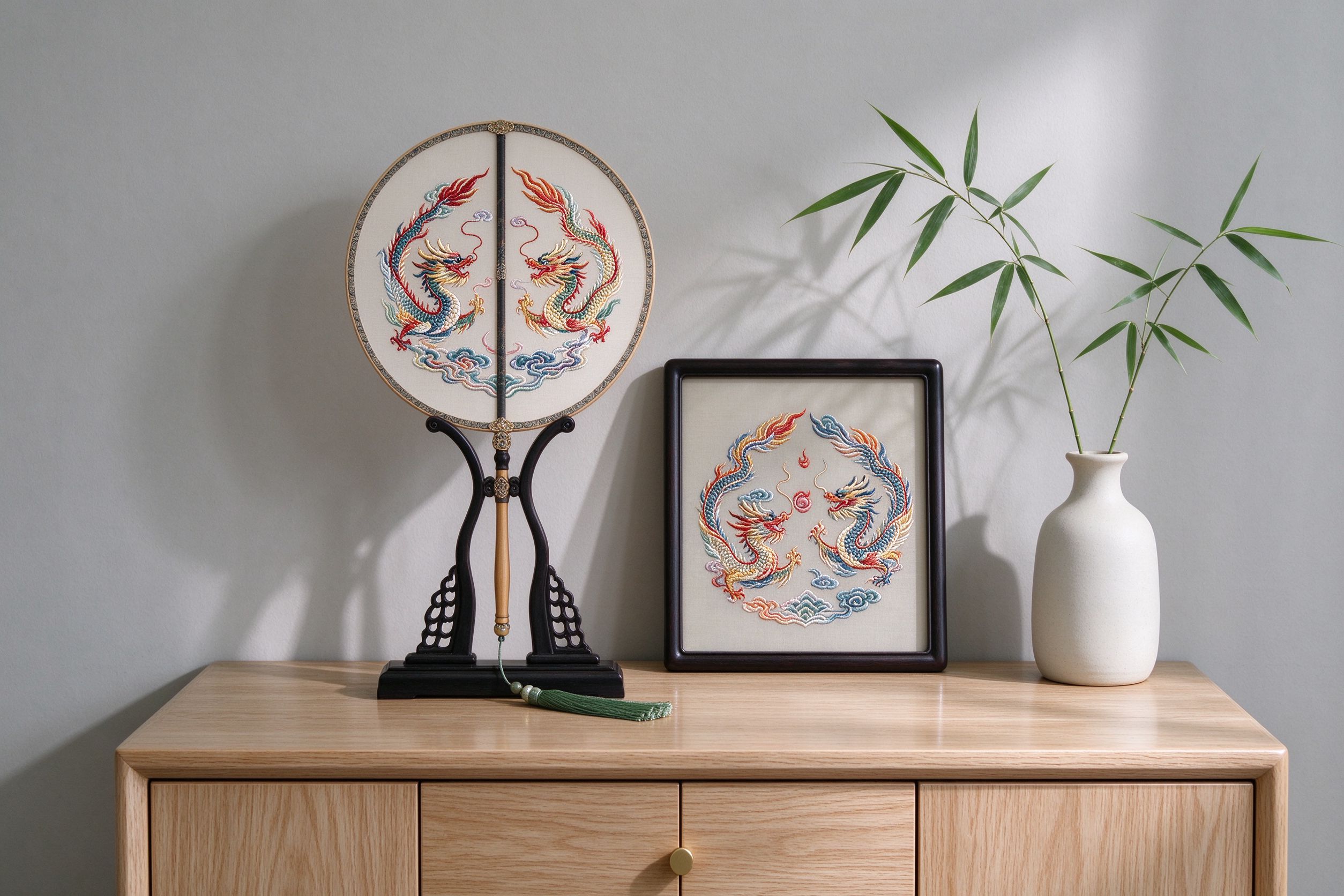
受著作权相关法规限制,本站未使用第三方实拍照片。本图为AI参照传统实物形制1:1复原绘制,仅作文化示意,并非真实藏品实拍。
Due to copyright regulations, no third-party photographs are used on this site. This image is AI-generated, faithfully reconstructed based on the traditional craft form for cultural illustration only. It is not a photograph of a real artifact.
权威档案 · Official archives
想要查阅官方档案、馆藏原始记载,可点击下方链接跳转至国家级权威平台阅读。
以上链接为国家平台的项目档案页,页内不设个人联系方式;站点侧栏的公众号二维码属机构自有渠道,非个人账号。