五
剪纸专区Paper Cutting
/paper-cutting
1. 页面导语
剪纸
一张红纸,一把剪刀,剪出的是日子的形状
纸便宜,剪刀家家都有,所以剪纸一直是最贴近生活的一门手作。它不靠稀有材料,也不靠复杂设备,全部功夫都在手上:一刀下去不断线,图案才立得住;断了一处,整张就散。
这一页按四层写:这门手艺从哪来,一刀怎么走,纹样在讲什么,今天它还出现在哪里。
2. 来历
起源:剪纸的出现与纸的普及同步。汉代造纸之后,剪刻纸张用于祭祀与装饰的做法逐渐出现;现存最早的剪纸实物出自南北朝,纹样是团花。唐宋以后,剪纸进入岁时节令:立春剪春幡,端午剪五毒,过年贴窗花,婚嫁贴喜花。
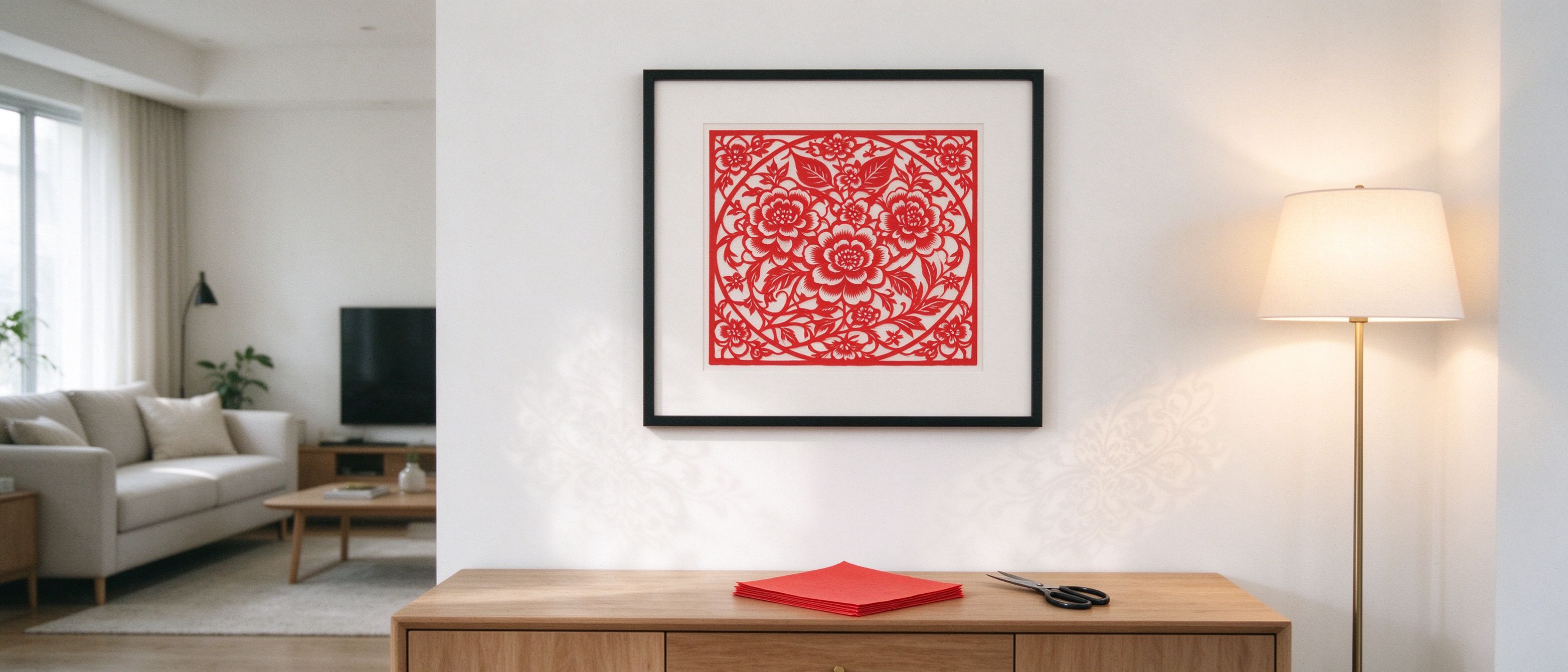
从窗上到墙上:过去剪纸的主要位置是窗纸、门楣和嫁妆箱柜。今天城镇住宅多用玻璃窗,窗纸早已退场,剪纸的位置也跟着变了:贴在玻璃内侧的静电贴,装框挂在墙上的装饰画,做成灯罩、贺卡、包装上的纹样。材料还是纸,观看的距离却从“贴着窗”变成了“挂在墙上、拿在手里”。
3. 怎么做
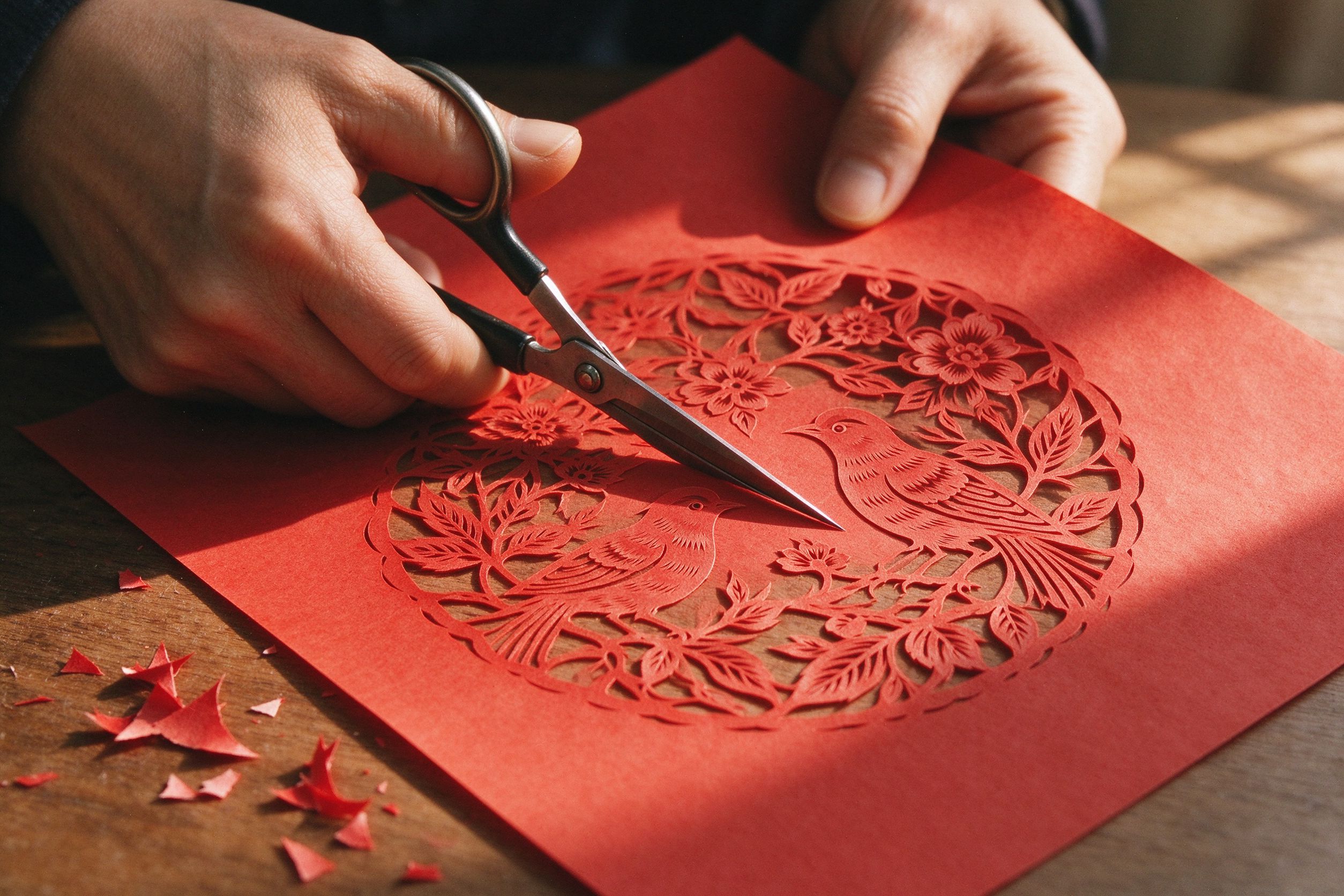
剪:一把小剪刀,一次成型,讲究“线线相连、刀刀不断”。剪之前先折纸,靠折痕定对称;下刀从内往外,先细部后轮廓,手一直悬着,不让纸压在桌上。
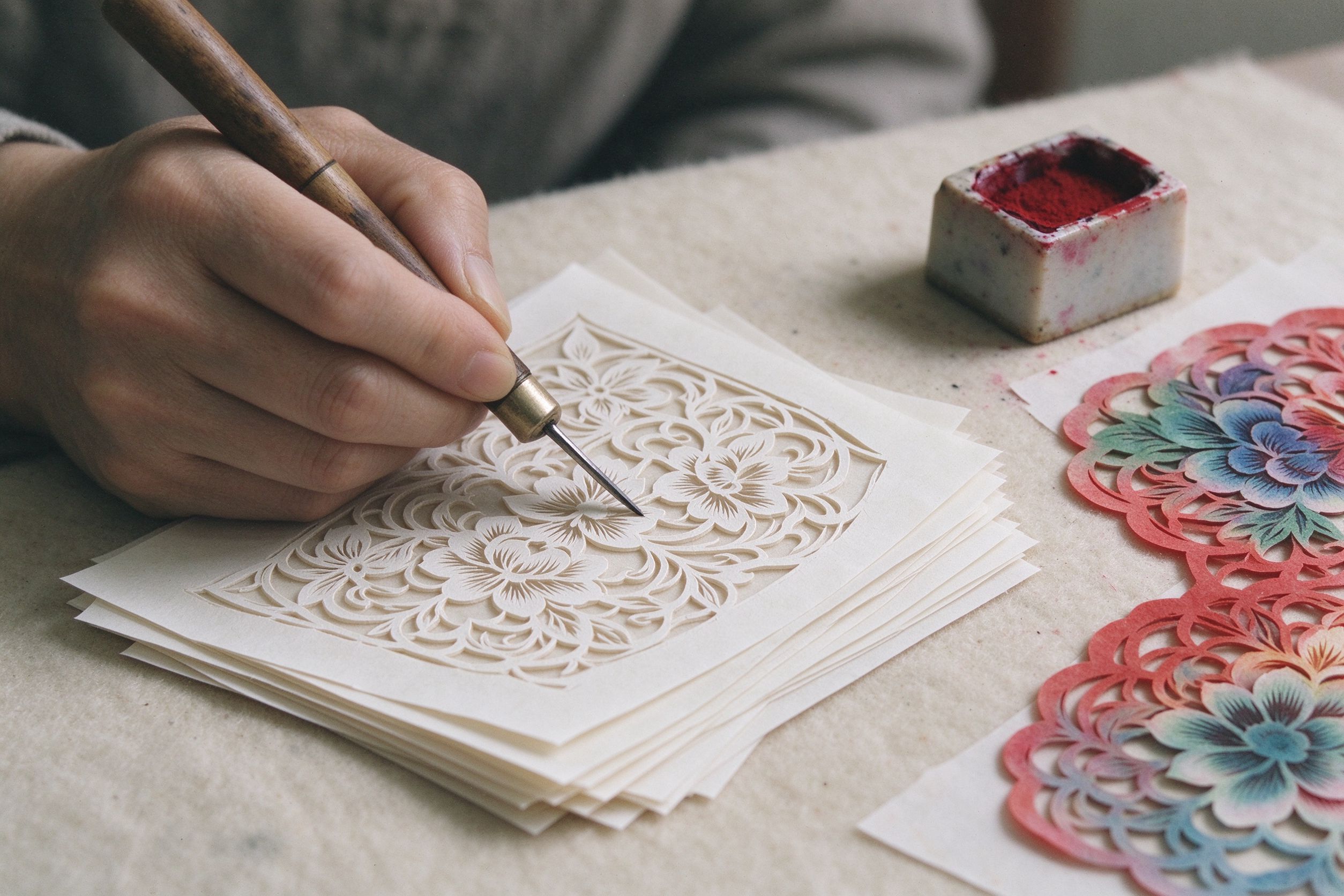
刻:蜡板上一叠纸,少则七八层,多则十几层,刻刀沿纹样走线。刻适合细密图案,一次能出十几张,但刀口要直,偏一点整叠都歪。
点染:河北蔚县的做法是先刻后染:白纸刻好,用品色一遍遍点上去,颜色透明,晾干后纸仍有挺括感。染的时候按区域上色,一笔不能出界。
4. 纹样在讲什么
团花与喜花:团花讲圆满,一圈一圈向内收;喜花多贴在新娘的箱柜上,龙凤、石榴、牡丹,取成双与多子。
抓髻娃娃:陕北常见,梳双髻、双手张开,老人说是驱邪招福的娃娃,也有人把它看作古老的护生形象。
老鼠娶亲:河南一带过年剪一队小老鼠抬轿吹打,贴在窗上给孩子看,讲的是“人勤鼠不欺”的老话。
留白:剪纸里留下的和剪掉的一样重要。线条围出来的空白是实心的,镂空处才是纹样的呼吸。看一张剪纸,先看它断没断,再看它空得对不对。
5. 今天怎么用
家里:小幅作品装框挂墙,或做成冰箱贴、杯垫;过年时用静电贴贴在玻璃内侧,撕下来不留胶。
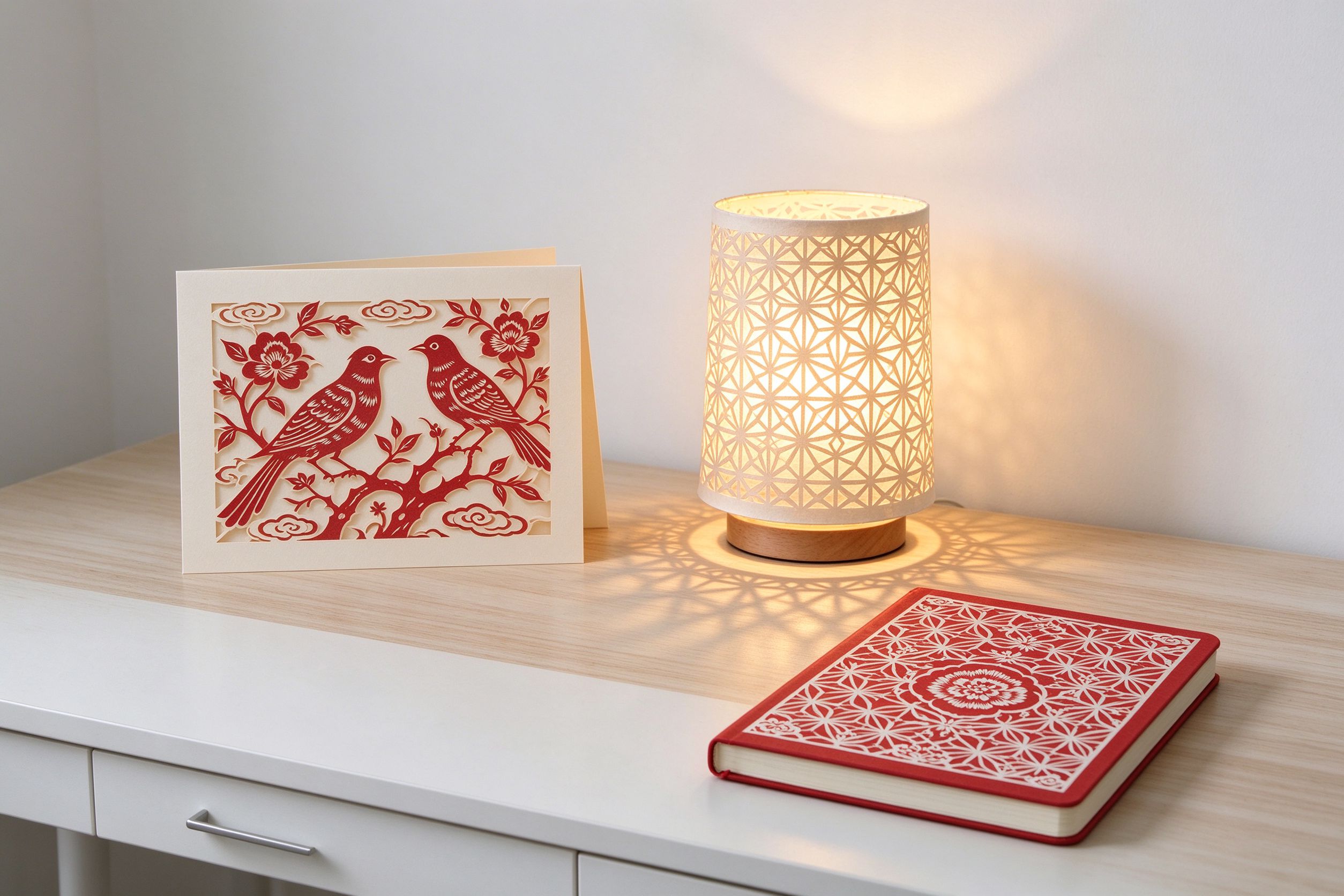
设计与出版:剪纸纹样被用在书籍封面、包装、舞台背景与展览海报上,多取局部放大,让镂空在光下出层次。
教学与体验:一把剪刀一张纸就能开课,是很多学校做传统手工课的入门项目。
6. 细作之处
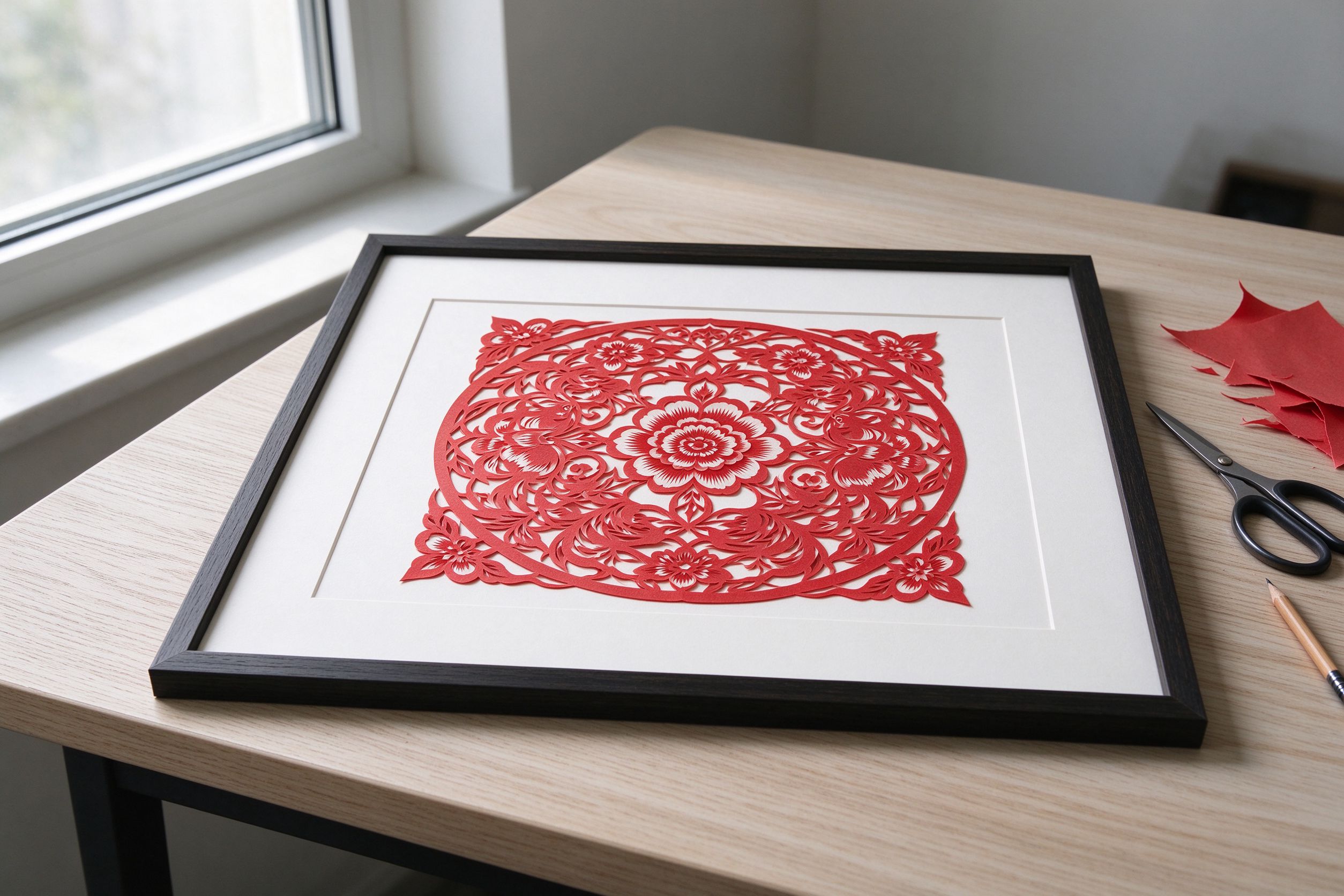
看一件剪纸的功夫,看三处:线条有没有断口,转折处圆不圆,密的地方敢不敢再密一点。好的剪纸远看是一整片红,近看每一根线都还连着,光从镂空里透出来,影子落在墙上又是一层图案。
1. Page introduction
Paper Cutting
A sheet of red paper and a pair of scissors, cut into the shape of ordinary days
Paper is cheap and every household has scissors, which is why paper cutting has stayed the craft closest to daily life. It relies on no rare material and no complex equipment. All of the skill sits in the hand: one line must run without breaking, or the whole sheet falls apart.
This page follows four layers: where the craft came from, how a cut travels, what the patterns say, and where it still appears today.
2. Where it came from
Beginnings: Paper cutting arrived with paper itself. After paper was made in the Han dynasty, cutting and carving paper for rituals and decoration slowly became common. The oldest surviving pieces date from the Northern and Southern Dynasties and carry a round flower pattern. From the Tang and Song dynasties on, paper cutting joined the calendar: spring banners at the start of spring, the five poisons at midsummer, window flowers at New Year, wedding flowers for marriages.
From the window to the wall: In the past, paper cutting lived on paper windows, door lintels and the chests that carried a bride's belongings. Most homes now have glass windows, and paper windows are long gone, so the place of paper cutting has shifted too: static decals on the inside of glass, framed pieces on a wall, patterns on lampshades, cards and packaging. The material is still paper, but the viewing distance has changed from close against a window to hung on a wall or held in the hand.
3. How it is made
Cutting: A small pair of scissors, one pass, no second chance. The rule is that lines stay connected and the blade never stops mid-line. The paper is folded first, so the creases set the symmetry; the cut starts from the inside and works outward, detail before outline, with the hand kept off the table so the sheet stays free.
Carving: A stack of paper on a wax board, seven or eight layers at the least and a dozen at most, with small knives following the pattern. Carving suits fine detail and can produce a dozen copies at once, but the blade has to run straight: lean it once and the whole stack goes crooked.
Dyeing: In Yuxian, Hebei, the order is carve first, dye second. A white sheet is carved, then color is dotted on layer by layer. The color is transparent, and the paper stays crisp when dry. Each area is dyed separately, and a brush cannot cross the line.
4. What the patterns say
Round flowers and wedding flowers: Round flowers speak of completeness, ring folding into ring. Wedding flowers go on the bride's chests: dragons and phoenixes, pomegranates, peonies, for a paired life and many children.
The doll with two buns: Common in northern Shaanxi: a figure with two buns of hair and open hands. Older people say it turns away evil and invites good fortune; others read it as an old protective figure.
The mouse wedding: Around Henan, New Year windows show a line of mice carrying a sedan and playing music, put up for children, from an old saying that diligent people are never cheated by mice.
The empty space: What is left matters as much as what is cut away. The blank space enclosed by lines is solid, and the openwork is where the pattern breathes. To read a piece, first check that no line is broken, then check whether the empty space is in the right place.
5. Where it is used today
At home: Small pieces are framed for a wall, or made into fridge magnets and coasters. At New Year, static decals go on the inside of glass and come off without leaving glue.
Design and publishing: Paper-cut patterns appear on book covers, packaging, stage backdrops and exhibition posters, usually a detail enlarged so the openwork can build depth in light.
Teaching: One pair of scissors and one sheet of paper are enough for a class, which makes it a common first project in school craft courses.
6. Where the fine work shows
Look at three things in a piece of paper cutting: whether any line is broken, whether the turns are round, and whether the dense passages dare to be denser. A good piece reads as one sheet of red from across a room; up close every line is still connected, light comes through the openwork, and the shadow on the wall becomes a second pattern.
配图 · Illustrations
受著作权相关法规限制,本站未使用第三方实拍照片。本图为AI参照传统实物形制1:1复原绘制,仅作文化示意,并非真实藏品实拍。
Due to copyright regulations, no third-party photographs are used on this site. This image is AI-generated, faithfully reconstructed based on the traditional craft form for cultural illustration only. It is not a photograph of a real artifact.
权威档案 · Official archives
想要查阅官方档案、馆藏原始记载,可点击下方链接跳转至国家级权威平台阅读。
以上链接为国家平台的项目档案页,页内不设个人联系方式;站点侧栏的公众号二维码属机构自有渠道,非个人账号。